Your Quick Guide: 10 Ancient Herbs for Modern Natural Living
Have you ever wondered if the wisdom of our ancestors, passed down through generations, still holds valuable secrets for our well-being today? In a world buzzing with new trends, sometimes the most profound solutions can be found in traditions that have stood the test of time. Imagine harnessing the power of nature, just as people did centuries ago, to enhance your daily vitality.
This isn’t about ditching modern medicine, but rather about exploring natural allies that can complement a healthy lifestyle. What if some of the most potent wellness tools are already growing around us, waiting to be rediscovered?
Why These Ancient Herbs Matter for You Today
In our fast-paced lives, many of us are seeking simpler, more natural ways to support our health and boost our energy. There’s a growing appreciation for ‘back-to-basics’ approaches, especially when it comes to what we put into our bodies. Ancient herbs, revered for their diverse properties across cultures for thousands of years, are at the heart of this movement. They offer a connection to natural rhythms and time-tested practices that can feel incredibly grounding.
Perhaps you’ve heard whispers of ginger’s soothing qualities or turmeric’s vibrant benefits, but felt unsure how to genuinely incorporate them. This guide aims to demystify these powerful plants, showing you how easily their ancient wisdom can fit into your modern natural living routine. We’ll explore ten remarkable herbs, each with its unique story and potential to enrich your wellness journey.
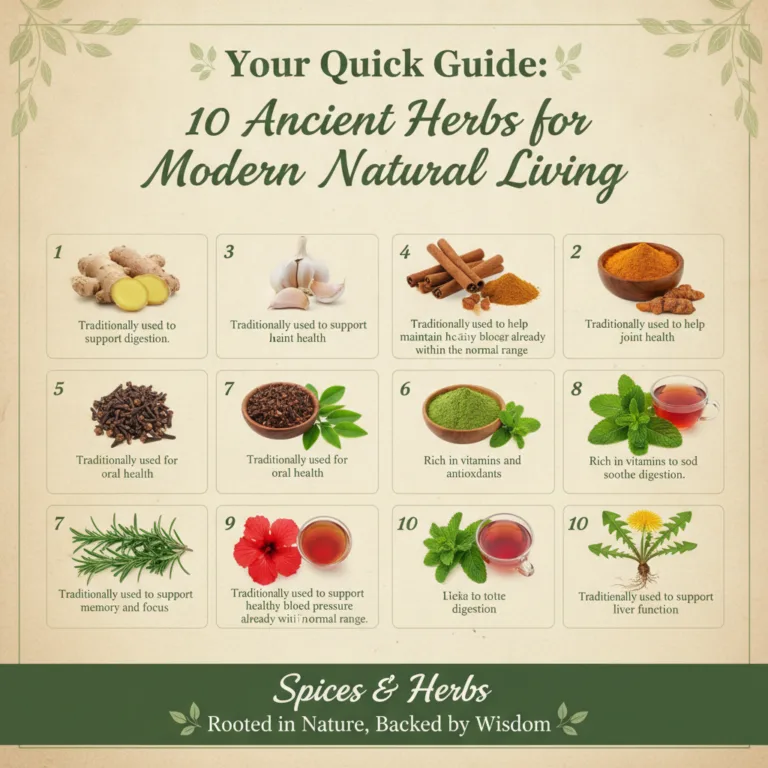
Your Guide to 10 Ancient Herbs for Modern Wellness
Let’s dive into the fascinating world of herbs that have been treasured for centuries and continue to offer valuable support for our contemporary lives.
1. Ginger (Zingiber officinale)
- Traditional Use: Revered in Asian and Indian traditions for its warming properties, ginger has long been used to soothe digestion, ease discomfort, and support circulation.
- Modern Understanding: Rich in compounds like gingerol, ginger may help maintain healthy inflammatory responses and support digestive comfort. It’s a popular choice for occasional nausea.
- Practical Use: Add fresh ginger slices to hot water for a soothing tea, grate it into stir-fries, or blend into smoothies.
2. Turmeric (Curcuma longa)
- Traditional Use: A staple in Ayurvedic medicine and a beloved spice in Indian cuisine, turmeric has been used for centuries to support overall vitality and healthy inflammatory responses.
- Modern Understanding: The active compound, curcumin, is widely studied for its potential antioxidant properties and ability to help maintain a healthy inflammatory balance in the body.
- Practical Use: Incorporate fresh or powdered turmeric into curries, golden milk lattes, soups, or even scrambled eggs.
3. Chamomile (Matricaria chamomilla)
- Traditional Use: Known across Europe and Asia for its gentle, calming effects, chamomile has been a go-to for soothing nerves, promoting relaxation, and aiding sleep.
- Modern Understanding: Chamomile contains compounds like apigenin, which may contribute to its mild sedative and muscle-relaxing properties, making it a wonderful herb for winding down.
- Practical Use: Brew a warm cup of chamomile tea before bedtime, or add a few drops of chamomile essential oil (diluted) to a bath.
4. Peppermint (Mentha piperita)
- Traditional Use: From ancient Egypt to Greece, peppermint leaves were used for their refreshing aroma and ability to aid digestion and invigorate the senses.
- Modern Understanding: Menthol, a key component, gives peppermint its characteristic scent and may help soothe digestive discomfort and clear airways.
- Practical Use: Enjoy peppermint tea after meals, chew on a fresh leaf, or diffuse peppermint essential oil for an uplifting aroma.
5. Lavender (Lavandula angustifolia)
- Traditional Use: Used by Romans for bathing and revered for its fragrant, calming properties, lavender has a long history as a relaxant and a skin soother.
- Modern Understanding: The aromatic compounds in lavender, like linalool, are thought to interact with neurotransmitters, potentially promoting relaxation and reducing feelings of stress.
- Practical Use: Place dried lavender sachets under your pillow, add a few drops of essential oil to a diffuser, or mix diluted oil into a lotion for skin application.
6. Ginseng (Panax ginseng)
- Traditional Use: A cornerstone of traditional Chinese medicine, ginseng is considered an adaptogen, historically used to enhance stamina, support cognitive function, and promote overall vitality.
- Modern Understanding: Ginsenosides, ginseng’s active compounds, are being researched for their potential to help the body adapt to stress and support energy levels.
- Practical Use: Ginseng is often consumed as a tea (from dried root slices), in powdered form, or as an extract.
7. Echinacea (Echinacea purpurea)
- Traditional Use: Native Americans traditionally used echinacea for various purposes, particularly for immune support during challenging times.
- Modern Understanding: Echinacea contains compounds like alkylamides that are thought to interact with the immune system, potentially helping to maintain healthy immune function.
- Practical Use: Commonly taken as a tea, tincture, or capsule, especially during seasonal changes.
8. Dandelion (Taraxacum officinale)
- Traditional Use: Valued in European and Chinese folk medicine, dandelion has a long history as a gentle liver and digestive tonic, often used for detoxification.
- Modern Understanding: Dandelion leaves are rich in vitamins and minerals, while the root contains prebiotics and compounds that may support liver function and digestion.
- Practical Use: Use young dandelion greens in salads, roast dandelion roots for a coffee substitute, or brew tea from the leaves.
9. Holy Basil (Tulsi) (Ocimum sanctum)
- Traditional Use: Known as