Tired of stale odors lingering in your home? Instead of reaching for generic store-bought air fresheners, imagine a custom scent that truly reflects your style and makes your space feel uniquely inviting. Crafting your own room spray is a surprisingly simple and rewarding DIY project, often using ingredients you might already have on hand. It’s a practical way to refresh any room, giving you control over the fragrance and avoiding harsh chemicals.
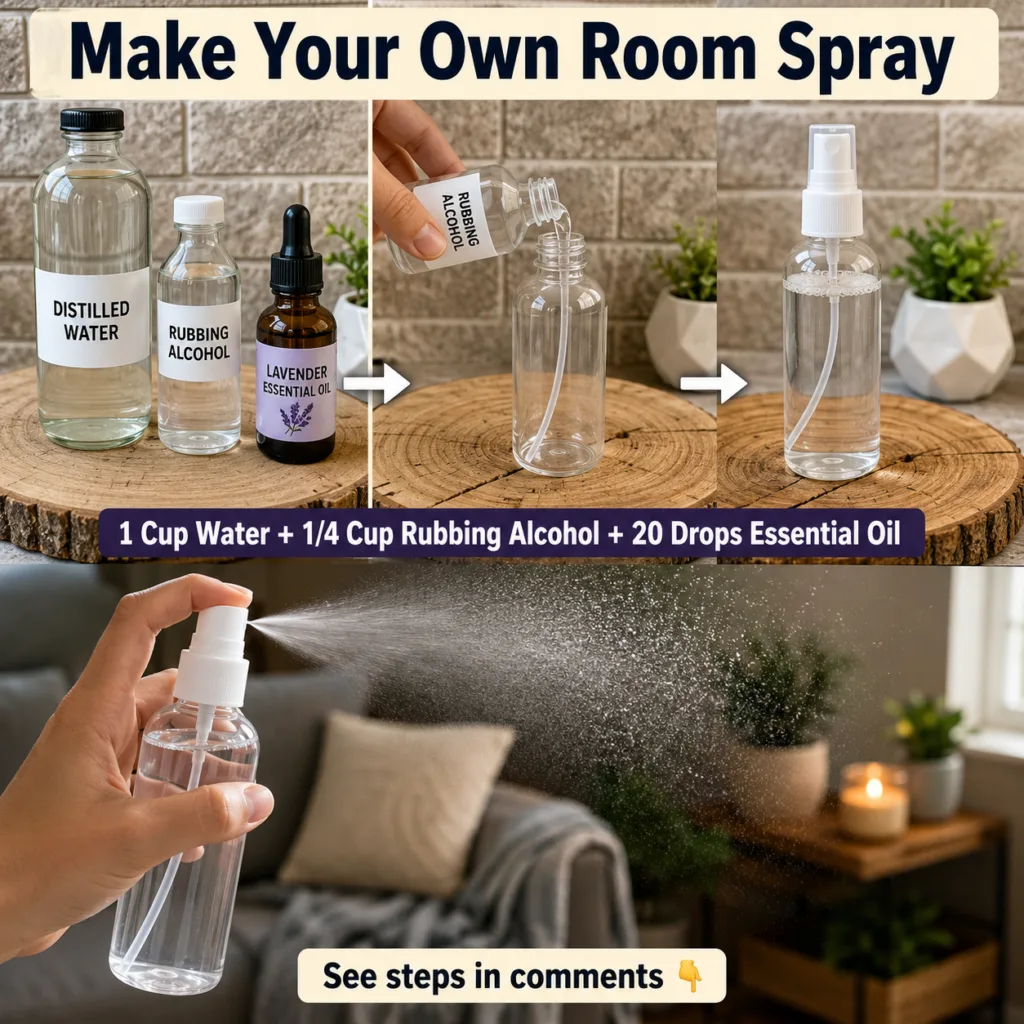
What You’ll Need
Ingredients:
- 2 tablespoons Witch Hazel (or Rubbing Alcohol)
- 20-30 drops Essential Oils (your choice of fragrance)
- Approximately 3.5 ounces (100 ml) Distilled Water
Tools:
- 4-ounce (120 ml) Glass Spray Bottle
- Small Funnel (optional, but helpful for pouring)
- Measuring Spoons
Why This DIY Can Be Useful
This DIY room spray offers a natural and customizable alternative to many commercial air fresheners. Witch hazel or rubbing alcohol acts as a dispersant, helping the essential oils blend with the water and evaporate more effectively, carrying the scent into the air. Essential oils provide the natural fragrance, allowing you to choose scents that uplift, calm, or simply make your home smell wonderful. Using distilled water helps prevent mineral buildup in your spray bottle and ensures a cleaner scent experience compared to tap water.
How to Make It
- Add Witch Hazel/Alcohol: Carefully pour 2 tablespoons of witch hazel or rubbing alcohol into your glass spray bottle. Using a small funnel can make this step easier and prevent spills.
- Add Essential Oils: Add 20-30 drops of your chosen essential oils to the bottle. The amount can be adjusted based on your desired scent strength.
- Combine: Secure the spray top and gently swirl the bottle to combine the witch hazel/alcohol and essential oils. This helps the oils disperse evenly.
- Add Distilled Water: Remove the spray top and fill the remainder of the bottle (approximately 3.5 ounces or 100 ml) with distilled water, leaving a small gap at the top.
- Final Shake: Replace the spray top securely. Shake the bottle well to fully mix all the ingredients.
How to Use It
Your homemade room spray is perfect for freshening up any area of your home. Before each use, give the bottle a good shake to ensure the ingredients are well mixed. Then, simply mist it into the air in rooms that need a boost of freshness. You can also lightly mist it onto linens, curtains, or upholstery, holding the bottle at least 12 inches away to prevent concentrated dampness.
What to Expect
You can expect a light, pleasant, and natural scent that helps neutralize odors and create a more inviting atmosphere. Unlike some synthetic fragrances, the scent from essential oils tends to be more subtle and may not last as long as commercial sprays. This allows you to reapply as often as you like throughout the day to maintain a consistently fresh environment.
Helpful Tips
- Experiment with Scents: Try different essential oil combinations. For a relaxing vibe, use lavender and chamomile. For an uplifting scent, blend lemon and peppermint. Eucalyptus and tea tree can offer a refreshing, clean aroma.
- Label Your Bottles: Always label your spray bottles with the scent blend and date. This helps you remember your favorite combinations and when you made it.
- Storage: Store your room spray in a cool, dark place away from direct sunlight to preserve the integrity of the essential oils.
- Patch Test: Before spraying extensively on fabrics or delicate surfaces, always test a small, inconspicuous area first to ensure there’s no staining or discoloration.
Important Notes / Safety
- Essential Oil Dilution: While this recipe uses a small amount of essential oils, always handle them with care. Keep concentrated essential oils out of reach of children and pets.
- Ventilation: Use your room spray in a well-ventilated area, especially if you or anyone in your household has respiratory sensitivities.
- Avoid Direct Contact: Do not spray directly onto skin, eyes, or open flames.
- Pet Safety: Research essential oil safety for pets. Some essential oils can be toxic to cats and dogs. Always ensure your pets have an escape route from sprayed areas.