Know Your Chicken: The Ultimate Nutrition Guide
Chicken is a versatile and popular protein source found in countless healthy meals worldwide. From lean breasts perfect for grilling to flavorful thighs ideal for stews, each cut offers a unique nutritional profile and culinary experience. But with so many options, how do you choose the best cut for your health goals and taste preferences?
This guide will break down the nutritional differences between common chicken cuts, helping you make informed decisions in the kitchen. We’ll explore calories, protein, fat, and other key nutrients, so you can confidently pick the right chicken for your next meal!
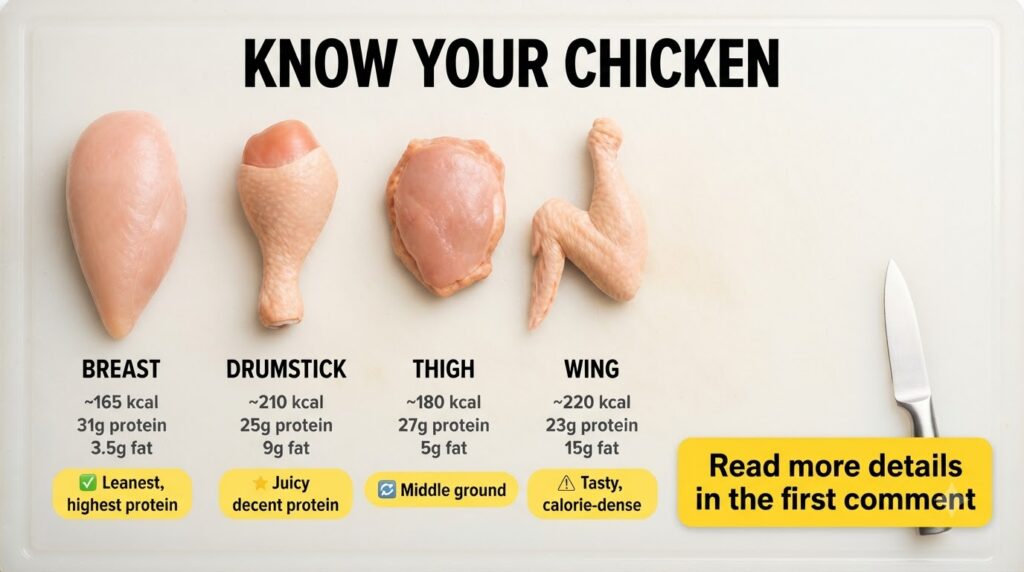
Chicken Nutrition Comparison: Breast, Thigh, Drumstick, and Wing (Skinless)
Let’s dive into the specifics! The following table compares the nutritional values for a 3.5-ounce (100g) serving of cooked, skinless chicken cuts. Keep in mind that values can vary slightly based on cooking method and specific bird.
| Chicken Cut (Skinless, Cooked 100g) | Calories | Protein (g) | Fat (g) | Main Nutrients | Best For |
|---|---|---|---|---|---|
| Breast | 165 | 31 | 3.6 | Niacin, B6, Selenium | Lean protein, weight management, muscle building |
| Thigh | 209 | 26 | 10.9 | Iron, Zinc, B12 | Flavor, moisture, essential minerals |
| Drumstick | 180 | 28 | 7.6 | Iron, Zinc, B12 | Juicy texture, affordability, general meals |
| Wing | 203 | 30 | 8.1 | Niacin, B6, Phosphorus | Flavorful small portions, appetizers |
As you can see, there’s a clear difference in macronutrient profiles, especially concerning fat content.
Exploring Each Chicken Cut
Let’s take a closer look at what each popular chicken cut brings to your plate.
Chicken Breast
The chicken breast is often considered the darling of healthy eating, and for good reason!
- Calories: Lowest among the cuts, making it a great choice for calorie-controlled diets.
- Protein: Highest protein content per serving, excellent for muscle growth and repair, and promoting satiety.
- Fat: Very low in fat, especially when skinless.
- Taste: Mild flavor, making it incredibly versatile for various marinades and seasonings. Its leanness can sometimes lead to dryness if overcooked.
- Best For: Weight management, bodybuilding, meal prep, stir-fries, grilling, baking, and shredding for salads or sandwiches.

Chicken Thigh
If flavor and moisture are your priorities, the chicken thigh might be your champion.
- Calories: Higher than breast due to its fat content.
- Protein: Good source of protein, slightly less than breast but still substantial.
- Fat: Noticeably higher in fat, which contributes to its rich flavor and tender texture. It also contains more healthy monounsaturated fats.
- Taste: Richer, more succulent flavor compared to breast. It’s forgiving to cook and less prone to drying out.
- Best For: Braising, roasting, stews, curries, and dishes where you want robust flavor and a tender bite.

Chicken Drumstick
The humble drumstick is a budget-friendly and kid-favorite option.
- Calories: Moderate, between breast and thigh.
- Protein: Good protein content, similar to thigh.
- Fat: Moderate fat content, providing a balance of flavor and leanness.
- Taste: Juicy and flavorful, similar to thigh but often slightly leaner. Its bone-in nature helps retain moisture during cooking.
- Best For: Frying, baking, grilling, and stewing. Great for casual meals and picnics.
Chicken Wing
Wings are a party favorite, but their nutrition varies greatly depending on preparation.
- Calories: Similar to thigh or drumstick, but usually consumed with skin and often deep-fried or sauced, significantly increasing calories and fat.
- Protein: A solid source of protein, especially when eaten skinless.
- Fat: Moderate fat when skinless, but high when skin is included.
- Taste: Distinctive, often savory flavor. The smaller size makes them ideal for appetizers.
- Best For: Appetizers, game-day snacks (when prepared healthily, e.g., baked skinless).

Which Chicken Cut is the “Winner”?
There’s no single “winner” when it comes to chicken cuts, as the best choice truly depends on your individual health goals, dietary needs, and culinary preferences.
- For weight loss and lean protein: Chicken breast is typically your best bet due to its low calorie and fat content, and high protein.
- For flavor, moisture, and essential minerals: Chicken thighs and drumsticks offer a richer taste and more iron and zinc, which can be beneficial.
- For versatility and affordability: All cuts can be incorporated into a healthy diet, but drumsticks are often the most budget-friendly.
The key is to consider how each cut fits into your overall meal plan and how you prepare it. Opting for skinless chicken and healthy cooking methods like baking, grilling, or roasting will always yield the most nutritious results.
Practical Tips for Enjoying Chicken Healthily
- Remove the Skin: The skin adds a significant amount of fat and calories. Removing it before cooking (or after, if you prefer crispy skin while cooking) can drastically reduce the fat content.
- Choose Lean Cooking Methods: Opt for baking, grilling, roasting, broiling, or stir-frying instead of deep-frying.
- Mind Your Marinades & Sauces: While flavorful, many store-bought marinades and sauces can be high in sugar, sodium, and unhealthy fats. Make your own with herbs, spices, vinegar, and healthy oils.
- Portion Control: Even healthy foods need to be eaten in appropriate portions. A standard serving of cooked chicken is typically 3-4 ounces.
- Vary Your Cuts: Don’t be afraid to switch it up! Enjoying different cuts can provide a broader spectrum of nutrients and keep your meals interesting.
- Check for Added Ingredients: When buying pre-marinated chicken or processed chicken products, always read the labels for added sugars, sodium, and preservatives.
FAQs About Chicken Nutrition
Q: Is it okay to eat chicken skin?
A: Chicken skin is high in fat, primarily saturated fat, and calories. While it can be enjoyed in moderation as part of an overall balanced diet, removing the skin is a simple way to reduce fat and calorie intake.
Q: Does dark meat chicken have more nutrients than white meat?
A: Dark meat (thighs, drumsticks) tends to have slightly higher levels of certain micronutrients like iron, zinc, and B vitamins (especially B12) compared to white meat (breast). However, both are excellent sources of protein and other essential nutrients.
Q: What’s the healthiest way to cook chicken?
A: Baking, grilling, roasting, broiling, and stir-frying with minimal added fat are among the healthiest ways to cook chicken. These methods help retain nutrients without adding excessive calories or unhealthy fats.
Q: Can I eat chicken every day?
A: Yes, chicken can be a healthy part of a daily diet, providing lean protein and essential nutrients. However, it’s important to have a varied diet that includes other protein sources, fruits, vegetables, and whole grains for a full spectrum of nutrients.
Q: Is organic chicken healthier?
A: Organic chicken is raised without antibiotics and fed organic feed. While it may not have a significantly different nutritional profile in terms of macronutrients, some people prefer it for ethical reasons and to avoid potential chemical residues.
Q: How does cooking method affect chicken nutrition?
A: The cooking method significantly impacts the nutritional value. Frying, especially deep-frying, adds a lot of fat and calories. Healthier methods like baking or grilling preserve the natural nutritional benefits without excessive additions.
Conclusion
Understanding the nutritional differences between chicken cuts empowers you to make smarter choices for your health and cooking adventures. Whether you’re aiming for lean protein, rich flavor, or a budget-friendly meal, there’s a chicken cut perfect for your needs.
By choosing skinless options and healthy cooking methods, you can enjoy all the benefits chicken has to offer as a cornerstone of a balanced and nutritious diet. So go ahead, experiment with different cuts, and savor the delicious variety!
This content is for educational purposes only and should not be considered medical advice. Consult a qualified healthcare professional for personalized dietary recommendations.