Feeling tired or sluggish? You might be surprised to learn that what you eat plays a huge role in your energy levels and overall well-being. Electrolytes are essential minerals that help keep your body functioning at its best, especially when it comes to hydration and energy.
This guide will explore the power of natural electrolytes, explaining what they are, why your body needs them, and how you can easily incorporate delicious, nutrient-rich foods into your diet to keep them balanced. Get ready to discover simple ways to boost your vitality and feel more energized every day!
What Are Electrolytes and Why Do We Need Them?
Electrolytes are minerals that carry an electric charge when dissolved in water, such as in your blood. They are vital for numerous bodily functions, influencing everything from muscle contractions to nerve signals and maintaining proper fluid balance.
Key Roles of Electrolytes:
- Fluid Balance: They help regulate the amount of water inside and outside your cells, preventing dehydration or overhydration.
- Nerve Function: Electrolytes are crucial for transmitting nerve impulses throughout your body.
- Muscle Contraction: They enable your muscles, including your heart, to contract and relax properly.
- pH Balance: They help maintain the correct acidity (pH) of your blood.
When your electrolyte levels are out of balance, you might experience symptoms like fatigue, muscle cramps, headaches, and even an irregular heartbeat. Replenishing them through diet is a natural and effective strategy.
Top Natural Electrolyte-Rich Foods
Forget sugary sports drinks! Nature offers a bounty of foods packed with the electrolytes your body craves. Let’s dive into some of the best:

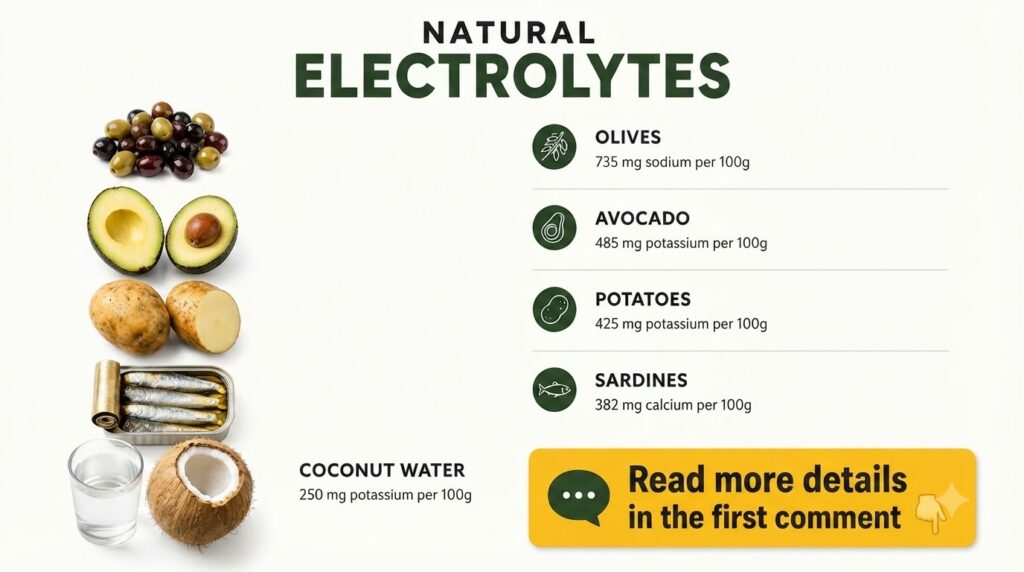
1. Coconut Water
- Main Electrolytes: Potassium, sodium, magnesium, calcium.
- Best Benefit: Known for its high potassium content, making it an excellent natural rehydrator, especially after exercise.
- How to Eat: Drink it plain, use it as a base for smoothies, or in healthy mocktails.
2. Potatoes (and Sweet Potatoes)
- Main Electrolytes: Potassium, magnesium, phosphorus.
- Best Benefit: A fantastic source of potassium, especially when consumed with their skins.
- How to Eat: Baked, roasted, mashed, or in healthy fries. Sweet potatoes offer similar benefits.
3. Avocados
- Main Electrolytes: Potassium, magnesium.
- Best Benefit: Rich in healthy fats and a significant source of potassium, even more than a banana per serving.
- How to Eat: Sliced on toast, in salads, guacamole, or blended into smoothies.
4. Olives
- Main Electrolytes: Sodium.
- Best Benefit: While high in sodium, they also offer healthy fats and antioxidants. The sodium can help replenish losses from sweat.
- How to Eat: As a snack, in salads, pasta dishes, or on charcuterie boards.
5. Sardines
- Main Electrolytes: Calcium, potassium, phosphorus, sodium.
- Best Benefit: A powerhouse of nutrients, including omega-3 fatty acids, calcium (from their edible bones), and various electrolytes.
- How to Eat: On whole-grain toast, in salads, or as a quick protein snack.
6. Leafy Green Vegetables
- Main Electrolytes: Magnesium, calcium, potassium.
- Best Benefit: Spinach, kale, and Swiss chard are packed with magnesium and calcium, crucial for muscle and nerve function.
- How to Eat: In salads, smoothies, stir-fries, or sautéed as a side dish.
7. Bananas
- Main Electrolytes: Potassium.
- Best Benefit: A classic for potassium replenishment, especially after a workout.
- How to Eat: Raw, in smoothies, on oatmeal, or as a healthy snack.
8. Dairy Products (Yogurt, Milk)
- Main Electrolytes: Calcium, potassium, sodium, phosphorus.
- Best Benefit: Yogurt and milk provide a good blend of electrolytes, plus protein and probiotics (in yogurt).
- How to Eat: Plain, with fruit, in smoothies, or as a base for savory sauces.
9. Nuts and Seeds
- Main Electrolytes: Magnesium, phosphorus, potassium.
- Best Benefit: Almonds, cashews, pumpkin seeds, and chia seeds are excellent sources of magnesium.
- How to Eat: As a snack, sprinkled on salads or yogurt, or in homemade trail mix.
Beyond Food: Hydration and Electrolyte Balance
While food is crucial, staying well-hydrated is equally important for electrolyte balance. Water helps transport these minerals throughout your body and maintain proper fluid levels.
When to Pay Extra Attention:
- Intense Exercise: Sweating profusely depletes electrolytes.
- Hot Weather: Increased sweating in high temperatures.
- Illness: Vomiting or diarrhea can lead to significant electrolyte loss.
- Certain Medications: Some medications can affect electrolyte balance.
In these situations, focusing on electrolyte-rich foods and plain water can make a big difference. For prolonged, intense activity, a pinch of sea salt in your water can also provide beneficial sodium.
Practical Tips for Boosting Electrolytes Naturally
- Start Your Day Right: Enjoy a smoothie with coconut water, spinach, and a banana.
- Snack Smart: Grab a handful of almonds, an avocado toast, or a small container of yogurt.
- Hydrate Thoughtfully: Carry a water bottle and consider adding a slice of lemon or cucumber for a subtle electrolyte boost.
- Cook with Whole Foods: Prioritize home-cooked meals featuring plenty of vegetables, lean proteins, and healthy fats.
- Listen to Your Body: If you feel unusually fatigued or have muscle cramps, consider if you’ve been losing more fluids than usual and adjust your intake of electrolyte-rich foods.
FAQs About Natural Electrolytes
Q1: How much potassium do I need daily?
A: The recommended daily intake for adults is typically around 3,400 mg for men and 2,600 mg for women, though individual needs can vary. Focus on including plenty of potassium-rich foods like potatoes, bananas, and avocados.
Q2: Can I get too many electrolytes from food?
A: It’s very rare to get an excessive amount of electrolytes from a balanced diet alone. Your kidneys are efficient at regulating levels. Problems usually arise from supplements or underlying health conditions.
Q3: Are sports drinks better than natural sources for electrolytes?
A: For most people, natural food sources are superior. Sports drinks often contain high amounts of added sugar and artificial ingredients. Natural options offer a wider range of nutrients.
Q4: What are the signs of an electrolyte imbalance?
A: Common signs include muscle cramps, weakness, fatigue, headaches, dizziness, nausea, and irregular heartbeat. Severe imbalances can be serious and require medical attention.
Q5: Is sea salt a good electrolyte source?
A: Yes, sea salt primarily provides sodium and chloride, two important electrolytes. A small amount can be beneficial, especially after heavy sweating.
Q6: Can eating specific fruits help with electrolyte balance?
A: Absolutely! Fruits like bananas, oranges, and watermelon are excellent sources of potassium and other beneficial minerals, along with natural sugars for energy.
Conclusion
Maintaining optimal electrolyte balance is fundamental for your energy, hydration, and overall health. By focusing on a diet rich in whole, natural foods like coconut water, potatoes, avocados, and leafy greens, you can effortlessly replenish these vital minerals and support your body’s complex functions.
Embrace these delicious options to feel more vibrant and energetic every day. Ready to explore more ways to nourish your body? Check out our other articles for healthy recipes and nutrition tips!
This content is for educational purposes only and should not be considered medical advice. Consult a qualified healthcare professional for personalized dietary recommendations.