Looking for a simple, accessible way to address rough, dry patches on your skin? This home remedy, combining common household items like Vaseline and baking soda, has been gaining popularity for its potential to support a smoother-looking complexion.
Many turn to this DIY solution to help soften and improve the feel of areas prone to dryness, like elbows, knees, or feet. It’s a straightforward approach that focuses on gentle exfoliation and deep moisture.
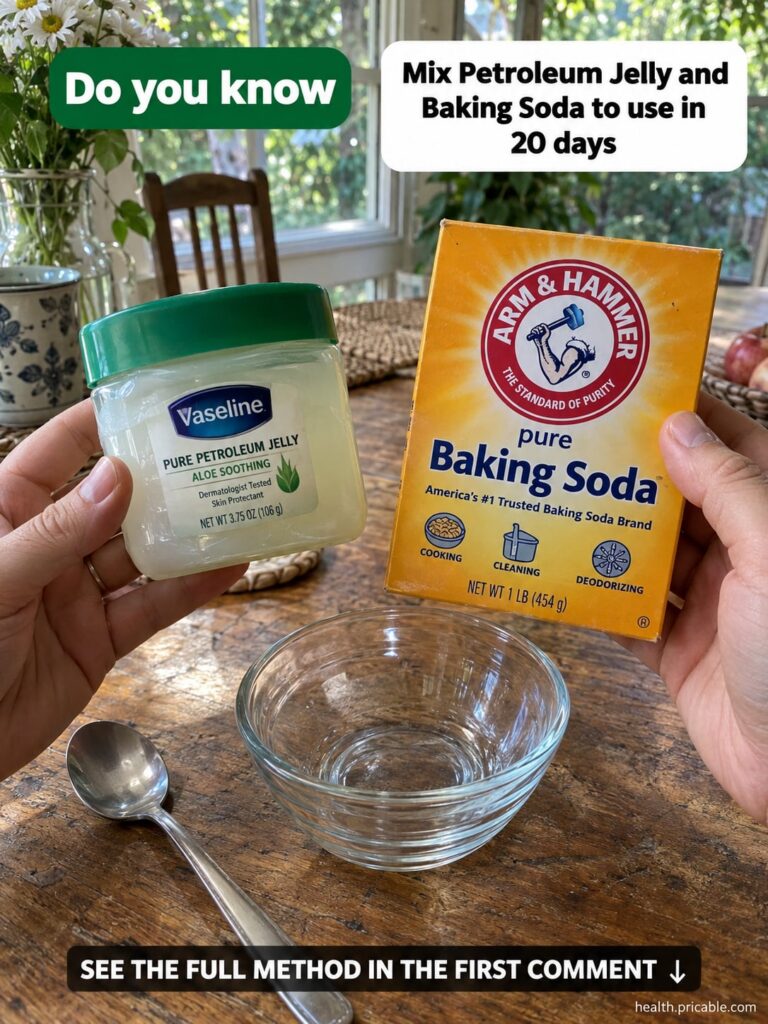
Quick Recipe
Prep time: 2 minutes
Best for: Rough, dry skin patches, dull skin appearance
Use type: Paste/scrub
Main ingredients:
- Vaseline (Petroleum Jelly)
- Baking Soda (Sodium Bicarbonate)
Ingredients
- 1 tablespoon Vaseline (Petroleum Jelly)
- 1 teaspoon baking soda (sodium bicarbonate)
How to Make It
- In a small, clean bowl, combine the 1 tablespoon of Vaseline and 1 teaspoon of baking soda.
- Using a spoon or a small spatula, mix the ingredients thoroughly until a smooth, uniform paste is formed.
- Ensure there are no lumps of baking soda, and the mixture has a consistent texture.
How to Use It
- Patch Test First: Always apply a tiny amount of the mixture to a small, inconspicuous area of your skin (like behind the ear or inner forearm) at least 24 hours before full application. Wait to see if any irritation occurs.
- Cleanse Skin: Ensure the area you plan to treat is clean and dry.
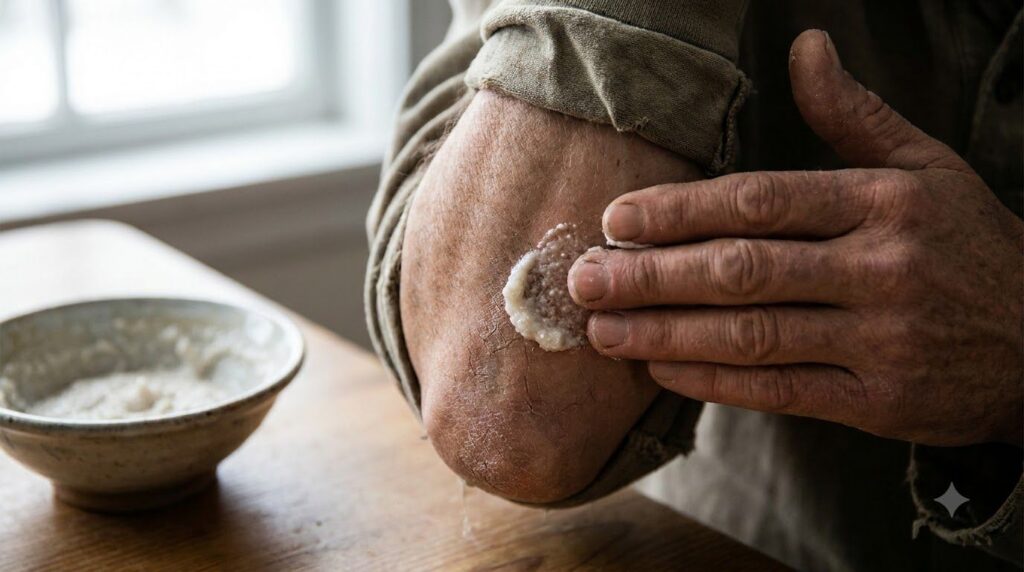
- Apply Gently: Take a small amount of the paste and apply it to the rough, dry skin area (e.g., elbows, knees, heels).
- Massage (Optional): If desired, gently massage the paste into the skin for about 30 seconds to 1 minute in circular motions. Be very light-handed, as baking soda can be abrasive. Avoid harsh scrubbing.
- Leave On: Let the mixture sit on your skin for 5-10 minutes. Do not leave it on for extended periods.
- Rinse Thoroughly: Rinse the area completely with lukewarm water, ensuring all the paste is removed.
- Moisturize: Pat the skin dry and apply your favorite hydrating moisturizer to lock in moisture.
How Often to Use It
Due to the exfoliating nature of baking soda, it’s best to use this remedy sparingly. Start with once a week, and if your skin tolerates it well, you may increase it to twice a week for rougher areas. Always listen to your skin and reduce frequency if you notice any irritation.
Why These Ingredients Are Used
Vaseline (Petroleum Jelly)
Vaseline is a well-known occlusive agent, meaning it creates a protective barrier on the skin’s surface. This barrier helps to seal in moisture, which is crucial for hydrating dry skin and supporting its natural healing process. It helps to prevent moisture loss, leaving skin feeling softer and more supple.
Baking Soda (Sodium Bicarbonate)
Baking soda has a fine, granular texture, making it a mild physical exfoliant. When used very gently, it can help to slough off dead skin cells from the surface, which may contribute to a smoother-looking skin texture. Its alkaline nature is also traditionally used in some home remedies to balance skin’s appearance, but caution is advised due to its potential for irritation.
What Results to Expect
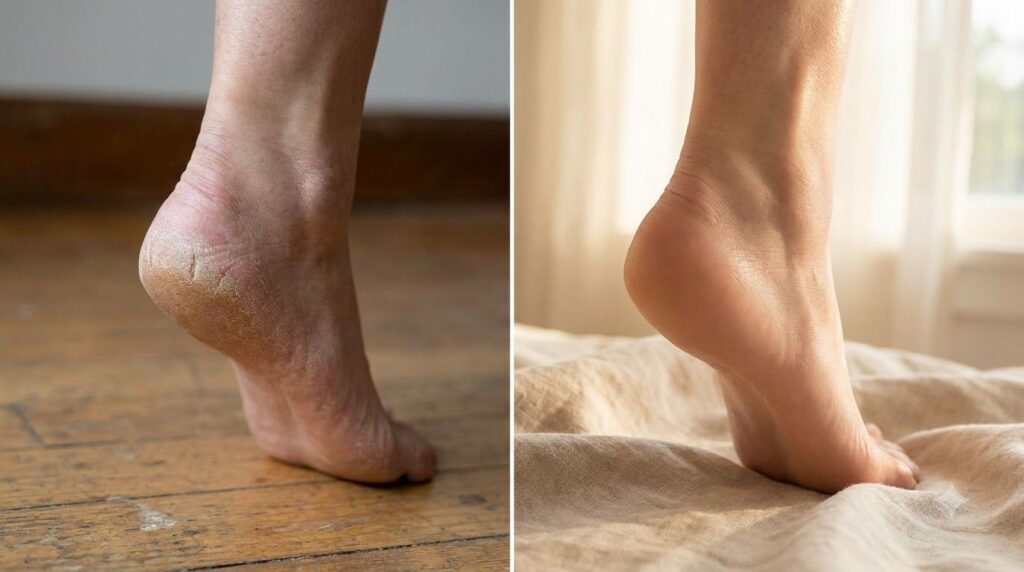
Regular and gentle use of this Vaseline and baking soda remedy may help improve the appearance and feel of rough, dry skin. You might notice skin feeling softer, looking smoother, and having a more hydrated glow over time. Individual results can vary, and consistency with proper usage is key.
Safety Notes
- Patch Test First: This is crucial. Always perform a patch test on a small skin area 24 hours prior to full application to check for any allergic reactions or irritation.
- Use Gently: Baking soda is an abrasive substance. Avoid harsh scrubbing, especially on sensitive areas.
- Avoid Irritated or Broken Skin: Do not apply this mixture to cuts, wounds, sunburned, or otherwise irritated skin, as it can cause further irritation.
- Not for Face: This remedy is generally not recommended for facial skin due to its delicate nature and the potential for baking soda to be too harsh or alter the skin’s pH.
- Stop Use if Discomfort Occurs: If you experience any redness, itching, burning, or discomfort, discontinue use immediately and rinse thoroughly with water.
- Consult a Professional: If you have sensitive skin, existing skin conditions, or concerns, consult with a dermatologist before trying new home remedies.
FAQ
Can I use this remedy on my face?
It is generally not recommended to use this Vaseline and baking soda mixture on your face. Facial skin is more delicate and sensitive than skin on the body, and baking soda can be too abrasive or disrupt the skin’s natural pH balance, potentially leading to irritation or dryness.
How long does it take to see results?
Results can vary depending on individual skin type and the severity of dryness or roughness. With consistent and gentle use (1-2 times a week), you may start to notice your skin feeling softer and looking smoother within a few weeks. Remember, patience and gentle care are key.
Can I use a different oil instead of Vaseline?
Vaseline’s unique occlusive properties are central to this specific remedy for moisture retention. While other oils can moisturize, they may not provide the same barrier effect. If you wish to use a different oil, the remedy’s effects might change, and a new patch test would be essential.
Final Thoughts
Embracing simple, natural solutions can be a rewarding part of your beauty routine. This Vaseline and baking soda paste offers an easy way to target rough, dry skin, helping it feel smoother and look more revitalized. Remember to always prioritize your skin’s health by performing a patch test and using the remedy gently.
Have you tried this hack or similar home remedies? Share your experiences and tips in the comments below!
