Persistent headaches can be debilitating, often derailing your day and leaving you searching for relief. While many turn to conventional options, what if a simple, natural remedy, easily found in nature, could be the answer? Most people see thistle as nothing more than a prickly weed, but the milky sap hidden within its stalks is what many herbalists keep for its unexpected properties.
One small preparation mistake can ruin the whole batch, or worse, make it ineffective. This guide will walk you through harnessing the surprising power of thistle’s milky sap, ensuring you maximize its potential for headache relief.
What is Thistle’s Milky Sap?
Thistle refers to a group of flowering plants characterized by their sharp prickles on the leaves and stems. Different varieties exist, but many produce a distinctive white, latex-like sap when their stems are cut or broken. This milky substance is a complex mixture of compounds, and in traditional herbal practices, certain thistles have been recognized for various supportive uses, including those related to discomfort and general well-being. Our focus here is on the common field thistle, often overlooked but a potential source for this unique remedy.

Ingredients for Thistle Sap Headache Remedy
- Fresh Thistle Stalks: Harvested from healthy, unsprayed plants. Look for mature, robust stalks.
- Clean Container: A small, sterile glass jar or bowl for collecting sap.
- Sharp Knife or Shears: For cleanly cutting the thistle stalks.
- Optional: Honey or Water: For diluting the sap if desired, especially for internal use or taste.
Approximate Measurements
The amount of sap you can collect depends on the size and health of the thistle plant. Aim for:
- Thistle Sap: 1-2 teaspoons per application/dose (adjust based on individual response and comfort).
- Honey/Water (if diluting): 1 teaspoon per 1 teaspoon of sap, creating a 1:1 mixture.
Formula / Recipe: Harvesting Thistle Sap
The goal is to extract the fresh milky sap with minimal contamination. Handle thistle with care to avoid prickles.
Step-by-Step Method
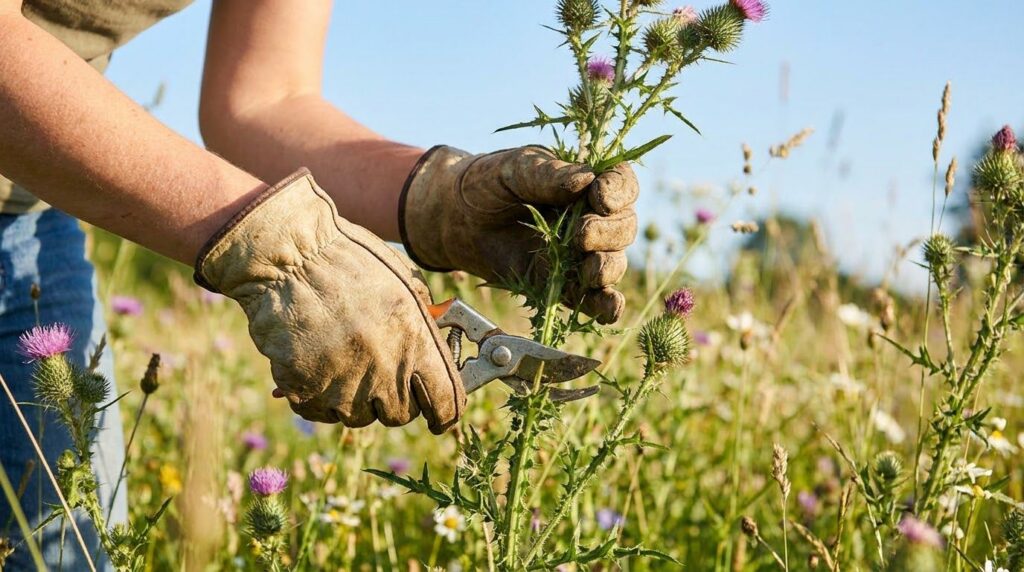
- Identify and Prepare: Locate mature thistle plants (ensure they are common field thistle and not a protected species or a toxic look-alike). Wear thick gloves to protect your hands from thorns. Choose stalks that are green and robust, avoiding any that look withered or diseased.
- Clean Cut: Using a sharp, clean knife or shears, make a clean cut across a thick part of the thistle stalk, about 6-12 inches from the base.
- Collect the Sap: Immediately after cutting, milky white sap will begin to ooze from the cut surface. Position your clean container directly beneath the cut to collect the dripping sap. You can also gently scrape the sap that adheres to the cut surface with a clean spoon or knife into your container.
- Repeat (if needed): You may need to make several cuts on the same stalk or different stalks to gather a sufficient amount. Be patient, as sap collection can be slow.
- Filter (Optional): If any small plant debris falls into the sap, you can gently filter it through a fine-mesh sieve or cheesecloth before use.
Quick Tip: Best Time to Use It
The freshest sap is always best. Use the sap as soon as possible after collection for maximum potency. While it can be stored briefly, its efficacy is highest when freshly harvested.
How to Use Thistle Sap for Headache Relief
There are a few practical ways to use the collected thistle sap:
- Topical Application: For a localized headache, gently dab 1-2 drops of pure thistle sap directly onto your temples, forehead, or the back of your neck. Gently massage it into the skin until absorbed.
- Oral Ingestion (Diluted): If you prefer internal use, mix 1 teaspoon of fresh thistle sap with 1 teaspoon of honey or water. Consume this mixture slowly. This can help mask the potentially bitter taste of the sap.
How Often to Use
Start with a small amount and observe your body’s response. For headaches, you can apply or ingest the sap:
- As needed: At the onset of a headache.
- Frequency: Up to 2-3 times per day, if necessary, with several hours between applications/doses. Do not exceed recommended amounts without consulting a healthcare professional.
How to Buy / How to Choose Ingredients
Thistle sap is not typically sold commercially due to its unstable nature and rapid oxidation. Therefore, you will need to forage for your own thistle plants. Here’s how to choose them:
- Location: Always forage from areas free of pesticides, herbicides, and pollution (e.g., away from roadsides, industrial areas, or recently treated lawns).
- Identification: Be absolutely certain of your plant identification. Look for common field thistles; if in doubt, do not harvest. Consult a local botanical guide or expert.
- Health: Choose vibrant, healthy-looking plants with strong, green stalks. Avoid plants that are wilted, discolored, or show signs of disease or pest damage.
- Sustainability: Harvest responsibly. Take only what you need and leave plenty of plants behind to ensure continued growth.
Storage
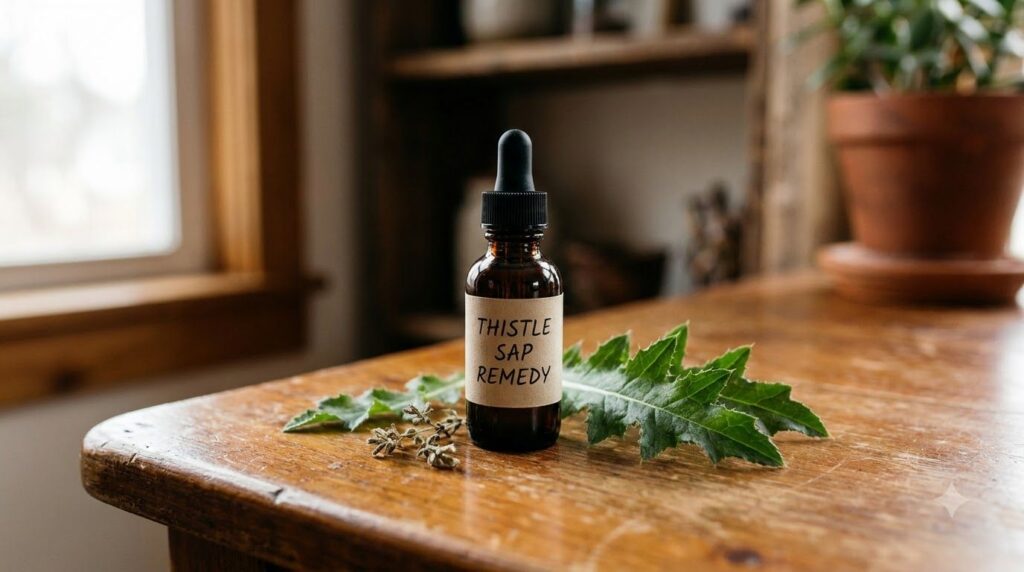
Thistle sap is highly perishable. Its active compounds can degrade quickly upon exposure to air and light.
- Short-Term: Store freshly collected sap in a small, airtight, dark glass container in the refrigerator for no more than 12-24 hours.
- Long-Term: Long-term storage is generally not recommended as the sap’s efficacy diminishes significantly. It’s best to harvest and use it fresh.
Did You Know? Fresh vs. Stored Sap
Freshly collected thistle sap contains the highest concentration of volatile compounds that contribute to its potential benefits. Storing it, even for a short period, can lead to oxidation and a reduction in its beneficial properties. For best results, use immediately after harvesting.
Practical Tips for Thistle Sap Use
- Patch Test: Before widespread topical application or ingestion, perform a small patch test on your skin (e.g., inner forearm) to check for any allergic reactions.
- Cleanliness: Ensure all tools and containers are sterile to prevent contamination of the sap.
- Patience: Collecting enough sap can take time. Don’t rush the process.
- Combine with Relaxation: For headaches, consider combining the thistle sap remedy with other relaxation techniques like deep breathing or resting in a quiet, dark room.
Common Mistakes
- Incorrect Plant Identification: The biggest mistake is harvesting the wrong plant. Always be 100% sure of your identification. Some plants can be toxic.
- Foraging in Contaminated Areas: Using thistle from roadsides or sprayed fields introduces harmful chemicals into your remedy.
- Using Damaged/Diseased Plants: Unhealthy plants yield lower quality sap and may carry pathogens.
- Improper Storage: Leaving sap exposed to air and light will cause it to degrade rapidly, making it ineffective.
- Ignoring Prickles: Handling thistle without protection can lead to painful stings and irritation.
- Overuse: While natural, excessive use, especially internally, without understanding individual tolerance can lead to unexpected reactions.
Cautions / Who Should Avoid It
- Allergies: Individuals with known allergies to plants in the Asteraceae/Compositae family (like ragweed, daisies, marigolds) should use thistle with extreme caution or avoid it entirely.
- Pregnancy and Breastfeeding: There is insufficient research on the safety of thistle sap during pregnancy or breastfeeding. It is best to avoid use.
- Medical Conditions: If you have any pre-existing medical conditions, especially liver issues, or are taking medications, consult your doctor before using thistle sap, especially internally.
- Children: Not recommended for use in children.
- Skin Irritation: If topical application causes redness, itching, or irritation, discontinue use immediately.
Quick Summary
Thistle’s milky sap offers a natural approach to headache relief. Harvest fresh sap from healthy, unsprayed plants using clean tools and protective gloves. Apply topically to temples or forehead, or ingest diluted with honey/water. Use fresh sap immediately for best results, as it does not store well long-term. Always ensure correct plant identification and perform a patch test. Avoid if pregnant, breastfeeding, or allergic to related plants.
FAQ
- Can I use dried thistle? No, this remedy specifically calls for fresh, milky sap, which is not present in dried thistle.
- How long does the sap last? Fresh sap is best used immediately. It can be refrigerated in an airtight, dark container for up to 12-24 hours, but potency decreases quickly.
- Can I freeze thistle sap? Freezing is not recommended as it can alter the sap’s consistency and chemical composition, reducing its efficacy.
- What part of the thistle is best for sap? The robust, green stalks yield the most sap.
- Can I reuse the thistle plant after cutting? Yes, you can often get more sap from the same stalk by making additional cuts higher up, or from other stalks on the same plant.
- When should I avoid thistle sap? Avoid if pregnant, breastfeeding, allergic to related plants, or if you have specific medical conditions without consulting a doctor.
- Is all thistle sap the same? While many thistles produce sap, this guide focuses on common field thistle. Always ensure positive identification.
- Will thistle sap stain my skin? The milky sap might leave a temporary white residue, but it generally washes off easily with water.
Conclusion
The journey to natural headache relief often involves looking beyond the obvious. Thistle’s milky sap, a simple offering from the plant kingdom, provides a fascinating and practical approach for those seeking alternative solutions. By understanding the proper methods for harvesting, preparing, and using this often-overlooked remedy, you can potentially find relief right in your backyard. Always prioritize safety, proper identification, and fresh preparation for the best results.
You may also like: Herbal Tinctures for Daily Wellness: A Complete Guide
Read more: Natural Pain Relief: Top Garden Remedies

