Are you looking for a simple way to add more nutrient variety to your meals? It’s easier than you think to upgrade your plate with a wider array of essential vitamins, minerals, and compounds that your body craves. Instead of searching for one ‘superfood’ to solve all your nutritional needs, the secret lies in embracing a diverse range of wholesome ingredients.
Different foods bring different nutrients to the table, creating a powerful synergy that supports overall health. This guide will explore specific foods known for their unique contributions – from antioxidants and omega-3s to zinc and B-vitamins – and show you how effortlessly they can enhance your daily meals.
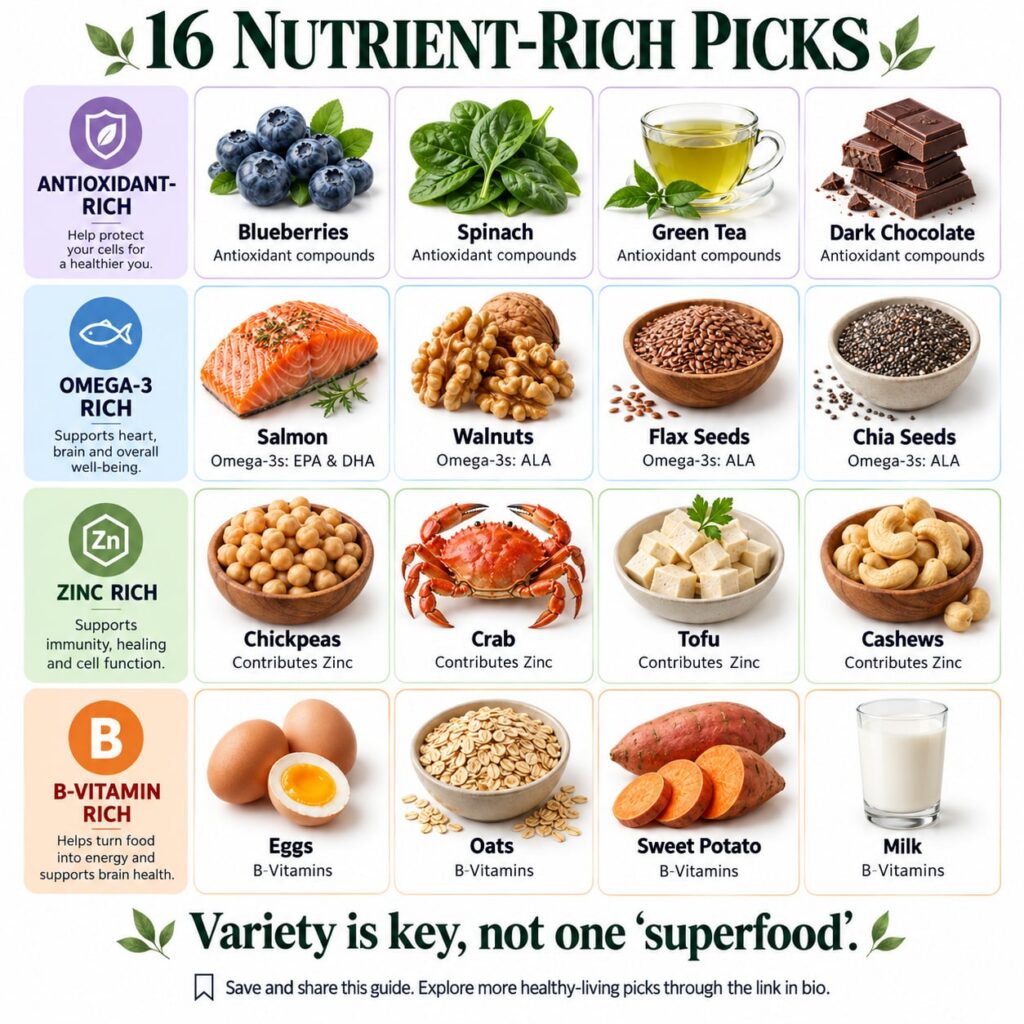
The Power of Nutrient Variety in Your Diet
The foundation of a truly healthy diet isn’t about restrictive eating or finding elusive ‘superfoods.’ It’s about diversity. By incorporating a broad spectrum of foods into your diet, you ensure your body receives a wide range of micronutrients, macronutrients, and beneficial plant compounds. This approach helps support everything from your immune system to your energy levels and cognitive function.
Boost Your Body with Antioxidant-Rich Foods
Antioxidants are vital compounds that help protect your cells from damage caused by free radicals. Including a variety of these foods can support cellular health and reduce oxidative stress.
Blueberries: Tiny Powerhouses
- Nutrient Highlight: Anthocyanins (a type of flavonoid antioxidant).
- Why They Matter: These vibrant berries are celebrated for their high antioxidant content, which may contribute to brain health and a healthy inflammatory response.
- How to Enjoy: Add them to your morning oatmeal, blend into smoothies, or enjoy a handful as a refreshing snack.
Spinach: The Leafy Green Champion
- Nutrient Highlight: Lutein, zeaxanthin, beta-carotene, and various vitamins.
- Why It Matters: Spinach is packed with antioxidants, supporting eye health, bone strength, and providing essential vitamins like K and A.
- How to Enjoy: Sauté it with garlic, add to eggs, blend into green smoothies, or use as a base for salads.
Green Tea: Your Daily Wellness Brew
- Nutrient Highlight: Catechins, especially EGCG.
- Why It Matters: Green tea is renowned for its potent antioxidant properties, which may support metabolism and cognitive function.
- How to Enjoy: Brew a warm cup daily, or try it iced with a slice of lemon for a refreshing twist.
Dark Chocolate: A Delicious Dose
- Nutrient Highlight: Flavonoids, polyphenols.
- Why It Matters: In moderation, dark chocolate (with a high cocoa content, 70% or more) can be a source of powerful antioxidants and may support heart health.
- How to Enjoy: Savor a small square as a treat, or melt it to drizzle over fruit.
Embrace Omega-3s for Heart and Brain Health
Omega-3 fatty acids are essential fats crucial for brain function, heart health, and reducing inflammation. It’s important to differentiate between types and sources.
Fatty Fish: EPA and DHA Essentials (Salmon)
- Nutrient Highlight: EPA (eicosapentaenoic acid) and DHA (docosahexaenoic acid).
- Why It Matters: Fatty fish like salmon provide EPA and DHA, the most bioavailable forms of omega-3s, directly used by the body for various functions, including supporting cardiovascular health and brain development.
- How to Enjoy: Bake, grill, or pan-sear salmon fillets; enjoy it in salads or as a main course.
Plant-Based ALA Sources: Walnuts, Flax, and Chia
- Nutrient Highlight: ALA (alpha-linolenic acid).
- Why It Matters: Plant sources provide ALA, which the body can convert into EPA and DHA, though the conversion rate is limited. These foods also offer fiber and other beneficial nutrients.
- How to Enjoy:
- Walnuts: Snack on them raw, add to salads, or sprinkle over yogurt.
- Flax Seeds: Grind and add to smoothies, oatmeal, or baked goods.
- Chia Seeds: Use to make overnight oats, puddings, or as a thickener in sauces.
Support Your Immune System with Zinc-Rich Choices
Zinc is a crucial mineral involved in immune function, wound healing, and DNA synthesis. Ensuring adequate intake can help maintain your body’s defenses.
Chickpeas: Versatile Legumes
- Nutrient Highlight: Zinc, fiber, plant-based protein.
- Why They Matter: Chickpeas are a fantastic plant-based source of zinc, offering both protein and fiber for digestive health.
- How to Enjoy: Roast them for a crunchy snack, add to salads, make hummus, or include in stews and curries.
Crab: A Seafood Delight
- Nutrient Highlight: Zinc, protein.
- Why It Matters: Crab meat is a lean protein source rich in zinc, supporting immune health and cellular processes.
- How to Enjoy: Enjoy in crab cakes, salads, or steamed with lemon and herbs.
Tofu: Plant-Based Protein
- Nutrient Highlight: Zinc, complete protein.
- Why It Matters: Tofu, a versatile soy product, provides zinc and is a complete plant-based protein, making it a staple in many healthy diets.
- How to Enjoy: Marinate and grill, stir-fry, or scramble as an egg substitute.
Cashews: Creamy and Nutritious
- Nutrient Highlight: Zinc, healthy fats, magnesium.
- Why They Matter: These creamy nuts offer a good amount of zinc, along with beneficial fats and minerals that support energy and nerve function.
- How to Enjoy: Snack on them raw, blend into sauces, or add to stir-fries for texture.
Energize with B-Vitamins
B-vitamins are a group of essential nutrients that play a vital role in metabolism, energy production, and maintaining nerve function. Different foods provide different members of this crucial family.
Eggs: The Incredible Edible
- Nutrient Highlight: B2 (Riboflavin), B5 (Pantothenic Acid), B7 (Biotin), B9 (Folate), B12 (Cobalamin).
- Why They Matter: Eggs are a powerhouse of nutrition, offering several B-vitamins crucial for energy metabolism and cellular health, along with high-quality protein.
- How to Enjoy: Boil, scramble, poach, or fry them; perfect for breakfast, lunch, or a quick snack.
Oats: A Wholesome Start
- Nutrient Highlight: B1 (Thiamine), B5 (Pantothenic Acid), B9 (Folate).
- Why They Matter: Oats are a whole grain rich in dietary fiber and various B-vitamins that help convert food into energy, supporting sustained vitality throughout your day.
- How to Enjoy: Prepare as oatmeal, use in baked goods, or blend into smoothies.
Sweet Potatoes: Naturally Sweet and Nutritious
- Nutrient Highlight: B6 (Pyridoxine), B5 (Pantothenic Acid).
- Why They Matters: Beyond their delicious taste, sweet potatoes are a great source of complex carbohydrates and B-vitamins, contributing to energy production and brain health.
- How to Enjoy: Roast, bake, mash, or make into fries; a versatile and nutritious side dish.
Milk: A Foundation of Health
- Nutrient Highlight: B2 (Riboflavin), B12 (Cobalamin).
- Why It Matters: Milk is a readily available source of B-vitamins, especially B12, which is essential for nerve function and red blood cell formation, alongside calcium for bone health.
- How to Enjoy: Drink it plain, add to coffee or tea, use in smoothies, or in cooking and baking.

Beyond “Superfoods”: Why Variety is Key
The concept of a single

