Most people ignore the potent power held within a common wayside flower. While St. John’s Wort (Hypericum perforatum) often conjures images of ancient folklore or traditional midsummer rituals, its true, practical magic lies in its ability to soothe and restore when properly prepared. Forget the broad theories; we’re diving into the tangible benefits of making and using your own St. John’s Wort infused oil.
This golden oil, celebrated for centuries, is a surprisingly simple yet effective home remedy. It’s not just about historical ‘lore’; it’s about harnessing the plant’s natural compounds for everyday topical relief. Ready to transform vibrant yellow blooms into a valuable addition to your natural first-aid kit?
What It Is: St. John’s Wort Infused Oil
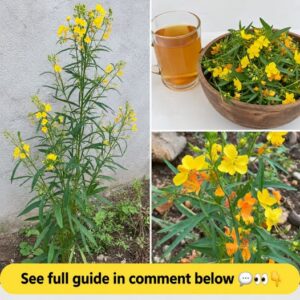
St. John’s Wort is a perennial plant known for its bright yellow, five-petaled flowers that bloom around the summer solstice. When these flowers and buds are infused into a carrier oil, they release compounds like hypericin and hyperforin, giving the oil its characteristic reddish hue and its renowned soothing properties. This infused oil is primarily used topically to calm skin, support nerve health, and ease minor aches.
Ingredients for St. John’s Wort Infused Oil
- Fresh St. John’s Wort Flowering Tops: Gather the buds and fully opened flowers. Ensure they are dry and free from dew or rain.
- Carrier Oil: A good quality, cold-pressed oil such as extra virgin olive oil, sweet almond oil, or jojoba oil. Olive oil is a traditional and stable choice.
- Clean Glass Jar: With a tight-fitting lid.
- Cheesecloth or Fine Mesh Strainer: For straining.
- Dark Glass Bottles: For storage.
Approximate Measurements
- St. John’s Wort: Enough to loosely fill your glass jar about two-thirds to three-quarters full.
- Carrier Oil: Enough to completely cover the plant material, ensuring it’s submerged by at least an inch.
Formula / Recipe: Cold Infusion Method
The cold infusion method is preferred for St. John’s Wort to preserve its delicate compounds. Heat can degrade some of the beneficial constituents.
Step-by-Step Method
- Harvest and Wilt: Harvest St. John’s Wort on a sunny day after the morning dew has evaporated. Snip the top 4-6 inches of the plant, including flowers and buds. Lay the harvested plant material on a clean cloth or screen in a warm, dry, shaded area for 24-48 hours. This wilting step helps to reduce moisture content, preventing mold in your oil.
- Chop: Roughly chop the wilted plant material to expose more surface area.
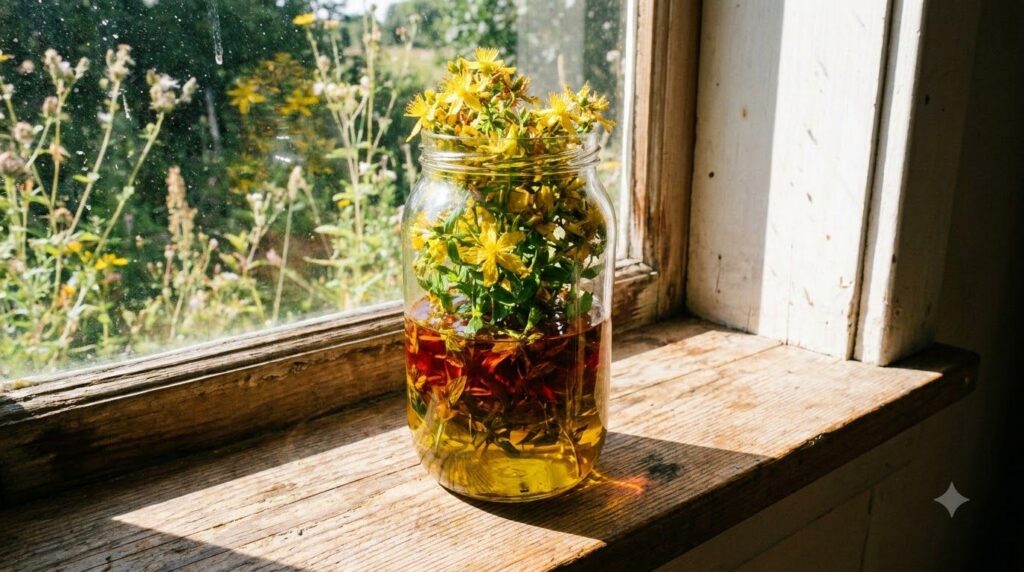
- Fill the Jar: Loosely fill your clean, dry glass jar about two-thirds to three-quarters full with the chopped St. John’s Wort. Do not pack it down tightly.
- Cover with Oil: Pour your chosen carrier oil over the plant material until it is completely submerged by at least an inch. Ensure no plant material is exposed to the air, as this can lead to mold.
- Seal and Shake: Seal the jar with its lid. Give it a gentle shake to release any air bubbles.
- Infuse: Place the jar in a warm, sunny windowsill or a consistently warm spot. The traditional method uses direct sunlight, but some prefer a warm, consistent indoor temperature. Shake the jar gently every day or two to redistribute the plant material and prevent settling.
- Strain: After 4-6 weeks, the oil should have developed a rich red color. Line a fine-mesh strainer with several layers of cheesecloth and place it over a clean bowl. Pour the oil and plant material into the strainer, allowing the oil to drain naturally.
- Press: Gather the corners of the cheesecloth and gently squeeze out any remaining oil from the plant material. Be thorough, but avoid excessive force that could push plant debris into your oil.
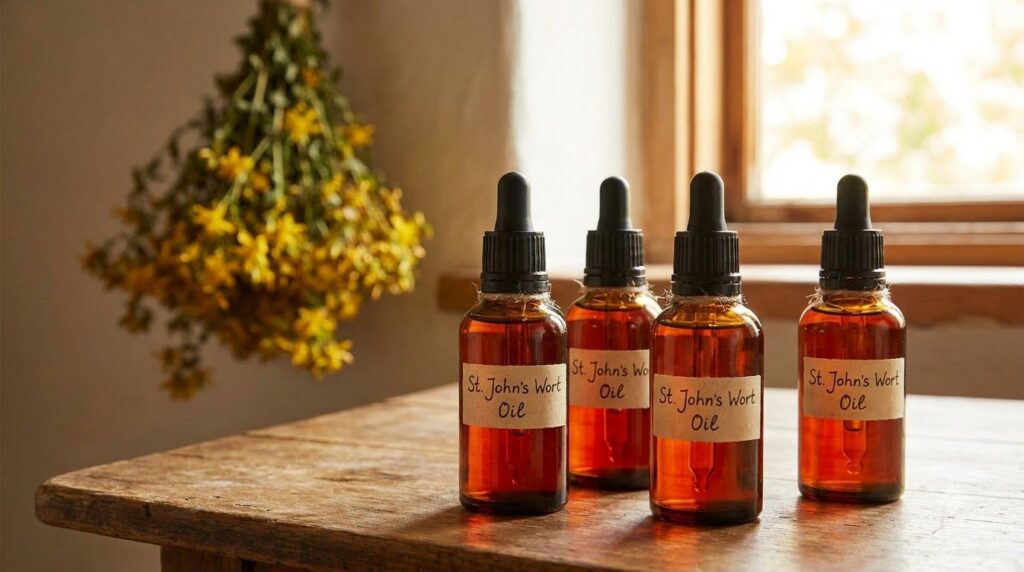
- Bottle: Pour the finished, strained St. John’s Wort oil into dark glass bottles. Label clearly with the date and ingredients.
How to Use
Apply a small amount of the infused oil directly to the skin. It can be massaged into sore muscles, used on minor burns, scrapes, or areas experiencing nerve discomfort. A few drops can be applied to insect bites or minor skin irritations.
How Often to Use
The oil can be applied 2-3 times daily, or as needed, to the affected area. Consistent application is key for best results.
Quick Tip: For enhanced soothing, gently warm a small amount of the oil before application. This can help improve absorption and provide a comforting sensation.
How to Buy / How to Choose Ingredients
When sourcing St. John’s Wort, prioritize quality and purity.
- Wildcrafting: If gathering from the wild, ensure you can accurately identify the plant and that it grows in an area free from pesticides, herbicides, and heavy traffic pollution. Always practice sustainable harvesting, taking only a small percentage of plants from any given area.
- Dried vs. Fresh: While fresh plant material is traditionally preferred for infused oils due to higher hypericin content, dried St. John’s Wort can also be used. If using dried, ensure it’s high quality and hasn’t lost its vibrant color or aroma.
- Carrier Oil: Choose organic, cold-pressed carrier oils to avoid contaminants and ensure maximum beneficial nutrients.
Read more: How to Sustainably Wildcraft Herbs for Home Remedies
Fresh vs. Dried St. John’s Wort for Oil
| Feature | Fresh St. John’s Wort | Dried St. John’s Wort |
|---|---|---|
| Potency | Generally higher in hypericin, leads to a richer red oil. | Potency can vary depending on drying and storage; may yield lighter oil. |
| Moisture Content | Requires wilting to prevent mold. | No wilting needed, but must be completely dry. |
| Availability | Seasonal (early to mid-summer). | Year-round from suppliers. |
| Oil Color | Deep ruby red. | Often a lighter red or orange. |
Storage
Store your finished St. John’s Wort infused oil in dark glass bottles, tightly sealed, in a cool, dark place away from direct sunlight and heat. Properly stored, it can last for 1-2 years, depending on the shelf life of your chosen carrier oil.
Common Mistake: Storing oil in clear bottles or direct sunlight significantly reduces its shelf life and potency. Always opt for dark glass to protect the delicate compounds from light degradation.
Practical Tips
- Patch Test: Always perform a patch test on a small area of skin before widespread use, especially if you have sensitive skin.
- Combine with other oils: For muscle rubs, consider blending with other soothing oils like arnica or ginger infused oil.
- Use in Salves: This infused oil makes an excellent base for homemade salves, especially for skin healing and nerve discomfort.
Common Mistakes
- Using Wet Plant Material: This is the number one cause of mold and spoilage. Always wilt fresh St. John’s Wort thoroughly.
- Not Submerging Plant Material: Any plant matter exposed to air above the oil will likely mold. Ensure everything is fully covered.
- Inadequate Straining: Leaving small plant particles in the oil can cause it to spoil faster. Use fine cheesecloth and strain carefully.
- Incorrect Storage: Light and heat degrade the oil. Always use dark bottles and store in a cool, dark place.
- Ignoring Photosensitivity Warnings: While generally milder with topical use, St. John’s Wort can increase photosensitivity. Avoid applying the oil just before prolonged sun exposure, especially if you have fair skin.
Cautions / Who Should Avoid It
- Photosensitivity: St. John’s Wort can increase sensitivity to sunlight, both internally and topically. If using the oil, it’s wise to avoid direct sun exposure on the applied skin area for several hours after application.
- Internal Use and Drug Interactions: This article focuses solely on topical use. For internal use, St. John’s Wort is known to interact with numerous medications, including antidepressants, birth control pills, blood thinners, and more. Always consult a healthcare professional before considering internal use, especially if you are on medication.
- Pregnancy and Nursing: Avoid internal use during pregnancy and nursing. Consult a doctor regarding topical use.
- Allergies: If you have allergies to plants in the Hypericaceae family, avoid using St. John’s Wort.
Quick Summary
St. John’s Wort infused oil is a potent, easy-to-make home remedy for topical use. Harvest fresh, wilt thoroughly, infuse in a good quality carrier oil for 4-6 weeks, then strain and store in dark bottles. Use for soothing skin, minor aches, and nerve discomfort. Be mindful of photosensitivity and avoid sun exposure on treated areas. Crucially, consult a professional for any internal use due to significant drug interactions.
FAQ
Q: Can I use dried St. John’s Wort for the oil?
A: Yes, you can, but fresh is traditionally preferred for maximum potency and the characteristic red color. If using dried, ensure it’s high quality and completely dry.
Q: How long does St. John’s Wort infused oil last?
A: When stored properly in a dark, cool place, it can last 1-2 years, depending on the shelf life of your carrier oil.
Q: Will my oil turn red?
A: Yes, if made with fresh St. John’s Wort, the oil should develop a beautiful ruby-red color as hypericin is extracted.
Q: Can I use this oil internally?
A: This guide is for topical use only. St. John’s Wort can have serious interactions with many medications if taken internally. Always consult a healthcare professional before internal use.
Q: What parts of the St. John’s Wort plant are best for oil?
A: The flowering tops, including the yellow flowers and buds, are the most potent parts for oil infusion.
Q: Do I need to wilt the fresh plant material?
A: Yes, wilting for 24-48 hours is crucial to reduce moisture and prevent mold in your oil.
Q: Can I use a slow cooker for a faster infusion?
A: While possible, the cold infusion method is generally recommended for St. John’s Wort to preserve its heat-sensitive compounds and achieve the best quality oil.
Conclusion
St. John’s Wort infused oil is more than just a nod to ancient remedies; it’s a practical, accessible solution for supporting your body’s natural healing processes. By following these clear steps, you can confidently craft your own golden-red elixir, bringing a touch of nature’s soothing power into your daily life. Embrace the tradition, but master the technique, and experience the grounded benefits of this remarkable plant.
You may also like: DIY Arnica Oil for Muscle Relief
Continue with: Making a Simple Herbal Salve