Your spice cabinet holds more than just a collection of ingredients to make your food taste better. Within each jar of whole spices lies a fascinating world of naturally occurring aromatic and plant compounds, ready to elevate your culinary creations and potentially offer a little something extra. From the warmth of cinnamon to the intriguing notes of star anise, these kitchen staples are a testament to nature’s incredible complexity.
At Glowra Health, we believe in embracing wholesome ingredients for their full potential. This guide will take you on a journey through some common whole spices, uncovering the unique compounds that give them their distinctive character. We’ll explore what makes each one special, how they enhance your meals, and — crucially — clarify what they can and cannot do for your health.
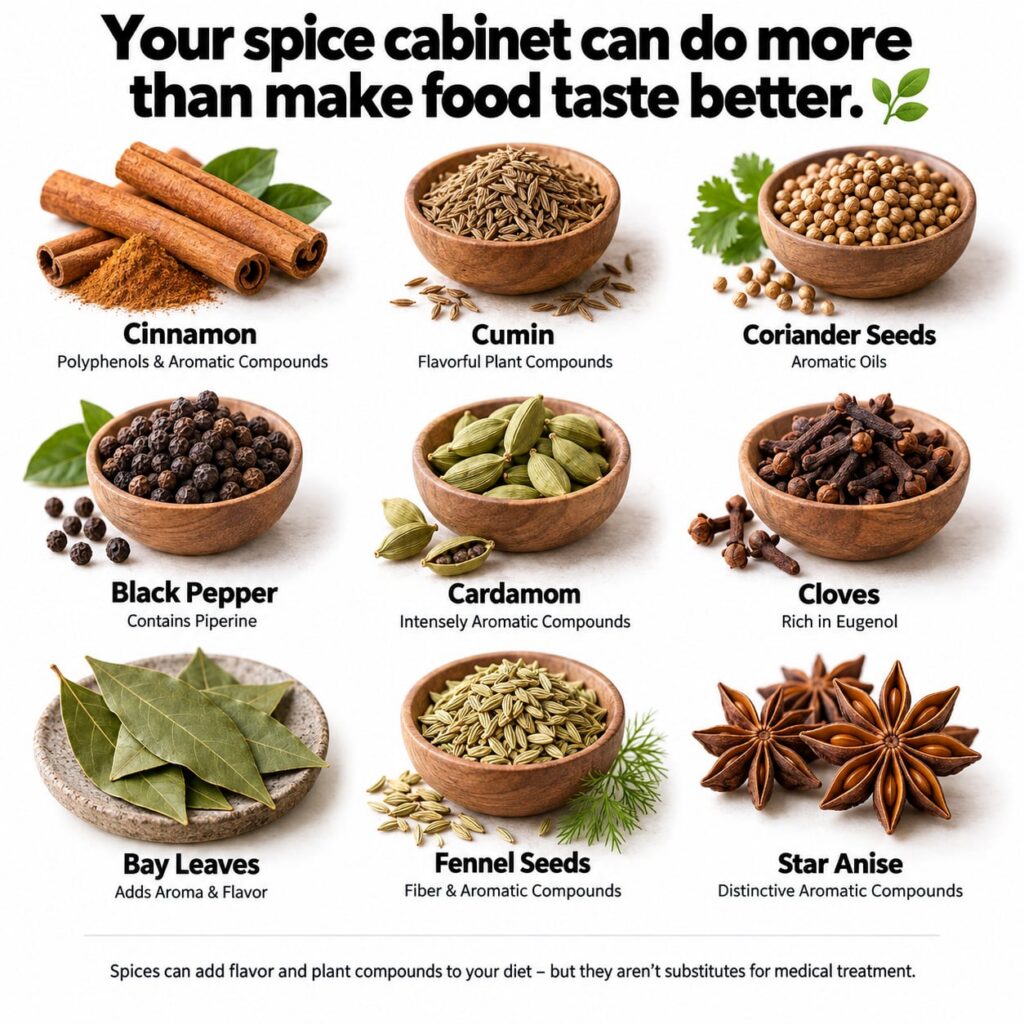
Unlocking the Natural Compounds in Your Whole Spices
Whole spices are more than just dried plant parts; they are miniature treasure troves of phytochemicals — plant compounds that contribute to their aroma, flavor, and unique properties. Here’s a closer look at what some of your favorite spices bring to the table:
Cinnamon: Rich in Polyphenols and Aromatic Compounds
Known for its sweet and warming notes, cinnamon is a beloved spice in both savory and sweet dishes. Its characteristic flavor comes from aromatic compounds, and it’s also notably rich in polyphenols. These compounds are what give cinnamon its distinctive appeal, making it a staple in everything from morning oatmeal to comforting stews. Consider adding a dash to your coffee or smoothies for an aromatic twist.
Cumin: Packed with Flavorful Plant Compounds
Cumin seeds are the heart of many global cuisines, providing an earthy, slightly bitter, and pungent flavor. Their unique taste and aroma are attributed to a variety of flavorful plant compounds. Cumin is a fantastic addition to curries, chili, and roasted vegetables, bringing depth and warmth to your culinary creations. It’s often dry-roasted before grinding to intensify its aromatic profile.
Coriander Seeds: Infused with Aromatic Oils
Often used in conjunction with cumin, coriander seeds offer a citrusy, slightly sweet, and nutty flavor. These distinctive notes come from their aromatic oils. Coriander seeds are incredibly versatile, used whole in pickles and brines, or ground into powders for marinades, spice rubs, and baked goods. They’re a cornerstone of many Indian, Middle Eastern, and Mexican dishes.
Black Pepper: The Power of Piperine
The “king of spices,” black pepper is valued globally for its pungent kick. This familiar heat and flavor are primarily due to a compound called piperine. Freshly ground black pepper adds a vibrant zest to almost any dish, enhancing other flavors and providing a subtle warmth. Always opt for whole peppercorns and grind them just before use for maximum impact.
Cardamom: Intensely Aromatic Compounds
Cardamom, often called the “queen of spices,” boasts a complex, floral, citrusy, and slightly spicy aroma. This intense fragrance and flavor come from its unique blend of aromatic compounds. Both green and black cardamom are used in various cuisines, from Scandinavian pastries to Indian curries and chai tea. Its distinctive flavor can transform a simple dish into an exotic experience.
Cloves: Rich in Eugenol
Cloves are small, nail-shaped spice buds known for their strong, sweet, and pungent flavor. A significant contributor to their distinctive taste and aroma is eugenol, an aromatic compound. Cloves are perfect for adding warmth to slow-cooked meats, mulled drinks, and baked goods. A little goes a long way, so use them sparingly to avoid overpowering other flavors.
Bay Leaves: An Easy Way to Add Aroma and Flavor
Bay leaves may seem humble, but they are a powerhouse of subtle aroma and flavor. While often removed before serving, these leaves infuse stews, soups, sauces, and braises with a complex, slightly woody, and herbal note. They contribute depth and nuance, making them an essential ingredient for many slow-cooked dishes.
Fennel Seeds: Providing Fiber and Aromatic Compounds
Fennel seeds offer a sweet, licorice-like flavor and are enjoyed worldwide, particularly as a digestive aid after meals. They contain both dietary fiber and a wealth of aromatic compounds that give them their characteristic taste. You can chew them whole, add them to breads, or use them in spice blends for fish, poultry, and vegetables.
Star Anise: Distinctive Aromatic Compounds
Visually striking with its star-like shape, star anise delivers a powerful licorice-like flavor similar to fennel but with greater intensity. Its distinctive taste comes from specific aromatic compounds, most notably anethole. Star anise is a cornerstone of Asian cooking, used in broths, stews, and braises, and it also features in some spice blends for desserts and drinks.
The Important Truth About Spice Benefits: Use for Flavor, Not a Cure
While the natural compounds in whole spices are intriguing and subject to ongoing scientific research for their potential biological effects, it’s crucial to maintain a balanced perspective. It is important to understand that individual spices cannot reliably:
- Regulate blood sugar
- Reduce inflammation
- Protect your heart
- Treat respiratory problems
These are complex health conditions that require appropriate medical care and comprehensive lifestyle approaches, not a reliance on single spices. Spices should be viewed as wonderful additions to a balanced diet, primarily for their ability to enhance flavor, add variety, and increase the enjoyment of your meals.
At Glowra Health, we emphasize that spices are for culinary delight and nutritional diversity. They are not replacements for prescribed medications, professional medical advice, or established treatments for any health condition. If you have health concerns, always consult with a qualified healthcare professional.
Elevating Your Cooking with Whole Spices
Now that you know more about the compounds behind the flavor, here are some ways to incorporate whole spices into your daily cooking for maximum enjoyment and aromatic bliss:
- Toast Them First: Lightly toasting whole spices in a dry pan before grinding them can release their aromatic oils and deepen their flavor profile.
- Freshly Ground is Best: Investing in a spice grinder (or a coffee grinder dedicated to spices) allows you to grind whole spices fresh for each use, providing superior aroma and taste compared to pre-ground versions.
- Infuse Liquids: Add whole spices like bay leaves, star anise, or cinnamon sticks directly to soups, stews, curries, and even hot beverages to infuse them with rich flavor.
- Create Custom Blends: Experiment with combining different whole spices to create your own unique rubs for meats, marinades for vegetables, or aromatic additions to grain dishes.
- Dessert & Drink Enhancers: Don’t limit spices to savory dishes. Cardamom in coffee, cinnamon in baked goods, or cloves in mulled cider can add delightful complexity.
Embrace the vibrant world of whole spices to transform your ordinary meals into extraordinary culinary experiences.