When it comes to your daily protein intake, does the source truly make a difference? You might aim for 30g of protein in a meal, but whether that comes from a convenient scoop of protein powder or a plate of whole animal foods, the impact on your body can be surprisingly different. It’s a common misconception that all grams of protein are created equal, regardless of where they come from.
This article delves into the nuances of protein sources, comparing the benefits and considerations of protein powder versus whole animal foods. We’ll explore what makes each source unique and help you understand how to choose the best options for your health and fitness goals.
30g Protein: The Same Number, Different Sources
The core question at the heart of this discussion is whether 30g of protein from a supplement provides the same benefits and nutritional value as 30g from a natural food source. While the numerical value might be identical, the broader nutritional package and how your body processes it can vary significantly.
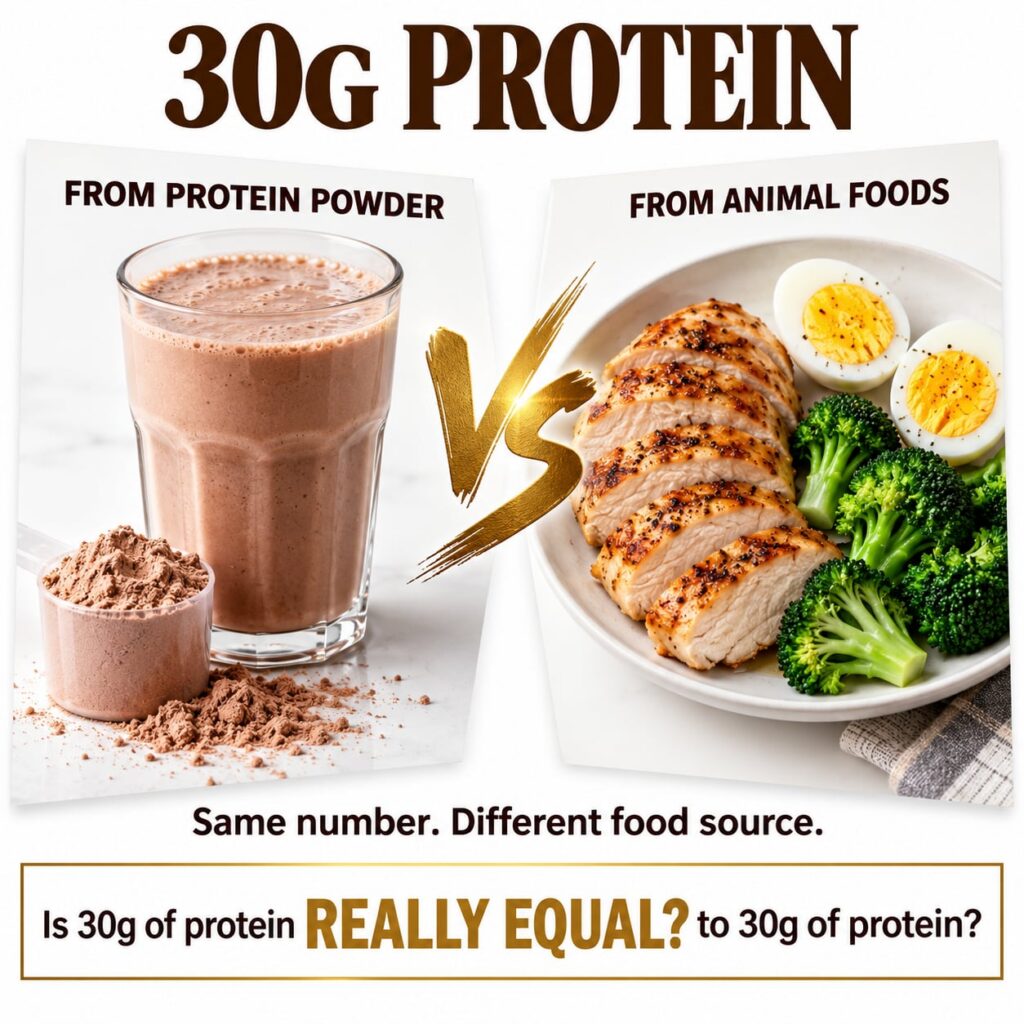 Does 30g of protein from a shake really equal 30g from whole foods?
Protein Powder: Convenience and Concentration
Protein powder has become a staple for many, offering a quick, convenient, and concentrated way to boost protein intake. A typical serving, often providing around 20-30g of protein, can be easily mixed into shakes, smoothies, or even baked goods.
- Quick Absorption: Many protein powders, especially whey, are known for their rapid digestion and absorption, making them popular for post-workout recovery.
- Convenience: Ideal for busy schedules, travel, or when whole food options are not readily available.
- Customizable: Can be easily incorporated into various recipes to enhance protein content without adding much bulk.
However, it’s worth noting that protein powders, by nature, are processed and often lack the full spectrum of nutrients found in whole foods. Some may contain artificial sweeteners, flavorings, or fillers, which might be a consideration for those prioritizing a ‘clean’ diet.
Whole Animal Foods: The Nutrient Powerhouse
On the other side of the spectrum are whole animal foods like chicken and eggs. These sources provide not just protein but a complex matrix of essential vitamins, minerals, and other bioactive compounds that work synergistically to support overall health.
- Complete Amino Acid Profile: Animal proteins are typically ‘complete proteins,’ meaning they contain all nine essential amino acids your body needs.
- Rich in Micronutrients: Beyond protein, chicken offers B vitamins, iron, and zinc, while eggs are a fantastic source of Vitamin D, B12, selenium, and choline.
- Satiety and Digestion: Whole foods often take longer to digest, contributing to greater satiety and a sustained release of energy. The fiber in accompanying vegetables, like broccoli, further aids digestion and fullness.
- Examples from the Infographic:
- Grilled Chicken Breast: A lean source of high-quality protein, perfect for muscle growth and repair.
- Hard-Boiled Eggs: Versatile and packed with protein, healthy fats, and a wide array of vitamins and minerals.
- Broccoli: While not a primary protein source, it provides essential fiber, vitamins (C, K), and antioxidants, enhancing the nutritional value of the meal.
Beyond the Grams: What Makes the Difference?
So, is 30g of protein really equal to 30g of protein? The answer is nuanced. While the absolute quantity of protein might be the same, the overall nutritional impact can differ due to several factors:
Bioavailability and Amino Acid Profile
Animal proteins generally have high bioavailability, meaning a high percentage of their amino acids are absorbed and utilized by the body. They also contain a complete profile of essential amino acids, which are the building blocks your body cannot produce on its own.
Most quality protein powders (like whey or casein) also offer a complete amino acid profile and high bioavailability. However, the exact composition can vary between brands and types (e.g., plant-based protein blends sometimes need specific combinations to be complete).
Additional Nutrients and Fiber
This is where whole foods truly shine. When you eat chicken and eggs, you’re not just getting protein; you’re also consuming vital nutrients like iron, zinc, B vitamins, and healthy fats. Foods like broccoli, pictured alongside the animal proteins, add essential fiber, which aids digestion, promotes gut health, and contributes to a feeling of fullness. Protein powders, while concentrated in protein, typically lack these naturally occurring vitamins, minerals, and fiber.
Satiety and Digestive Experience
The experience of eating a whole food meal is different from drinking a protein shake. Chewing and the presence of fiber and fat in whole foods can contribute to greater satiety, helping you feel fuller for longer. This can be particularly beneficial for weight management. Protein shakes, while filling in the short term, may not offer the same sustained satisfaction due to their liquid form and lack of fiber.
Processing and Additives
Whole foods are minimally processed. Protein powders, by definition, undergo processing. While many are made with high standards, some may contain artificial sweeteners, colors, or thickeners. For those looking to minimize their intake of processed ingredients, whole foods are often the preferred choice.
Which Protein Source is Right for You?
The choice between protein powder and whole animal foods isn’t an either/or situation; it’s about integration and balance. Both have their place in a healthy diet.
- For Convenience and Post-Workout: Protein powder can be an excellent choice for a quick protein boost, especially after a workout when rapid amino acid delivery is beneficial.
- For Overall Nutrient Density and Satiety: Prioritize whole animal foods for most of your meals to ensure you’re getting a broad spectrum of micronutrients and fiber, contributing to greater satiety and long-term health.
A balanced approach often involves using protein powder strategically to supplement your intake when whole foods are impractical, while relying on diverse whole food sources for the majority of your protein needs.