Overnight oats have become a breakfast staple for busy mornings, offering a convenient, nutritious, and delicious start to your day. But if you’ve ever found yourself staring at two different bags of oats in the grocery aisle – rolled oats versus quick oats – wondering which one is truly best for your morning meal, you’re not alone. The type of oat you choose can significantly impact not just the texture, but also the overall nutritional experience of your overnight oats.
Many people assume all oats are created equal, especially when they’re simply soaking overnight. However, the processing methods for rolled and quick oats differ, leading to distinct characteristics that come into play when preparing them without cooking. Understanding these differences is key to achieving that perfect creamy, yet satisfyingly textured, overnight oats.
Let’s dive into the surprising truth behind these popular oat types and learn how to pick the ideal one for your next batch of overnight oats, ensuring both the texture and nutrition meet your expectations.
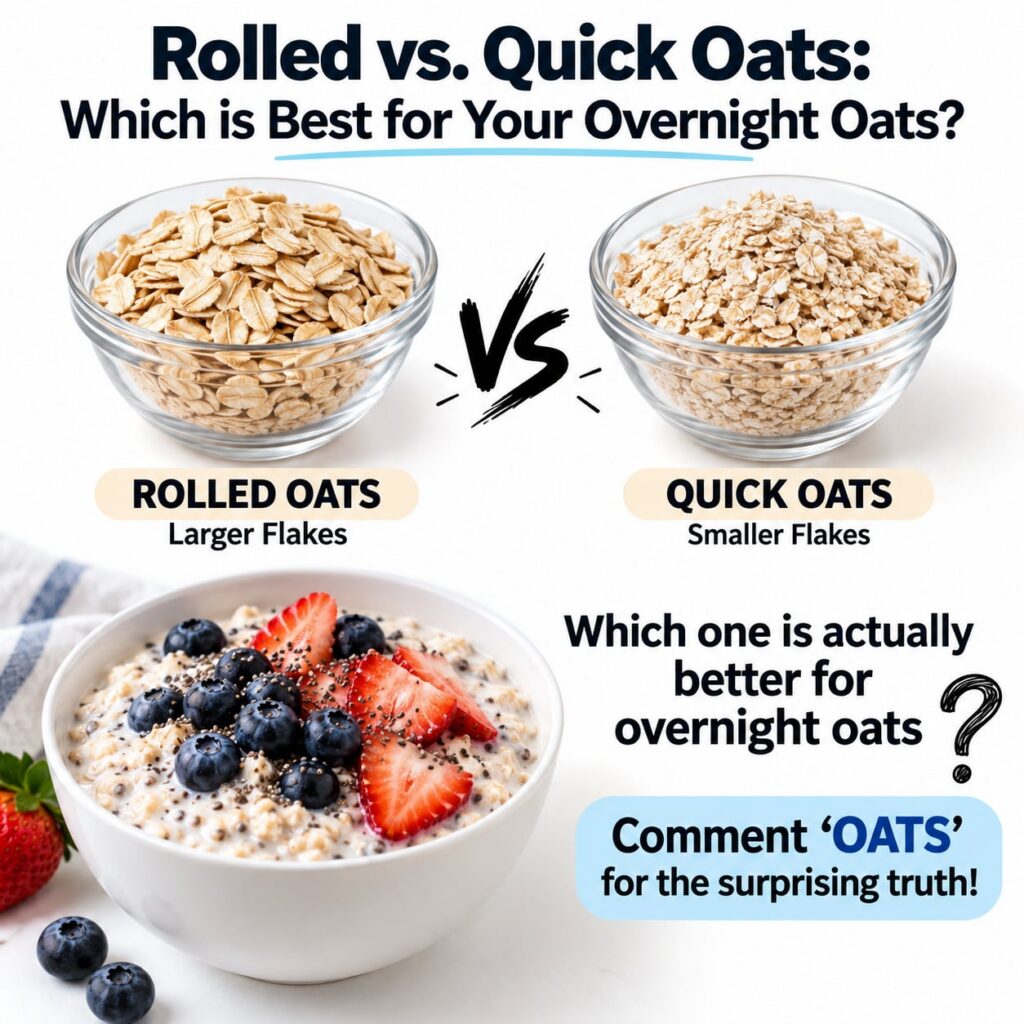
Understanding Rolled Oats: The Classic Choice
Rolled oats, also known as old-fashioned oats, are whole oat groats that have been steamed and then flattened by large rollers. This process stabilizes their healthy oils, allowing them to cook faster and absorb liquids more readily than steel-cut oats, yet they still retain much of their original shape and texture. When used for overnight oats, rolled oats offer a distinct chewiness that many enthusiasts prefer.
Texture and Mouthfeel for Overnight Oats
- Chewy and Hearty: Rolled oats maintain a pleasant, slightly chewy texture even after soaking overnight. They don’t become overly mushy, making them ideal if you enjoy a more substantial bite to your breakfast.
- Defined Structure: Each oat flake remains largely intact, contributing to a more wholesome and less uniform consistency.
Nutritional Profile
Rolled oats are a whole grain, packed with complex carbohydrates, dietary fiber (especially soluble fiber like beta-glucan), and plant-based protein. They may contribute to feelings of fullness and can help support healthy digestion. Their minimal processing means they retain more of their natural nutrients and may have a slightly lower glycemic index compared to more processed oat types.
Exploring Quick Oats: The Convenient Option
Quick oats, sometimes labeled as instant oats, are made by further processing rolled oats. They are steamed for a longer duration, then cut into smaller pieces, and rolled even thinner. This extensive processing allows them to cook or soften much faster. For traditional hot oatmeal, they are ready in minutes. For overnight oats, their fast absorption properties mean they soften considerably.
Texture and Mouthfeel for Overnight Oats
- Creamy and Smooth: Quick oats break down much more readily when soaked, resulting in a significantly creamier, softer, and almost porridge-like texture. If you prefer a very smooth consistency, or even plan to blend your overnight oats into a smoothie, quick oats are an excellent choice.
- Less Distinct Chew: They lose much of their individual flake structure, creating a more uniform, often mushier, outcome.
Nutritional Profile
Despite the additional processing, quick oats largely retain the same nutritional benefits as rolled oats. They still offer soluble fiber, protein, and complex carbohydrates. The primary difference is textural and how quickly they break down, rather than a significant loss of essential nutrients. However, it’s crucial to check labels, as some instant oat packets come with added sugars or artificial flavors, which can diminish their health benefits.
Rolled vs. Quick Oats: Which Reigns Supreme for Overnight Oats?
The

