Most people dismiss it as just another troublesome weed, those pesky plants with burrs that cling stubbornly to clothing, pet fur, and even shoelaces. But one such plant, the Rough Cocklebur (Xanthium strumarium), holds a fascinating yet cautionary tale. Often confused with its more benign cousin, Burdock, this common roadside inhabitant is far from a harmless annoyance. Understanding its characteristics is not just about avoiding itchy encounters; it’s about recognizing a plant with significant historical mentions and, more importantly, understanding its potent toxicity.
We’ll delve into what makes Rough Cocklebur stand out, why it has earned its reputation, and the crucial information you need to keep yourself and your loved ones safe from its hidden dangers. This isn’t about finding a new remedy, but about empowering you with the knowledge to navigate your natural surroundings safely.
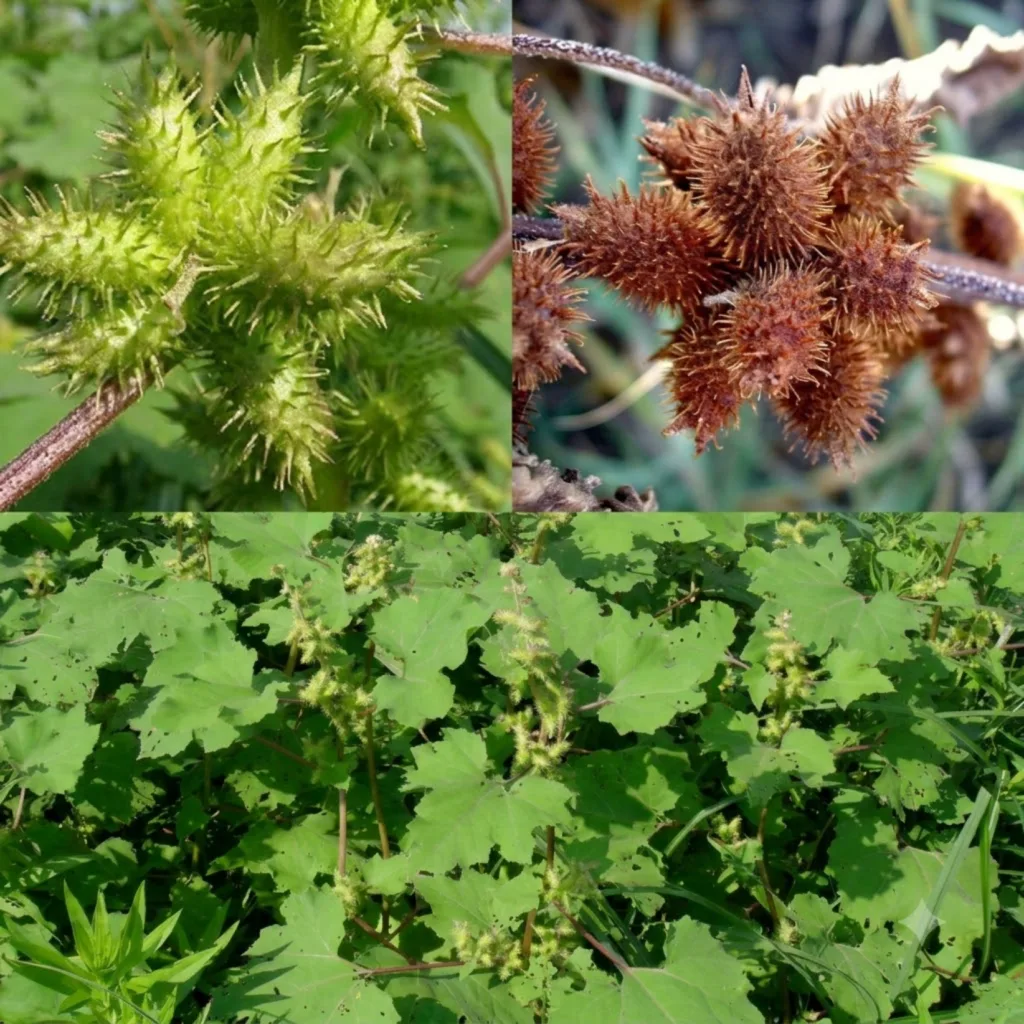 Rough Cocklebur’s distinct burrs and leaves are key to identification.
What it Is: An Overview of Rough Cocklebur
Rough Cocklebur, scientifically known as Xanthium strumarium, is an annual plant found almost worldwide, thriving in disturbed soils like agricultural fields, pastures, roadsides, and riverbanks. It’s a member of the daisy family (Asteraceae) and is characterized by its robust growth, reaching heights of up to 6 feet.
The plant’s most notable feature, and the one responsible for its common name, is its distinctive burrs. These spiky, egg-shaped fruits are covered in stiff, hooked spines that allow them to attach to passing animals and clothing, aiding in seed dispersal. The burrs start green and mature to a woody, dark brown. Beneath these prickly exteriors lie seeds containing potent toxic compounds.
Why Extreme Caution is Needed
Unlike some other plants with burrs, Rough Cocklebur is notably toxic, especially its seeds and young seedlings. The primary toxic compound is carboxyatractyloside, which can cause severe liver damage. Both humans and livestock, particularly pigs and cattle, are susceptible to its harmful effects if ingested. Symptoms can range from vomiting, weakness, and loss of appetite to staggering, convulsions, and even death in severe cases of poisoning.
Plant Parts and Historical (Cautioned) Mentions
While the entire plant contains varying levels of toxic compounds, specific parts are historically mentioned in traditional herbal systems, though always with caveats and extreme caution. It’s crucial to understand that such historical uses often come from times before detailed chemical analysis and safety protocols, and modern herbalism overwhelmingly advises against internal use due to its potent toxicity.
- Burrs (Fruits): These are the most recognizable part. Historically, the burrs (or rather, the seeds within them) were sometimes mentioned for external applications in poultices for certain skin conditions or to address localized pain, primarily in very specific traditional systems and always with a clear understanding of potential risks. However, contact with the burrs themselves can cause skin irritation.
- Leaves: The large, rough, somewhat heart-shaped or lobed leaves were occasionally mentioned for similar external applications. However, like the seeds, they contain toxic compounds, and direct application to broken skin is ill-advised.
- Young Seedlings: These are particularly dangerous because they are palatable to grazing animals and contain a high concentration of toxins.
Important: Despite historical mentions, modern scientific understanding emphasizes the high toxicity of Xanthium strumarium. Internal consumption of any part of the Rough Cocklebur plant is strongly discouraged and can be dangerous or even fatal.
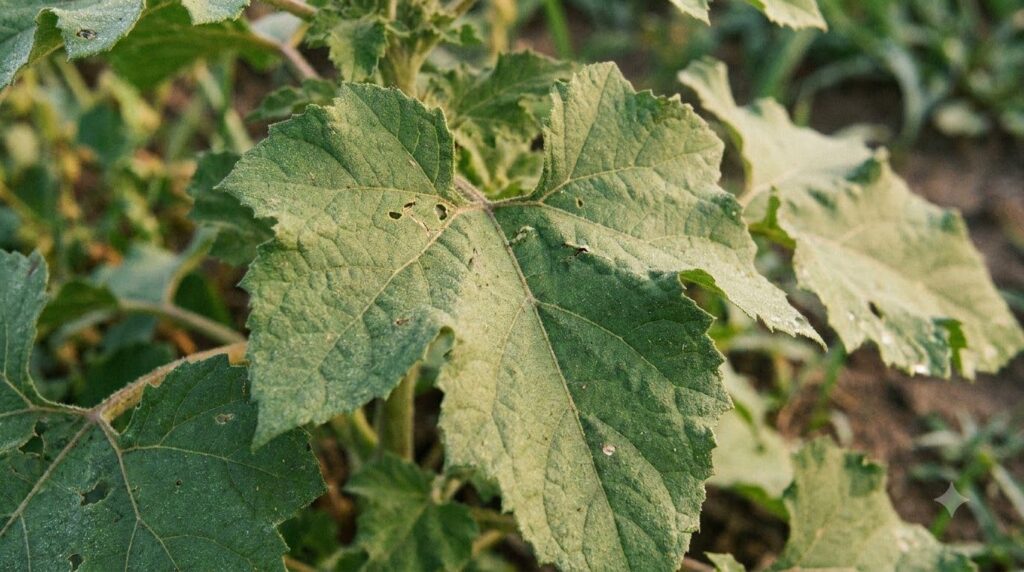 Rough Cocklebur leaves are broad and can be slightly lobed.
Quick Tip: The Danger of Misinformation
Always verify plant identification with multiple reliable sources, especially if you encounter any traditional claims. What was used historically isn’t always safe or recommended today, particularly with toxic plants like Rough Cocklebur.
Identification Guide: Distinguishing Rough Cocklebur
Accurate identification is your best defense against accidental exposure. Here’s how to recognize Rough Cocklebur:
- Leaves: Large, typically 2-6 inches long, broadly ovate to heart-shaped with irregularly toothed or lobed margins. They are rough to the touch, with visible veins, and grow alternately on the stem.
- Stems: Stout, hairy, and often mottled with reddish-purple spots. They can be branched, especially in mature plants.
- Flowers: Inconspicuous green or greenish-yellow, appearing in small clusters in the leaf axils. They are not visually striking.
- Burrs (Fruits): The most definitive feature. They are woody, egg-shaped, about 0.5-1 inch long, covered entirely with stiff, hooked spines. They contain two seeds and are initially green, turning dark brown when mature.
- Root System: A shallow taproot with many fibrous lateral roots.
Comparison: Rough Cocklebur vs. Burdock
These two plants are frequently confused due to their similar-looking burrs and large leaves. However, they are distinct:
FeatureRough Cocklebur (Xanthium strumarium)Burdock (Arctium lappa/minus)LeavesBroad, often triangular/heart-shaped, rough, irregularly lobed/toothed, green on both sides.Very large, heart-shaped, wavy margins, dark green on top, whitish-woolly underneath.StemsStout, often reddish-mottled, hairy.Stout, green, hollow, often grooved.Burrs0.5-1 inch, covered with straight, hooked spines all over. Woody.Smaller, spherical, less than 0.5 inch, spines more prominent at the top/tip, often purplish-green.FlowersInconspicuous green/yellow clusters.Purple/pink thistles (like small artichokes).ToxicityHighly toxic, especially seeds and seedlings.Edible (roots, young stalks, leaves after preparation), used in herbal medicine.
Common Mistakes to Avoid
When it comes to Rough Cocklebur, mistakes can have serious consequences. Be vigilant:
- Misidentification: The most common and dangerous mistake. Confusing it with edible burdock or other non-toxic plants can lead to accidental ingestion. Always double-check identification, especially before consuming any wild plant.
- Accidental Ingestion by Pets or Children: Young seedlings are particularly appealing to grazing animals and curious children. Keep pets away from areas with cocklebur, and educate children about not eating wild plants without adult supervision.
- Improper Handling of Burrs: While not as dangerous as ingestion, handling the spiky burrs without gloves can lead to skin irritation or the burrs embedding themselves in skin, causing discomfort.
- Allowing it to Seed: If cocklebur is growing in your garden or property, allowing it to go to seed will exacerbate the problem in subsequent years due to its highly efficient dispersal mechanism.
Practical Tips for Managing Rough Cocklebur
If you encounter Rough Cocklebur on your property, here are some practical tips:
- Wear Protective Gear: Always wear thick gloves when handling the plant, especially the mature burrs, to prevent skin irritation and embedding of spines.
- Remove Early: The best time to remove cocklebur is when the plants are young, before they produce seeds. This prevents new plants from growing.
- Dispose Safely: Do not add cocklebur plants (especially those with mature burrs) to your compost pile unless you are certain your composting system reaches high enough temperatures to kill the seeds. Bagging and disposing of them in regular trash is often safer.
- Monitor Affected Areas: Cocklebur seeds can remain viable in the soil for several years, so continue to monitor areas where it has grown and remove new seedlings promptly.
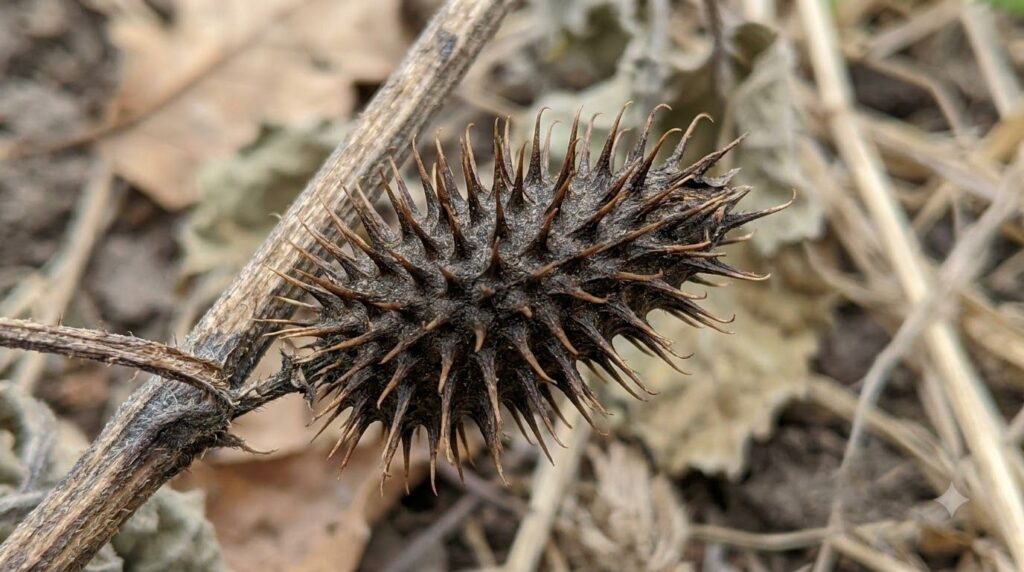 The distinctive hooked spines of the Rough Cocklebur burr.
Cautions / Who Should Avoid It
The message is unequivocal: everyone should avoid ingesting Rough Cocklebur in any form.
- Children and Pets: These groups are particularly vulnerable due to their smaller body mass and tendency to explore with their mouths. Keep them away from areas where cocklebur grows.
- Pregnant and Nursing Individuals: The toxic compounds can be harmful.
- Individuals with Liver Conditions: Given the plant’s hepatotoxic (liver-damaging) properties, those with pre-existing liver issues should be especially cautious.
- Livestock: Farmers should be aware that cocklebur can poison cattle, pigs, and other livestock, especially in early spring when young seedlings emerge and are most potent.
If you suspect ingestion, seek immediate medical or veterinary attention. Do not attempt to induce vomiting without professional advice.
Quick Summary: Rough Cocklebur Safety Essentials
- Best Preparation: None for internal consumption.
- Best Use-Case: Identification and avoidance.
- Storage: Not applicable. Dispose of safely if removed.
- When to Use: Never internally. Handle with caution externally (gloves) for removal.
- What to Avoid: Ingestion of any part, especially seeds and young plants.
FAQ
- Can I eat Rough Cocklebur?
- No. Rough Cocklebur is toxic and should not be ingested by humans or animals.
- How do I tell the difference between Rough Cocklebur and Burdock?
- Rough Cocklebur leaves are rough and green on both sides, with inconspicuous flowers. Burdock leaves are whitish-woolly underneath, and its flowers are noticeable purple thistles. The burrs also differ in size and spine distribution as detailed in the comparison table.
- Is it safe to touch Rough Cocklebur?
- Touching the plant with bare skin can cause mild irritation. The burrs can embed in skin, causing discomfort. It’s best to wear gloves when handling it.
- What part of the Rough Cocklebur plant is most toxic?
- The seeds and young seedlings are considered the most potent due to higher concentrations of the toxic compound carboxyatractyloside.
- What should I do if a pet or child eats Rough Cocklebur?
- Seek immediate medical or veterinary attention. Do not wait for symptoms to appear.
- Can I use Rough Cocklebur in a poultice?
- While some traditional texts mention external uses, due to its toxicity and potential for skin irritation, it is generally not recommended without expert herbalist guidance and careful consideration of risks. Modern practice typically advises against it.
Conclusion
The world of wild plants is full of hidden wonders, but also hidden dangers. Rough Cocklebur stands as a potent reminder that not all natural elements are benign. By understanding its key identification features, its toxic nature, and the crucial precautions necessary, you can protect yourself and your loved ones. This knowledge transforms a simple weed into a valuable lesson in responsible engagement with the natural world, emphasizing respect, caution, and informed decisions over untested remedies.