Boost Your Fiber Intake: Top 10 Seeds & Nuts
Did you know that seeds and nuts can be a fantastic source of fiber? These tiny powerhouses are packed with nutrients that support your digestive health and overall well-being! Incorporating just a handful into your daily diet can offer great benefits, from aiding digestion to supporting heart health.
Fiber is an essential part of a healthy diet, playing a crucial role in keeping your digestive system running smoothly, managing blood sugar levels, and even helping with weight management. Many people don’t get enough fiber, but thankfully, nature provides delicious and convenient ways to boost your intake.
In this guide, we’ll explore 10 fiber-rich seeds and nuts that you can easily add to your meals. We’ll break down their nutritional benefits and share practical tips on how to enjoy them.
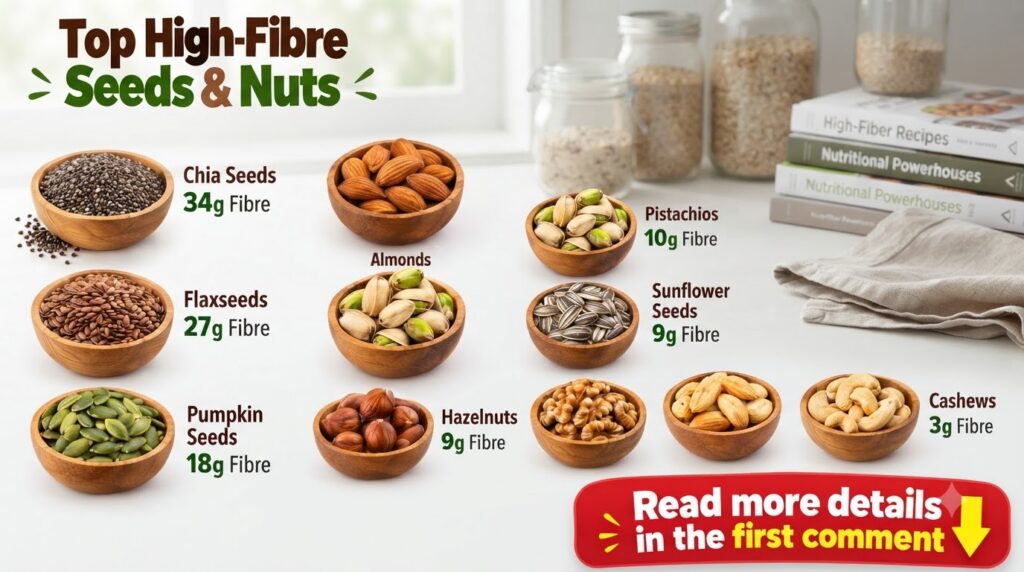
Top 10 Fiber-Rich Seeds & Nuts Chart
Here’s a quick look at some of the best seeds and nuts to help you reach your daily fiber goals, along with their key nutritional highlights per 1 ounce (approximately 28 grams).
| Food | Calories | Protein (g) | Carbs (g) | Fat (g) | Fiber (g) | Main Nutrients | Best Benefit |
|---|---|---|---|---|---|---|---|
| Chia Seeds | 138 | 5 | 12 | 9 | 10 | Omega-3s, Calcium, Magnesium | Digestive health, satiety |
| Flax Seeds | 150 | 5 | 8 | 12 | 8 | Omega-3s, Lignans, Manganese | Heart health, digestion |
| Hemp Seeds | 160 | 9 | 3 | 14 | 2 | Omega-3s & 6s, Magnesium, Iron | Plant protein, healthy fats |
| Almonds | 164 | 6 | 6 | 14 | 4 | Vitamin E, Magnesium, Calcium | Antioxidants, bone health |
| Walnuts | 185 | 4 | 4 | 18 | 2 | Omega-3s, Antioxidants, Copper | Brain health, anti-inflammatory |
| Pistachios | 159 | 6 | 8 | 13 | 3 | Vitamin B6, Potassium, Lutein | Eye health, blood sugar support |
| Pumpkin Seeds | 163 | 8 | 5 | 14 | 2 | Magnesium, Zinc, Iron | Immune support, bone health |
| Sunflower Seeds | 164 | 6 | 7 | 14 | 3 | Vitamin E, Selenium, Manganese | Skin health, antioxidant |
| Sesame Seeds | 160 | 5 | 7 | 14 | 3 | Calcium, Iron, Magnesium | Bone strength, iron source |
| Pecans | 196 | 3 | 4 | 20 | 3 | Manganese, Copper, Zinc | Antioxidant, healthy fats |
Nutrition Comparison: More Than Just Fiber
While fiber is a star component, these seeds and nuts offer a wealth of other nutrients. Many are excellent sources of healthy fats, particularly omega-3 fatty acids, which are crucial for heart and brain health. They also provide plant-based protein, making them valuable for vegetarians and vegans.
- Seeds like Chia and Flax stand out for their exceptional fiber content and omega-3s, often surpassing nuts in these specific areas.
- Nuts like Almonds and Pistachios offer a good balance of fiber, protein, and healthy fats, alongside important vitamins like Vitamin E and minerals such as potassium.
- Hemp Seeds, though lower in fiber than chia or flax, provide a complete protein profile, meaning they contain all nine essential amino acids.
- Most seeds and nuts are rich in minerals like magnesium, zinc, and iron, which support various bodily functions from energy production to immune health.
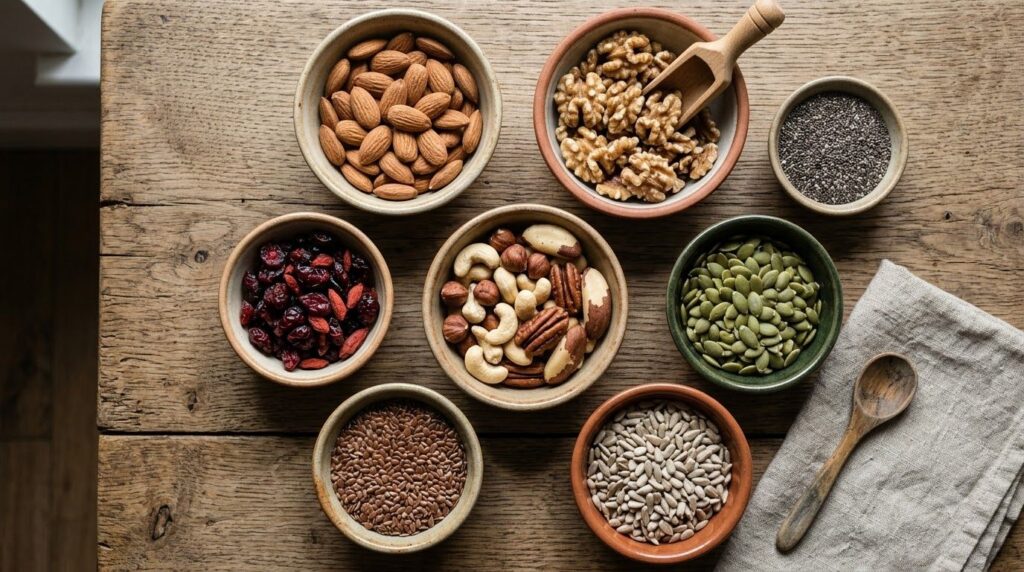
Best Ways to Eat & Serving Suggestions
Incorporating these fiber powerhouses into your diet is easier than you think!
- Smoothie Boost: Add a tablespoon of chia, flax, or hemp seeds to your morning smoothie for an instant fiber and omega-3 kick.
- Yogurt & Oatmeal Topping: Sprinkle chopped almonds, walnuts, or pumpkin seeds over your yogurt, oatmeal, or cereal.
- Salad Enhancer: Toast sunflower or sesame seeds lightly and sprinkle them over salads for extra crunch and nutrients.
- Baking: Incorporate ground flax seeds into muffins, breads, or pancakes for a hidden fiber boost.
- Snack Time: A handful of almonds, pistachios, or pecans makes for a satisfying and nutritious snack.
- Homemade Granola: Combine your favorite oats, nuts, and seeds with a touch of honey or maple syrup for a delicious and customizable granola.
- Energy Bites: Mix ground nuts, seeds, dates, and a little nut butter to create quick and easy no-bake energy bites.
Who Should Eat More Fiber-Rich Seeds & Nuts?
These foods can benefit almost everyone, but certain groups may find them particularly helpful:
- Those seeking better digestive health: The high fiber content is excellent for promoting regularity and supporting a healthy gut microbiome.
- Individuals managing weight: Fiber and protein contribute to satiety, helping you feel fuller for longer and potentially reducing overall calorie intake.
- People looking for heart-healthy options: The healthy fats and plant compounds in nuts and seeds can help support cardiovascular health.
- Vegetarians and Vegans: They offer valuable plant-based protein and essential nutrients often found in animal products.
- Anyone wanting a nutrient boost: A simple way to add vitamins, minerals, and antioxidants to your daily diet.

Practical Tips for Enjoying Seeds & Nuts
- Start Small: If you’re new to high-fiber foods, introduce seeds and nuts gradually to avoid digestive discomfort. A tablespoon or small handful is a good starting point.
- Hydrate: When increasing fiber intake, it’s important to drink plenty of water to help the fiber move through your digestive system effectively.
- Storage: Store nuts and seeds in airtight containers in a cool, dark place. For longer freshness, consider refrigerating or freezing them, especially those high in healthy fats, to prevent them from going rancid.
- Read Labels: When buying pre-packaged nuts and seeds, opt for unsalted and unroasted varieties to avoid added sodium and oils.
- Grinding Flax Seeds: For optimal absorption of omega-3s from flax seeds, it’s best to consume them ground. You can grind them at home in a coffee grinder or buy them pre-ground.
FAQs About Fiber-Rich Seeds & Nuts
How much fiber do I need daily?
The recommended daily fiber intake is typically around 25 grams for women and 38 grams for men, but individual needs can vary. Always aim for a balanced intake from various sources.
Can eating too many seeds and nuts be bad?
While highly nutritious, seeds and nuts are calorie-dense. Consuming them in moderation is key, especially if you’re managing your weight. Excessive intake can also lead to digestive issues like bloating or gas due to their high fiber content if your body isn’t used to it.
Are all seeds and nuts equally good for fiber?
No, fiber content varies significantly. As shown in our chart, chia and flax seeds tend to have the highest fiber per serving, while others like hemp seeds or walnuts offer different nutritional strengths.
How can I make seeds and nuts easier to digest?
Soaking certain nuts and seeds (like almonds or cashews) overnight can sometimes improve digestibility and nutrient absorption. Grinding flax seeds also helps with digestion.
What’s the best way to store seeds and nuts?
Store them in airtight containers in a cool, dark place. For extended freshness, especially for high-fat varieties like walnuts, pecans, and flax seeds, refrigeration or freezing is recommended.
Are seeds and nuts good for weight loss?
Yes, in moderation. Their fiber and protein content can increase satiety, helping to reduce hunger and overall calorie intake. However, their high calorie density means portion control is crucial.
Can children eat seeds and nuts?
Yes, but with caution regarding choking hazards, especially for younger children. Whole nuts and seeds should be introduced carefully, often in ground form, or as part of other foods, depending on the child’s age and chewing ability. Always consult a pediatrician.
Are there any allergies to watch out for?
Absolutely. Nut and seed allergies are common and can be severe. If you have any known allergies, avoid those specific items. If you suspect an allergy, consult a healthcare professional immediately.
Conclusion
Seeds and nuts are nutritional powerhouses, offering a convenient and delicious way to boost your fiber intake along with a host of other essential nutrients. From supporting digestive health to contributing to a healthy heart and brain, their benefits are undeniable.
By incorporating a variety of these tiny ingredients into your daily meals, you can easily enhance your diet and move closer to your wellness goals. Start experimenting with different types, find your favorites, and enjoy the incredible benefits they bring!
This content is for educational purposes only and should not be considered medical advice. Consult a qualified healthcare professional for personalized dietary recommendations.
Explore More Healthy Eating Content
- High Protein Breakfast Ideas
- Healthy Smoothie Recipes
- Best Foods for Gut Health
- Smart Grocery Shopping
- Anti-Inflammatory Foods