If you’ve ever wondered whether you should eat dry chia seeds or soaked chia seeds, you’re not alone. They may begin as the same tiny seed, but the experience of eating them can feel very different. Tiny chia seeds hold a big secret when you soak them! They swell up, get easier to digest, and are ready to power your day.
In this guide, we’ll look at the difference between dry chia and soaked chia, how each one behaves, and why many people prefer one over the other. Which way do you prefer them for your daily dose of nutrition?
What is Dry Chia?
Dry chia is simply chia seeds in their original, unadulterated form. They are tiny, compact, and incredibly versatile. Their small size and neutral flavor make them an effortless addition to many dishes without significantly altering the taste or texture – unless you’re looking for that subtle crunch!
How to Enjoy Dry Chia Seeds:
- Oatmeal: Sprinkle them on top of your morning oats for added fiber and a slight crunch.
- Smoothies: Blend them directly into your favorite smoothie for an extra nutritional boost.
- Yogurt: Stir them into yogurt bowls with fruit and granola.
- Cereal: Add a spoonful to your breakfast cereal.
- Baked Goods: Incorporate them into muffins, breads, or energy bars for texture and nutrients.
Dry chia is convenient because it is quick to use, easy to portion, and doesn’t require any pre-planning. Just grab and sprinkle!
What is Soaked Chia?
Soaked chia is chia that has been mixed with liquid (like water, milk, or juice) and allowed to sit. As these hydrophilic seeds absorb the liquid, they develop a gelatinous outer layer, forming a soft, expanded, and much larger mixture. This process can take anywhere from 15 minutes to a few hours, or even overnight.
Common Uses for Soaked Chia Seeds:
- Chia Pudding: The most popular use, creating a thick, creamy, and nutritious pudding.
- Chia Water/Lemonade: Add a spoonful to your water bottle for hydration and a dose of nutrients.
- Yogurt Bowls: Stir pre-soaked chia into yogurt for a smoother texture.
- Overnight Mixtures: Prepare them with oats or other grains for a grab-and-go breakfast.
- Breakfast Jars: Layer soaked chia with fruit and nuts in jars for easy meal prep.
Soaking chia transforms it into a versatile ingredient perfect for creating thicker textures and adding volume to meals.
Key Differences Between Dry and Soaked Chia
While both forms offer the same impressive nutritional profile, their physical characteristics and how they interact with your body differ significantly.
1. Volume
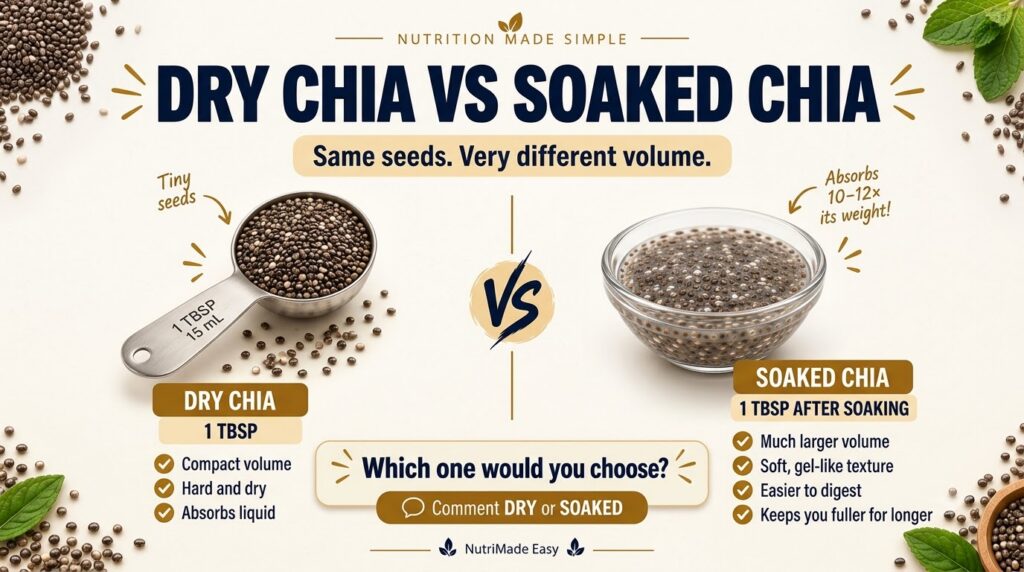
Dry chia is small and compact, taking up minimal space. However, once soaked, chia seeds expand noticeably, absorbing up to 10-12 times their weight in liquid. This means a small amount of dry chia yields a much larger, more filling portion when soaked.
2. Texture
Dry chia has a firm, slightly crunchy feel, similar to poppy seeds. When soaked, it transforms into a soft, gel-like consistency, often described as tapioca-like. This distinct texture difference heavily influences how people prefer to incorporate them into their diet.
3. Digestion
For some individuals, dry chia seeds can be a bit challenging to digest, especially if not consumed with enough liquid. Soaking chia seeds helps break down their tough outer layer, potentially making them easier on the digestive system and allowing for better nutrient absorption. The gel-like consistency can also promote smoother digestion.
4. Hydration
Because soaked chia seeds absorb a significant amount of liquid, consuming them in this form contributes to your daily hydration. The water-binding capacity of the seeds helps retain moisture, which can be beneficial, especially in warm climates or for those who struggle to drink enough water.
Which Way is Best for You?
The choice between dry and soaked chia often comes down to personal preference, convenience, and how your body reacts.
- Choose Dry Chia If: You prefer a slight crunch, you’re short on time, or you like to add them discreetly to dishes without altering the texture too much. Always ensure you drink plenty of water throughout the day when consuming dry chia to aid digestion.
- Choose Soaked Chia If: You enjoy a gel-like texture, want to boost your hydration, find them easier to digest, or are looking to create satisfying puddings and thick beverages. Soaking also helps you feel fuller due to the increased volume.
Bringing Chia into Your Daily Routine
Whether you choose them dry or soaked, chia seeds are a nutritional powerhouse, packed with fiber, omega-3 fatty acids, protein, and various micronutrients. Experiment with both methods to see which you enjoy more and how they fit best into your healthy eating plan.
Tell us: how do you enjoy your chia seeds?