Are your garden plants looking a little sad? Is your soil feeling tired and lifeless? Many gardeners face these challenges, but the good news is that the solution might be closer than you think – right in your kitchen! Harnessing the power of homemade kitchen compost is a fantastic, natural way to revitalize your garden soil, boost plant health, and embrace sustainable gardening practices.
At Garden – L. Quyên, we believe in simple, effective, and natural methods to help your garden thrive. Today, we’re diving into the wonderful world of kitchen composting, showing you how easy it is to turn everyday food scraps into a rich, nourishing treat for your plants.
Why Homemade Kitchen Compost is a Game-Changer
Composting isn’t just about reducing waste; it’s about creating a powerhouse of nutrients for your garden. When you add homemade compost to your soil, you’re not just fertilizing; you’re building a healthier ecosystem. Here’s why it’s so beneficial:
- Enriches Soil Structure: Compost improves drainage in heavy clay soils and helps sandy soils retain water and nutrients.
- Boosts Nutrient Content: It provides essential macro and micronutrients that plants need for strong growth, vibrant flowers, and bountiful harvests.
- Introduces Beneficial Microbes: A thriving microbial community in your soil helps plants absorb nutrients more efficiently and can even suppress diseases.
- Reduces Waste: Divert food scraps from landfills, reducing methane emissions and your environmental footprint.
- Saves Money: Less need for store-bought fertilizers and soil amendments.
The Simple Art of Kitchen Composting
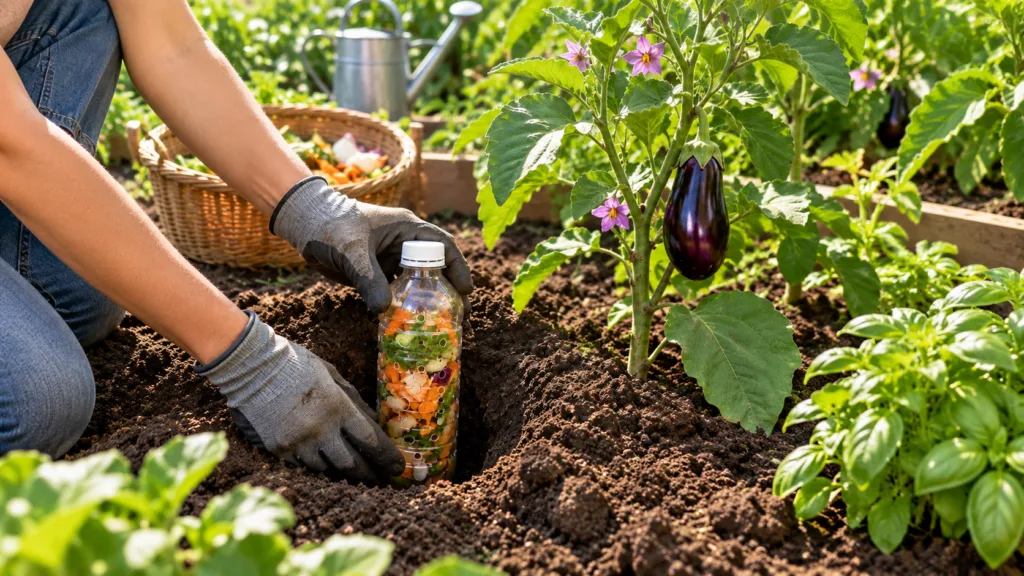
You don’t need a fancy compost bin to get started. One of the simplest and most effective methods, especially for small gardens or specific plants, is direct burial. This is precisely what we see in the image – burying kitchen scraps directly into the garden soil.
Direct Burial Composting: A Step-by-Step Guide
This method is perfect for providing a slow-release nutrient boost right where your plants are growing. It’s discreet, minimizes odors, and helps build soil health from the ground up.
- Gather Your Scraps: Collect fruit and vegetable peels, coffee grounds, tea bags, and other suitable kitchen waste. Chopping them into smaller pieces will help them break down faster.
- Choose Your Spot: Select an area in your garden near plants that could use a nutrient boost, like your eggplant, tomatoes, or other heavy feeders. Make sure it’s not directly under the plant’s main stem to avoid disturbing roots.
- Dig a Hole: Dig a hole about 6-12 inches deep, depending on the amount of scraps you have. You can use an old plastic bottle or container with the bottom cut out, as shown in the image, to create a dedicated ‘compost pocket’ that you can refill.
- Add Your Scraps: Place your chopped kitchen scraps into the hole or container.
- Cover It Up: Cover the scraps completely with soil. This prevents pests and helps maintain moisture for decomposition. If using a container, you can leave the top open slightly to allow for air, or cover it with a lid when not adding scraps.
- Let Nature Do Its Work: Over time, microorganisms in the soil will break down the organic matter, releasing nutrients directly into the root zone of your plants.
What You CAN Compost (and What to Avoid)
Knowing what to add is key to successful composting. For kitchen scraps, stick to:
- Fruit and vegetable scraps (peels, cores, wilted produce)
- Coffee grounds and filters
- Tea bags (remove staples)
- Eggshells (crushed)
- Plant trimmings from your garden
Avoid these in direct burial or small compost systems to prevent pests and odors:
- Meat, fish, and bones
- Dairy products
- Oils and greasy foods
- Diseased plants
- Pet waste
Tips for Composting Success
- Keep it Moist: Compost needs moisture to break down. If your soil is very dry, give the area a little water after burying scraps.
- Mix it Up: In a larger compost pile, a good mix of ‘greens’ (nitrogen-rich: food scraps, grass clippings) and ‘browns’ (carbon-rich: dry leaves, shredded paper) is ideal. For direct burial, the surrounding soil acts as the brown component.
- Don’t Overdo It: Bury scraps in different spots over time to distribute nutrients evenly and avoid overwhelming one area.
- Patience is Key: Decomposition takes time. While you might not see instant results, your soil will gradually improve, and your plants will thank you with sustained growth.
Cultivate a Greener Lifestyle
Embracing homemade kitchen compost is more than just a gardening tip; it’s a step towards a more sustainable and fulfilling lifestyle. You’ll not only grow healthier, happier plants but also contribute positively to the environment by reducing waste and nurturing the earth beneath your feet.
Ready to transform your garden and kitchen waste? Start small, experiment with direct burial near your favorite plants, and watch your garden come alive with new vitality. Happy composting!