Nuts are a powerhouse of nutrition, offering a satisfying crunch and a wealth of health benefits. From healthy fats to fiber, they’re a smart snack choice. But when it comes to boosting your protein intake, some nuts stand out more than others. If you’re looking to fuel your body, build muscle, or simply stay fuller for longer, knowing which nuts pack the biggest protein punch can be incredibly helpful.
In this guide, we’ll dive into the world of nuts, revealing the top contenders for protein content. You’ll learn about their unique nutritional profiles, discover delicious ways to incorporate them into your diet, and find answers to common questions about these incredible superfoods. Get ready to crunch your way to a healthier you!
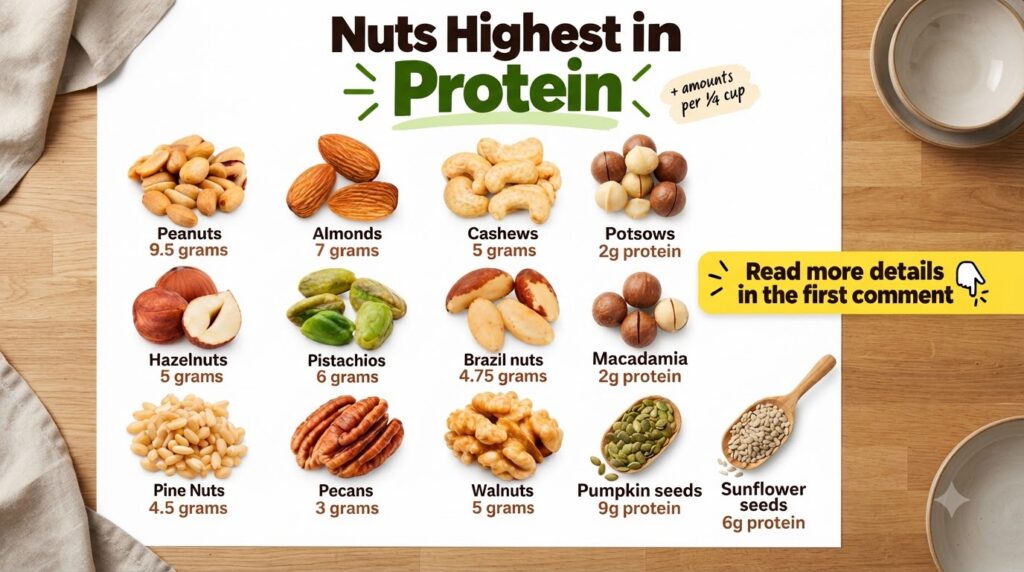
Top Protein-Packed Nuts
Here’s a breakdown of some of the most protein-rich nuts, helping you make informed choices for your healthy diet. Remember, serving sizes can vary, but these values give you a great idea of their protein power.
| Food | Calories (per 1/4 cup) | Protein (g) | Carbs (g) | Fat (g) | Fiber (g) | Main Nutrients | Best Benefit |
|---|---|---|---|---|---|---|---|
| Peanuts | 207 | 9 | 6 | 18 | 3 | B vitamins, Manganese, Magnesium | High protein, good for energy |
| Almonds | 170 | 6 | 7 | 15 | 4 | Vitamin E, Magnesium, Calcium | Antioxidant-rich, bone health |
| Pistachios | 160 | 6 | 8 | 13 | 3 | Potassium, Vitamin B6, Antioxidants | Heart health, vision support |
| Cashews | 190 | 5 | 10 | 15 | 1 | Copper, Magnesium, Zinc | Immune support, healthy bones |
| Walnuts | 190 | 5 | 4 | 19 | 2 | Omega-3 fatty acids, Antioxidants | Brain health, anti-inflammatory |
| Hazelnuts | 180 | 4 | 5 | 18 | 3 | Vitamin E, Manganese, Copper | Skin health, heart health |
| Brazil Nuts | 220 | 5 | 4 | 22 | 2 | Selenium, Magnesium, Zinc | Thyroid health, powerful antioxidant |
| Pecans | 196 | 3 | 5 | 20 | 3 | Zinc, Vitamin E, B vitamins | Heart health, anti-inflammatory |
Nutrition Comparison
As you can see from the chart, peanuts (which are technically legumes but nutritionally similar to nuts) often lead the pack in protein content per serving, closely followed by almonds and pistachios. While all nuts offer beneficial fats, fiber, and a range of vitamins and minerals, their specific profiles vary.
For example, walnuts are renowned for their high omega-3 fatty acid content, crucial for brain and heart health. Almonds are excellent sources of Vitamin E, a powerful antioxidant. Brazil nuts stand out for their exceptional selenium content, important for thyroid function and immune support.
Choosing a variety of nuts ensures you get a broad spectrum of nutrients, maximizing the health benefits.

Best Ways to Enjoy Protein-Rich Nuts
Incorporating more nuts into your diet is easy and delicious! Here are some practical ideas:
- Snack Smart: A handful of raw or lightly roasted nuts makes an excellent portable snack. Portion them out to avoid overeating.
- Breakfast Boost: Sprinkle chopped nuts over your oatmeal, yogurt, or whole-grain cereal for added crunch and protein.
- Salad Topping: Add a handful of nuts to your salads to enhance flavor, texture, and nutritional value.
- Baking & Cooking: Incorporate ground nuts into baked goods, or use them as a crust for fish or chicken. Nut butter can also be a versatile ingredient in sauces and smoothies.
- Trail Mix: Create your own healthy trail mix with your favorite nuts, seeds, and dried fruit.
- Nut Butters: Enjoy natural almond, peanut, or cashew butter on whole-wheat toast, with apple slices, or blended into smoothies.

Who Should Eat More Protein-Packed Nuts?
While most people can benefit from including nuts in their diet, certain groups may find them particularly advantageous:
- Athletes and Active Individuals: The protein supports muscle repair and growth, while healthy fats provide sustained energy.
- Vegetarians and Vegans: Nuts are an excellent plant-based source of protein, helping meet daily requirements.
- Individuals Managing Weight: The combination of protein, fiber, and healthy fats helps promote satiety, which can aid in weight management by reducing overall calorie intake.
- People Looking for Heart-Healthy Options: Many nuts are rich in monounsaturated and polyunsaturated fats, which can support cardiovascular health.
- Those with Blood Sugar Concerns: Nuts have a low glycemic index and can help stabilize blood sugar levels, making them a smart snack for managing blood sugar.
Practical Tips for Nut Consumption
- Portion Control: Nuts are calorie-dense. Stick to recommended serving sizes (typically 1/4 cup or a small handful) to avoid consuming too many calories.
- Choose Unsalted & Raw/Dry-Roasted: Opt for nuts without added salt, sugars, or excessive oils to maximize their health benefits.
- Storage Matters: Store nuts in an airtight container in a cool, dark place or even in the refrigerator or freezer to prevent them from going rancid, especially those high in healthy fats like walnuts.
- Check for Allergies: Be mindful of nut allergies, which can be severe.
- Variety is Key: Don’t stick to just one type! Enjoy a mix of different nuts to benefit from their diverse nutrient profiles.
FAQs About Protein and Nuts
Q1: Are nuts a complete protein source?
Most nuts are not complete protein sources, meaning they don’t contain all nine essential amino acids in sufficient quantities. However, when combined with other plant-based proteins throughout the day (like legumes, grains, or seeds), they contribute to a complete amino acid profile.
Q2: Can eating too many nuts be unhealthy?
While nuts are healthy, they are calorie-dense. Eating them in excessive amounts can lead to weight gain. They also contain phytic acid, which can inhibit mineral absorption, but this is usually not an issue with moderate consumption and a varied diet.
Q3: What’s the difference between raw, roasted, and salted nuts?
Raw nuts are unprocessed. Dry-roasted nuts are roasted without oil, which can enhance flavor. Oil-roasted nuts are cooked in oil, adding extra calories and fat. Salted nuts have added sodium, which can be a concern for blood pressure. Opt for raw or dry-roasted and unsalted whenever possible.
Q4: Are peanuts really nuts?
Botanically, peanuts are legumes, part of the pea family, because they grow underground. However, nutritionally and culinarily, they are often grouped with tree nuts due to their similar nutrient profile and uses.
Q5: How can I incorporate nuts into my diet if I have trouble digesting them?
Some people find soaking nuts overnight can improve digestibility by breaking down enzyme inhibitors. Starting with smaller portions and gradually increasing intake can also help your digestive system adjust.
Q6: Do nuts help with weight loss?
Nuts can support weight management due to their protein, fiber, and healthy fat content, which promotes satiety and can reduce overall calorie intake. However, portion control is essential due to their high caloric density.
Conclusion
Nuts are truly remarkable foods, offering a convenient and delicious way to boost your protein intake and provide your body with essential nutrients. From peanuts and almonds to pistachios and walnuts, each type brings its unique benefits to the table. By understanding their nutritional value and incorporating a variety into your diet, you can support muscle health, enhance satiety, and contribute to overall well-being.
So go ahead, grab a handful of your favorite protein-packed nuts, and enjoy the wholesome goodness they offer. For more healthy eating inspiration and delicious recipes, be sure to explore other content on our website!
This content is for educational purposes only and should not be considered medical advice. Consult a qualified healthcare professional for personalized dietary recommendations.
Related Healthy Eating Content:
- High Protein Breakfast Ideas
- Healthy Smoothie Recipes
- Best Foods for Gut Health
- Easy Meal Prep Ideas for Busy Weeks
- Understanding Healthy Fats: A Complete Guide