As the seasons turn and the promise of new growth fills the air, many of us are eagerly planning our next gardening adventures. Whether you’re a seasoned green thumb or just starting out, one truth remains constant: a healthy garden begins with healthy soil. This is especially true for raised garden beds, which offer excellent control over your growing environment but require thoughtful preparation.
Just like we nourish ourselves with good food, our plants thrive when their roots are supported by nutrient-rich, well-structured soil. Let’s dive into how you can enhance your garden beds with natural soil amendments, setting the stage for abundant harvests and vibrant blooms.
Why Soil Health is Your Garden’s Superpower
Think of your garden’s soil as the pantry for your plants. It provides essential nutrients, anchors roots, retains moisture, and allows for proper air circulation. Poor soil can lead to stunted growth, nutrient deficiencies, and make your plants more susceptible to pests and diseases. Conversely, rich, living soil is teeming with beneficial microorganisms that work tirelessly to break down organic matter, making nutrients available to your plants and improving overall plant vigor.
The Benefits of Naturally Amended Soil:
- Improved Structure: Better drainage in heavy soils and increased water retention in sandy soils.
- Nutrient Availability: Provides a slow-release source of essential macro and micronutrients.
- Enhanced Root Development: Looser soil allows roots to penetrate deeper and wider, accessing more resources.
- Pest and Disease Resistance: Healthy plants grown in healthy soil are naturally more resilient.
- Environmental Friendliness: Reduces the need for synthetic fertilizers and pesticides.
Top Natural Soil Amendments for Your Garden Beds
There’s a wide array of natural materials you can incorporate into your garden beds to boost soil health. Here are some of our favorites:
1. Compost: The Black Gold of Gardening
Compost is undoubtedly the king of soil amendments. Made from decomposed organic matter, it enriches soil with a vast spectrum of nutrients, improves soil structure, and introduces beneficial microbial life. You can make your own compost from kitchen scraps and garden waste, or purchase it from local nurseries.
2. Well-Rotted Manure
Manure from herbivores like cows, horses, chickens, or sheep is an excellent source of nutrients and organic matter. Always ensure it is well-rotted (aged for several months) to prevent burning your plants with excess nitrogen and to eliminate potential pathogens or weed seeds.
3. Worm Castings
These are essentially worm manure – the byproduct of worms breaking down organic matter. Worm castings are incredibly rich in nutrients, beneficial microbes, and trace minerals, acting as a gentle, potent fertilizer and soil conditioner.
4. Cover Crops (Green Manure)
If you have an empty bed for a season, planting cover crops like clover, vetch, rye, or buckwheat can dramatically improve soil health. When tilled into the soil before flowering, they add organic matter, fix nitrogen (legumes), suppress weeds, and prevent erosion.
5. Leaf Mold
Simply decomposed leaves, leaf mold is fantastic for improving soil structure, increasing water retention, and adding a slow release of nutrients. It’s easy to make by simply composting leaves in a separate pile or bin.
6. Aged Wood Chips or Bark
While fresh wood products can temporarily deplete nitrogen as they decompose, aged wood chips or bark can be excellent for long-term soil health, improving drainage and aeration when incorporated into the soil, or used as mulch on top.
How to Amend Your Raised Garden Beds
Integrating these amendments is simpler than you might think:
- Assess Your Current Soil: If you’re starting a new raised bed, you’ll likely be filling it with a mix of topsoil, compost, and other amendments. For existing beds, consider a simple soil test to understand its current nutrient levels and pH.
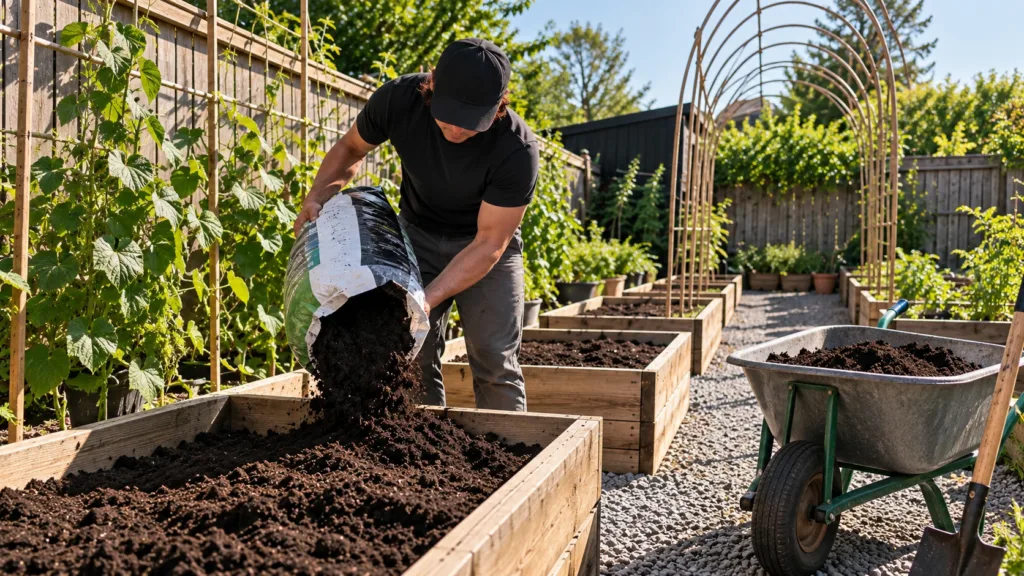
- Layering for Success: When filling a new raised bed, a common practice is to create layers. Start with coarser organic matter at the bottom (like aged logs or branches for drainage and slow decomposition), followed by a mix of good quality topsoil and compost.
- Mix it In: For existing beds, gently spread a 2-4 inch layer of compost and other desired amendments (like worm castings or aged manure) over the surface of your bed in spring or fall. Use a garden fork to lightly incorporate these into the top 6-8 inches of soil. Avoid deep tilling, which can disrupt the soil’s delicate structure and beneficial organisms.
- Top Dressing: Throughout the growing season, you can lightly sprinkle compost or worm castings around the base of your plants as a ‘top dressing’ to provide continuous nourishment.
Tips for Long-Term Soil Health
- Mulch, Mulch, Mulch: A layer of organic mulch (like straw, shredded leaves, or wood chips) on top of your soil helps retain moisture, suppress weeds, moderate soil temperature, and slowly adds organic matter as it decomposes.
- Rotate Crops: Different plants have different nutrient needs. Rotating where you plant certain crops each year helps prevent nutrient depletion and reduces pest and disease build-up.
- Minimize Soil Disturbance: Avoid excessive digging or tilling. This preserves the intricate web of life within your soil and maintains its structure.
- Feed Your Soil, Not Just Your Plants: Focus on building a healthy soil ecosystem, and your plants will naturally thrive.
Embracing natural soil amendments is a cornerstone of organic and sustainable gardening. By dedicating time and effort to nurturing your soil, you’re not just growing plants; you’re cultivating a thriving ecosystem that will reward you with beauty and bounty for seasons to come. What are your favorite natural soil amendments for your garden beds? Share your tips with our community!