Ever wonder what’s lurking beneath your beautiful bedsheets? Over time, mattresses can accumulate dust, sweat, skin cells, and even stains from spills, leading to a less-than-fresh sleeping environment. This can not only impact the hygiene of your bed but also affect the overall freshness of your bedroom. A full mattress replacement isn’t always feasible, but a good deep clean can make a significant difference.
This DIY mattress refresh method helps to tackle those hidden marks and odors, leaving your mattress cleaner and more inviting. It’s a practical way to extend the life of your mattress and ensure you’re sleeping in a truly pristine space, without the need for harsh chemicals.
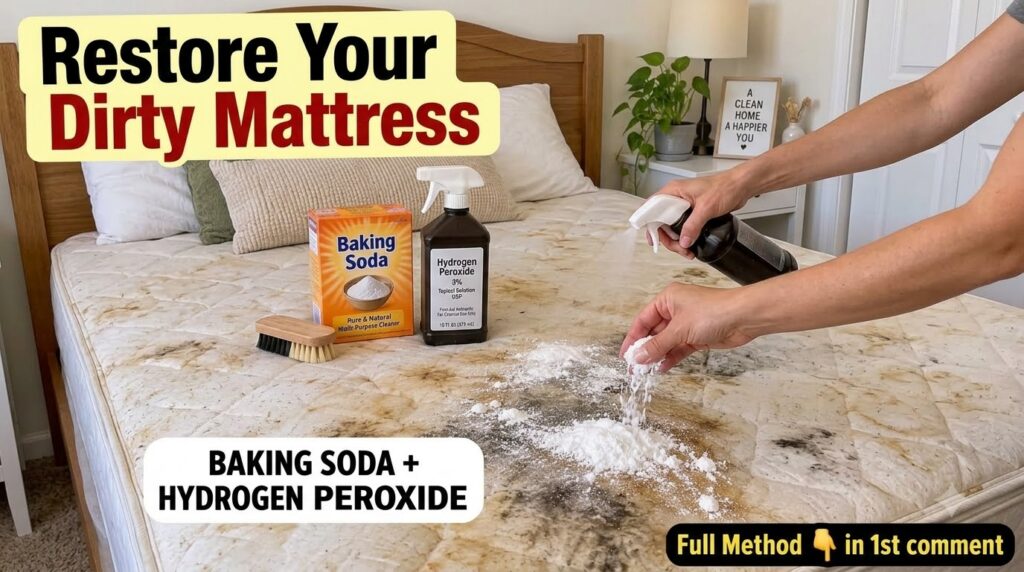
What You’ll Need
- 1 cup baking soda
- 1/2 cup white vinegar
- 1/2 cup distilled water
- 1 set of clean white bedsheets
Tools
- 1 spray bottle
- 2-3 clean cloths or sponges (microfiber works well)
- 1 vacuum cleaner with an upholstery attachment
Why This DIY Can Be Useful
This refresh method uses simple household ingredients to target common mattress issues. Baking soda is excellent for absorbing moisture, odors, and breaking down acid-based stains. It acts as a natural deodorizer, drawing out unwanted smells from the fabric. White vinegar, when diluted, works as a mild disinfectant and can help to break down many types of stains, especially organic ones. It’s also effective at neutralizing odors and can help to kill dust mites and bacteria.
How to Make It
The only preparation needed is for your cleaning solution:
- In your spray bottle, combine 1/2 cup white vinegar and 1/2 cup distilled water.
- Shake gently to mix.
How to Use It
Follow these steps to give your mattress a thorough refresh:
- Strip Your Bed: Remove all sheets, pillowcases, mattress protectors, and blankets from your bed.
- Vacuum Thoroughly: Use your vacuum cleaner’s upholstery attachment to vacuum the entire surface of the mattress. Pay extra attention to seams and crevices where dust mites and debris can accumulate.
- Spot Clean Stains: For any visible stains, lightly mist the vinegar and water solution directly onto the stain. Do not over-saturate. Immediately blot the stain with a clean, dry cloth or sponge. Work from the outside of the stain inwards to prevent spreading. Repeat as needed, using a fresh part of the cloth each time, until the stain begins to lift.
- Apply Baking Soda: Evenly sprinkle about 1 cup of baking soda over the entire surface of the mattress. For heavily soiled or odorous areas, you can use a bit more. The baking soda will absorb residual moisture and odors.
- Let It Sit: Allow the baking soda to sit on the mattress for at least 30 minutes, or even a few hours for a deeper refresh. The longer it sits, the more it can absorb. If possible, open windows to let in fresh air and sunlight.
- Vacuum Again: Once the baking soda has done its job, thoroughly vacuum it up using the upholstery attachment. Ensure all baking soda residue is removed.
- Flip and Repeat (Optional): If you have a two-sided mattress, or if you feel the other side needs attention, flip the mattress and repeat steps 2-6 on the other side.
- Dress Your Bed: Once your mattress is completely dry and clean, put on your fresh, clean set of bedsheets.
What to Expect
You can expect a noticeably fresher-smelling and cleaner-looking mattress. Stains should be significantly lighter or even fully removed, depending on their age and nature. Your entire bed will feel more inviting and hygienic, contributing to a better sleep environment. Remember that very old or deeply set stains may not disappear entirely, but this method will still improve their appearance and the overall cleanliness of your mattress.
Helpful Tips
- Ventilate Well: Always ensure the room is well-ventilated during and after the cleaning process. This helps with drying and disperses any vinegar scent.
- Sun Exposure: If possible, let your mattress air out in direct sunlight for a few hours after cleaning (before putting on sheets). Sunlight is a natural disinfectant and helps eliminate moisture.
- Regular Maintenance: Aim to refresh your mattress every few months, or more often if you have allergies or pets.
- Mattress Protector: Consider using a good quality, washable mattress protector to guard against future spills and stains.
Important Notes / Safety
- Patch Test: Before applying the vinegar solution to a large stain, always do a patch test on an inconspicuous area of your mattress to ensure it doesn’t cause discoloration.
- Avoid Over-Wetting: Never drench your mattress with liquid. Mattresses can be difficult to dry completely, and excessive moisture can lead to mold and mildew growth. Light misting and blotting are key.
- Ventilation: Always ensure proper ventilation to help your mattress dry thoroughly and to avoid inhaling any strong odors.
- Rinse Cloths: Use clean cloths and rinse them frequently when spot cleaning to avoid spreading dirt.