Imagine a warm summer evening, sitting in your garden, and watching tiny lights dance and twinkle all around you. This magical sight, created by fireflies, is a beloved memory for many and a dream for others. Unfortunately, firefly populations have been declining in many areas due to habitat loss and light pollution. But don’t worry! You can help bring these enchanting insects back to your backyard. Creating a firefly-friendly garden is easier than you might think, and it starts with choosing the right plants and nurturing the right environment.
Join us as we explore the best plants and practical tips to transform your outdoor space into a haven for fireflies, bringing that captivating glow back to your evenings.
Why Fireflies Matter
Beyond their charming glow, fireflies play an important role in our ecosystems. Most firefly species spend their larval stage as beneficial predators, feeding on snails, slugs, and other small invertebrates that can be garden pests. Adult fireflies, while often feeding on nectar or pollen, are also part of the broader ecological web. Their presence indicates a healthy, balanced environment, and observing them adds a unique sense of wonder to any garden.
Understanding Fireflies: More Than Just Plants
To truly attract fireflies, we need to understand their full lifecycle. Fireflies spend most of their lives as larvae, living in damp soil, under leaf litter, or in rotting wood. This is where they do most of their hunting! Adult fireflies emerge to mate, and it’s during this stage that we see their characteristic bioluminescent displays. They seek out mates using their light signals, often preferring areas with minimal light pollution and sufficient moisture. Therefore, creating a diverse habitat that supports both larvae and adults is key.
Top Plants to Welcome Fireflies to Your Garden
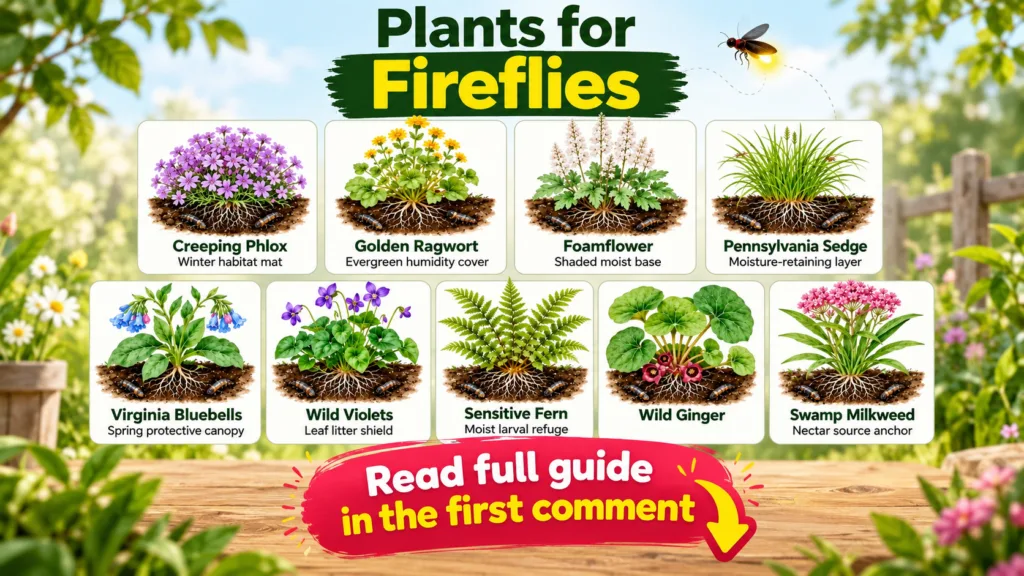
Choosing the right plants can provide both shelter for larvae and adults, as well as attract prey for the larval stage. Here are some excellent choices:
1. Tall Grasses and Native Prairies
- Why they help: Taller grasses and native perennial patches provide excellent shelter for firefly larvae, keeping the ground damp and offering hunting grounds for slugs and snails. They also give adult fireflies places to rest during the day.
- Examples: Big bluestem, switchgrass, native sedges.
2. Coneflowers (Echinacea)
- Why they help: These beautiful native flowers provide nectar for many beneficial insects, including adult fireflies who might visit for a sweet treat. Their sturdy structure also offers cover.
- Examples: Purple coneflower, pale purple coneflower.
3. Black-Eyed Susans (Rudbeckia hirta)
- Why they help: Similar to coneflowers, Black-Eyed Susans are robust, native perennials that offer nectar and shelter. Their dense growth can create humid microclimates that fireflies appreciate.
- Examples: ‘Goldsturm’ Black-Eyed Susan.
4. Hostas
- Why they help: Hostas create dense ground cover and thrive in shady, damp conditions – perfect for firefly larvae. They also attract slugs, which are a primary food source for the larvae.
- Examples: Any variety of Hosta, especially larger leaf types.
5. Clover (Trifolium spp.)
- Why they help: White clover and other low-growing clovers create a living mulch that retains moisture in the soil, providing an ideal environment for firefly larvae to develop and hunt.
- Examples: White clover, red clover.
6. Shrubs and Small Trees
- Why they help: Densely planted shrubs and the lower branches of small trees provide crucial perching spots for adult fireflies, especially during their mating season. They also contribute to overall garden humidity and shade.
- Examples: Dogwood, serviceberry, native azaleas.
Creating a Firefly-Friendly Habitat (Beyond Plants)
While plants are crucial, several other factors contribute to making your garden a true firefly haven:
1. Reduce Light Pollution
Fireflies communicate through light. Excessive artificial light from homes, streetlights, or decorative garden lights can disrupt their mating signals, making it harder for them to find partners. Turn off unnecessary outdoor lights, use motion-sensor lights, or install downward-facing, shielded lighting where absolutely necessary.
2. Avoid Pesticides
Pesticides, especially broad-spectrum insecticides, can harm firefly larvae and their food sources (snails, slugs). Embrace organic gardening practices and allow beneficial insects, like firefly larvae, to help control pests naturally.
3. Provide Damp Areas
Fireflies, particularly their larvae, thrive in moist environments. Consider creating a small bog garden, adding a water feature, or simply ensuring parts of your garden remain consistently damp, especially during dry spells.
4. Let Leaves Accumulate
Don’t be too tidy! Firefly larvae overwinter in leaf litter and decaying wood. Leaving some undisturbed areas with fallen leaves or brush piles provides essential shelter and insulation for them.
5. Create Diverse Layers
A garden with varied heights – from ground covers to shrubs to trees – offers different microclimates and shelter options for all stages of a firefly’s life cycle.
Bring the Magic Back
By thoughtfully choosing plants and adopting a few firefly-friendly gardening practices, you can invite these enchanting insects back to your backyard. Imagine those magical summer nights, filled with flickering lights and the gentle hum of nature. It’s a simple way to contribute to local biodiversity and create unforgettable memories for you and your family. Start transforming your garden today and experience the wonder of fireflies once more!