Most people walk past this ancient plant, mistaking it for mere greenery, but horsetail holds a surprising array of practical uses when prepared correctly. Its unique structure and rich mineral content have made it a quiet powerhouse in natural wellness for centuries. If you’ve ever wondered how to harness its potential, understanding the right preparation method is crucial to unlock its benefits safely and effectively.
Ignoring the simple steps can mean missing out on a truly beneficial remedy. Unlike many herbs, horsetail (specifically Equisetum arvense) requires a bit more attention during preparation to extract its key compounds, particularly silica, which is essential for its well-known supportive properties for hair, skin, and nails. This guide will walk you through everything you need to know, from identifying the plant to making your own potent infusions and rinses.
What it Is: Understanding Horsetail
Horsetail, scientifically known as Equisetum arvense, is a perennial fern-like plant that has graced our planet for millions of years. It’s easily recognizable by its distinctive, segmented, hollow stems that resemble miniature bamboo or, as its name suggests, a horse’s tail. Unlike flowering plants, horsetail reproduces by spores and typically thrives in damp, marshy areas, along riverbanks, and in open fields.
What truly sets horsetail apart in the realm of natural remedies is its remarkably high silica content. Silica is a trace mineral vital for connective tissues in the body, making horsetail a popular choice for those looking to support the strength and elasticity of skin, hair, and nails. Beyond silica, it also contains flavonoids, phenolic acids, and minerals like potassium, calcium, and magnesium, contributing to its traditional use as a diuretic and for bone health.
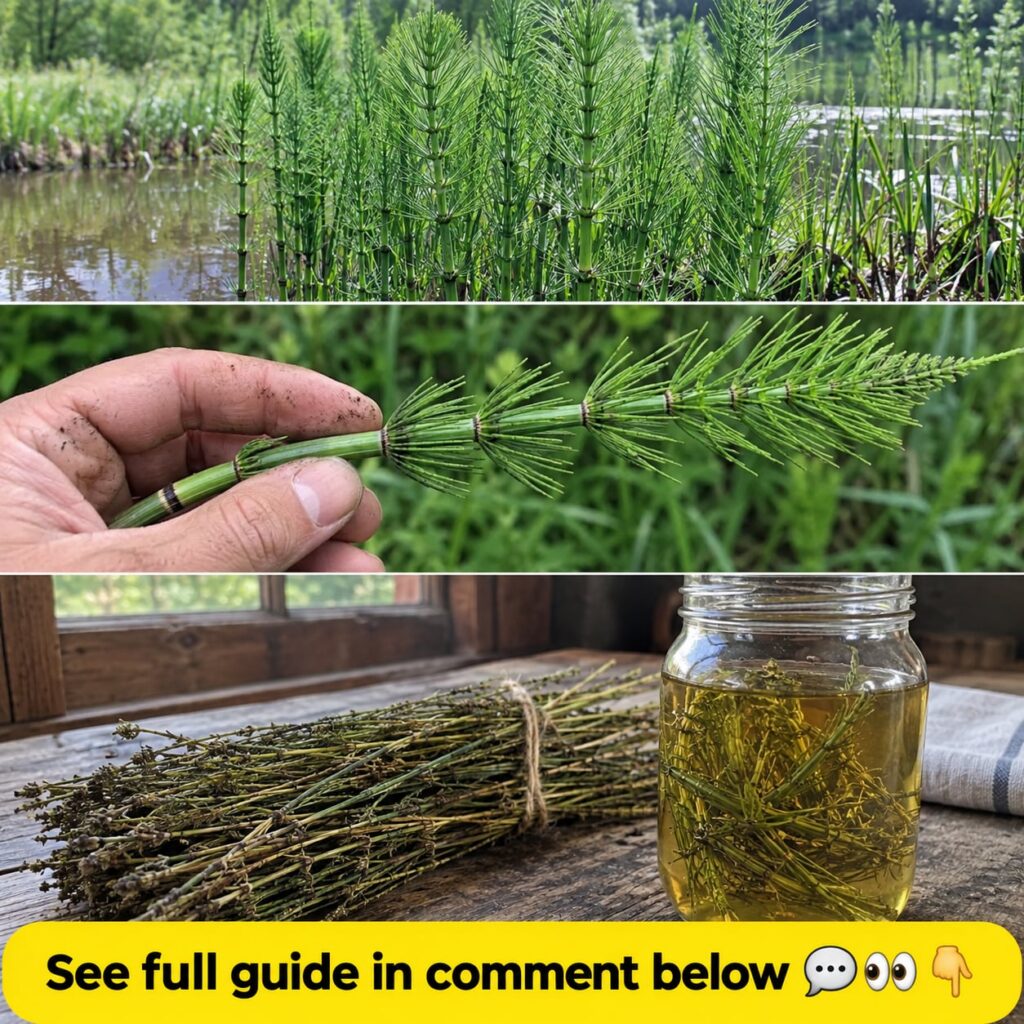 From field to dried herb, horsetail is identifiable by its distinctive segmented stalks.
Ingredients for a Potent Horsetail Infusion
For a foundational horsetail remedy, a strong infusion (often called a tea) is the most common and versatile preparation. This allows for optimal extraction of its beneficial compounds.
- Dried Horsetail: Approximately 2-4 tablespoons (about 10-20 grams) of cut and sifted dried horsetail herb.
- Filtered Water: 4 cups (about 1 liter).
Using dried horsetail is generally preferred for infusions because the drying process can break down some cell walls, making the beneficial compounds more accessible during steeping. While fresh horsetail can be used, it may require longer steeping times or a larger quantity to achieve similar potency.
Formula / Recipe: Horsetail Infusion
This formula yields a concentrated infusion suitable for both internal use (with proper dilution and caution) and external applications like hair rinses or skin tonics.
Step-by-Step Method
- Prepare Your Herb: If your dried horsetail is particularly coarse, you can gently crush it slightly to increase its surface area, but this is not strictly necessary for cut and sifted varieties.
- Heat the Water: Bring 4 cups of filtered water to a rolling boil in a non-reactive pot (stainless steel or glass).
- Add Horsetail: Once the water is boiling, remove the pot from the heat and immediately add the dried horsetail.
- Steep: Cover the pot tightly with a lid. This is crucial to prevent the escape of volatile compounds and steam. Let the horsetail steep for at least 4 hours, or ideally overnight (8-12 hours). The longer steep time, often called an infusion rather than a simple tea, is key for extracting the minerals, especially silica.
- Strain: After steeping, strain the liquid through a fine-mesh sieve or cheesecloth into a clean glass jar or bottle. Press down on the spent herb to extract as much liquid as possible.
Quick Tip: Drying Fresh Horsetail
If you’re harvesting fresh horsetail, ensure it’s from an uncontaminated area away from roadsides and industrial sites. To dry, bundle small amounts together and hang them upside down in a well-ventilated, dark, and dry area. Alternatively, spread the stalks in a single layer on screens. It can take 1-2 weeks to fully dry, depending on humidity. Ensure it is completely brittle before storing to prevent mold.
How to Use Your Horsetail Infusion
This versatile infusion can be applied in several ways:
- Hair Rinse: After shampooing and conditioning, pour the cooled infusion over your hair and scalp. Massage it in and leave it on, or rinse lightly with cool water after 5-10 minutes. This can help strengthen hair and add shine.
- Skin Tonic: Apply with a cotton pad to clean skin. It can be used as an astringent and to support skin elasticity. Always patch test first.
- Internal Tea (with caution): Dilute the concentrated infusion. Start with 1/4 cup of the infusion diluted in 3/4 cup of hot or cold water, once a day. This is generally for supporting bone health and as a diuretic. Always consult a healthcare professional before internal use, especially if you have underlying health conditions or are on medication.
How Often to Use
- Hair/Skin Rinse: 2-3 times per week for visible benefits.
- Internal Use: Daily for no more than 6-8 weeks, followed by a break. This is due to the potential for thiaminase activity (which can break down Vitamin B1, thiamine) in horsetail, though the risk is generally low with dried herb and proper preparation. Always monitor your body’s response.
How to Buy / How to Choose Ingredients
Purchasing quality horsetail is vital for safety and efficacy.
- Reputable Suppliers: Always buy dried horsetail from trusted herbal suppliers who can verify the plant’s identity and sourcing practices. Look for organic or wild-crafted options to ensure it hasn’t been exposed to pesticides.
- Appearance: Dried horsetail should have a green-to-brownish-green color and a faint, earthy aroma. Avoid anything that looks moldy, discolored, or has a strange smell.
- Fresh Harvesting: If harvesting fresh, ensure you can accurately identify Equisetum arvense and that the location is free from pollutants. Misidentification can be dangerous, as some horsetail relatives or other plants can be toxic.
FeatureFresh HorsetailDried HorsetailAvailabilitySeasonal (spring/summer)Year-roundPreparationCan be used, often requires longer steeping or larger quantityEasier extraction of minerals; standard for infusionsPotencyPotentially higher volatile compounds; minerals may be harder to extract fullyStable mineral content; good for long infusionsStorageVery short shelf life (days)Long shelf life (1-2 years)Risk of MoldHigh if not dried properlyLow if stored correctly
Storage
Proper storage ensures the longevity and potency of your horsetail preparations.
- Dried Horsetail: Store in an airtight container (glass jars are ideal) in a cool, dark, and dry place. Keep it away from direct sunlight, heat, and moisture, which can degrade its compounds and encourage mold growth. It can last for 1-2 years.
- Horsetail Infusion: The prepared infusion should be stored in a sealed glass jar or bottle in the refrigerator. It is best used within 3-5 days. Beyond this, its potency may decrease, and spoilage can occur.
Common Mistake: Storing Wet Herbs
Never store freshly harvested or partially dried horsetail in an airtight container. Any residual moisture will lead to rapid mold growth, rendering the herb unusable and potentially unsafe. Ensure horsetail is completely dry and brittle before sealing it for long-term storage.
Practical Tips for Enhanced Efficacy
- Combine with Nettle: For a synergistic hair and skin boost, consider combining horsetail with dried nettle leaf. Nettle is another excellent source of minerals and beneficial compounds for overall wellness. Use a 1:1 ratio for your infusion.
- Use Quality Water: Filtered water is always recommended to avoid introducing impurities or chemicals that might react with the herbal compounds.
- Consistency is Key: Like many natural remedies, consistent use over time is where you’ll see the most noticeable results, especially for hair and nail health.
Common Mistakes to Avoid
- Insufficient Steeping: One of the most common errors is not steeping the horsetail long enough. A 10-15 minute tea brew won’t extract enough of the beneficial minerals. Aim for at least 4 hours, or ideally overnight, for a true infusion.
- Misidentification: Confusing Equisetum arvense with other horsetail species (like Equisetum palustre, Marsh Horsetail) or other plants can be dangerous. Always be 100% certain of your identification if harvesting wild.
- Using Contaminated Plants: Horsetail is a bio-accumulator, meaning it can absorb heavy metals and pollutants from its environment. Never harvest from roadsides, industrial areas, or unknown contaminated soil.
- Overuse Internally: While generally safe in moderation, excessive or prolonged internal use without breaks can potentially deplete thiamine (Vitamin B1) levels.
- Boiling the Herb: Once water is boiling, remove from heat before adding the herb. Boiling the herb directly can destroy some delicate compounds.
Cautions / Who Should Avoid It
While generally considered safe for topical use, internal consumption of horsetail warrants specific precautions:
- Pregnancy and Breastfeeding: Avoid internal use due to insufficient research on its safety during these periods.
- Kidney Conditions: Horsetail has diuretic properties. Individuals with kidney disease or those on diuretic medications should avoid internal use unless advised by a healthcare professional.
- Thiamine Deficiency: Though rare with dried horsetail, individuals with existing thiamine (Vitamin B1) deficiency or alcoholism should avoid internal use.
- Cardiac Glycosides: Horsetail may interact with certain heart medications (cardiac glycosides) due to its diuretic effect and potassium content.
- Diabetic Medications: Horsetail might affect blood sugar levels, so caution is advised for individuals with diabetes or those on blood sugar-lowering medications.
- Consult a Professional: Always consult your doctor or a qualified herbalist before incorporating horsetail into your routine, especially for internal use or if you have any pre-existing health conditions or are taking medications.
Quick Summary: Your Horsetail Guide
For a robust horsetail remedy, a long-steeped infusion is your best bet. Use 2-4 tablespoons of dried horsetail per 4 cups of boiling water, steeping for 4-12 hours. This infusion can be used externally as a hair rinse or skin tonic, or internally (diluted and with caution) for a maximum of 6-8 weeks. Always source from reputable suppliers or identify wild plants meticulously. Store dried herbs in airtight containers in a cool, dark place, and refrigerate infusions for up to 5 days. Avoid common mistakes like short steeping times or misidentification, and consult a healthcare professional before internal use, especially if pregnant, breastfeeding, or managing health conditions.
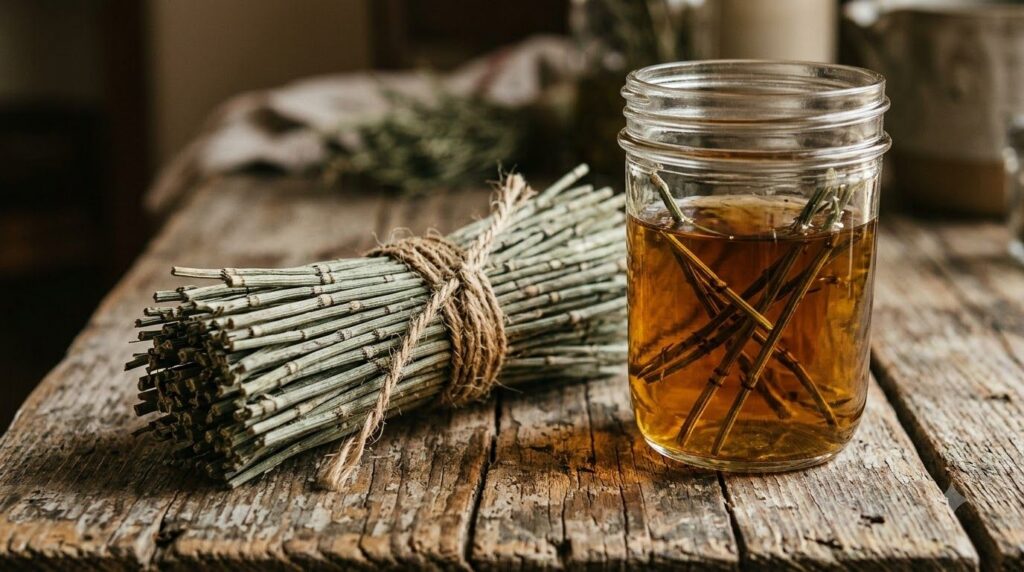 Properly dried and infused horsetail is ready for use.
Frequently Asked Questions
- Can I use fresh horsetail for an infusion? Yes, but it may require a larger quantity and potentially longer steeping to achieve the same mineral extraction as dried horsetail. Ensure it’s correctly identified and from a clean source.
- How long does horsetail infusion last? When stored in the refrigerator in a sealed container, it typically lasts for 3-5 days. Beyond that, its potency and freshness can degrade.
- Can I refrigerate dried horsetail? It’s not necessary and can introduce moisture. Dried horsetail is best stored in a cool, dark, dry place at room temperature.
- How often should I use horsetail for hair growth? For a hair rinse, using it 2-3 times a week, consistently over several weeks, is often recommended for best results.
- What part of the horsetail plant is best to use? For medicinal purposes, the sterile, green, branched stems (the ‘fertile stems’ or the ‘vegetative stems’) are typically used, harvested in late spring or early summer before they become too woody.
- Are there any noticeable side effects? Some individuals might experience mild digestive upset or increased urination due due its diuretic properties. Internal use also carries the risk of thiamine depletion if used excessively or for prolonged periods without breaks.
- Can I combine horsetail with other herbs? Yes, it pairs well with other supportive herbs like nettle, calendula, or rosemary for enhanced benefits in hair rinses or general wellness teas (with appropriate caution for internal use).
- How can I safely identify horsetail in the wild? Look for its distinctive segmented, hollow stems with whorls of tiny leaves at each joint. It lacks true leaves and flowers. The fertile stems appear in early spring and are brownish, while the sterile, green stems appear later. Always cross-reference with multiple reliable botanical guides if you’re not experienced.
Conclusion
Horsetail is far more than just a common roadside plant; it’s a valuable botanical ally when handled with knowledge and respect. By mastering the art of creating a potent horsetail infusion, you can tap into its rich mineral profile to support your hair, skin, and overall vitality. Remember the importance of correct identification, careful sourcing, and proper preparation to ensure you’re getting the most out of this ancient herb. Always prioritize safety and consult with a healthcare professional before making any significant changes to your wellness routine, especially concerning internal use. Embrace the power of nature, prepared the right way.