Most people are drawn to the exotic beauty of the passion flower, admiring its intricate petals and vibrant colors. But what if the true power of this botanical marvel lies not just in its visual appeal, but in a less celebrated part, offering a profound sense of calm that many overlook? This isn’t about admiring the blossom; it’s about harnessing its gentle strength for deep tranquility in your daily life.
You might be surprised to learn that the calming properties of passion flower, specifically Passiflora incarnata, have been recognized for centuries in traditional practices. It’s not just a pretty vine; it’s a natural ally for those seeking a peaceful mind without resorting to harsh measures.
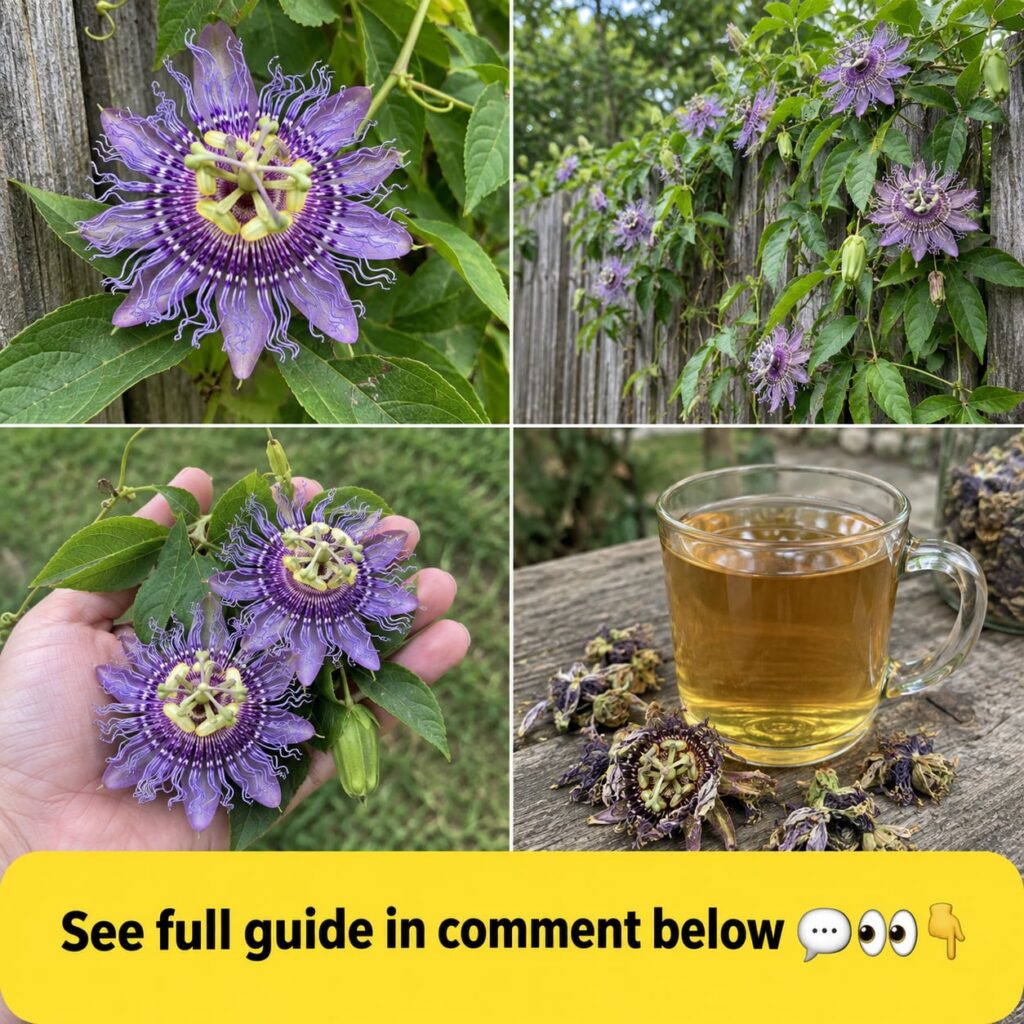 From vine to tranquil brew: understanding the many forms of passion flower.
What it is
Passion flower, primarily Passiflora incarnata (also known as Maypop, Purple Passionflower, or Wild Apricot), is a perennial vine native to the southeastern United States. While there are hundreds of species of passion flower, it is Passiflora incarnata that is most commonly used in herbal traditions for its calming effects. The parts traditionally utilized are the aerial parts of the plant, including the flowers, leaves, and stems, often dried and prepared as a tea or tincture.
Ingredients for a Calming Passion Flower Tea
To prepare a simple, effective passion flower tea, you’ll need just one key ingredient:
- Dried passion flower (Passiflora incarnata)
Ensure you source high-quality, organic dried passion flower from a reputable herbal supplier. The quality of your herb directly impacts the potency and safety of your remedy.
Approximate Measurements
- 1 teaspoon to 1 tablespoon of dried passion flower
- 8-10 ounces (about 1 cup) of hot water
Start with 1 teaspoon and adjust up to 1 tablespoon based on personal preference and desired strength. More isn’t always better, especially when you’re first introducing a new herb.
Formula / Recipe: Simple Passion Flower Infusion
This recipe focuses on creating a soothing herbal infusion that extracts the beneficial compounds from the dried passion flower without damaging them with excessive heat.
Step-by-Step Method
- Gather Your Supplies: Have your dried passion flower, a mug, a tea infuser or a fine-mesh strainer, and a kettle ready.
- Heat the Water: Bring fresh, filtered water to a near boil. Aim for about 200°F (93°C), just shy of a rolling boil.
- Measure the Herb: Place 1 teaspoon to 1 tablespoon of dried passion flower into your tea infuser or directly into your mug if you plan to strain it later.
- Pour the Water: Pour the hot water over the dried passion flower.
- Steep: Cover your mug to trap the volatile oils and beneficial compounds. Let it steep for 10-15 minutes. Steeping for too short a time won’t extract enough properties, while too long might make it overly bitter for some.
- Strain (if necessary): Remove the infuser or strain the tea through a fine-mesh sieve into another mug.
- Enjoy: Allow the tea to cool slightly before drinking. You can add a touch of honey or lemon if desired, though many prefer it plain to appreciate its subtle earthy flavor.
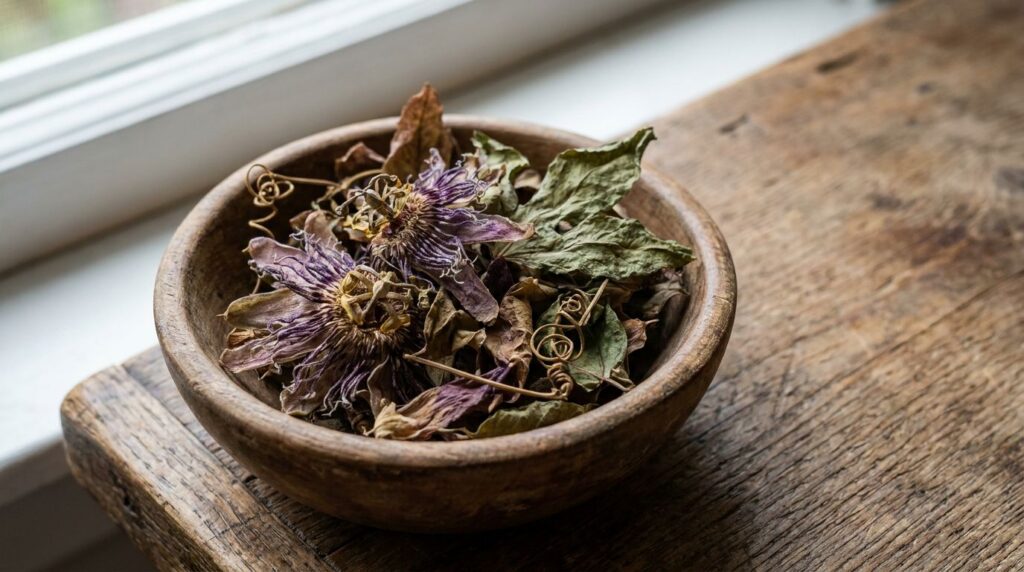 High-quality dried passion flower is essential for an effective brew.
Quick Tip: Best Time to Brew
For maximum calming effect, consider drinking passion flower tea about 30-60 minutes before bedtime or during moments of acute stress throughout the day. Its gentle nature makes it suitable for evening use without typically causing drowsiness that interferes with daily tasks.
How to Use
The primary way to use passion flower for its calming benefits is by drinking it as a warm herbal tea. This allows the compounds to be absorbed into your system, promoting relaxation. Some people also use passion flower in tinctures or capsules, but for a gentle, immediate sense of calm, the tea is often preferred.
How Often to Use
You can drink passion flower tea once or twice a day. For general relaxation or mild anxiety, one cup in the evening may suffice. If you’re experiencing heightened stress, a cup in the afternoon and another before bed can be beneficial. Always listen to your body and adjust as needed.
How to Buy / How to Choose Ingredients
When purchasing dried passion flower, vigilance is key:
- Species Specificity: Always look for Passiflora incarnata. Other species may not have the same therapeutic properties, or worse, could be ineffective or have different effects.
- Reputable Suppliers: Buy from trusted herbal suppliers who can verify the botanical identity and purity of their products.
- Organic Certification: Opt for organic dried passion flower to avoid pesticides and herbicides.
- Visual Inspection: The dried herb should look vibrant, not dull or dusty. It should have a mild, pleasant, grassy aroma. Avoid anything that smells moldy or off.
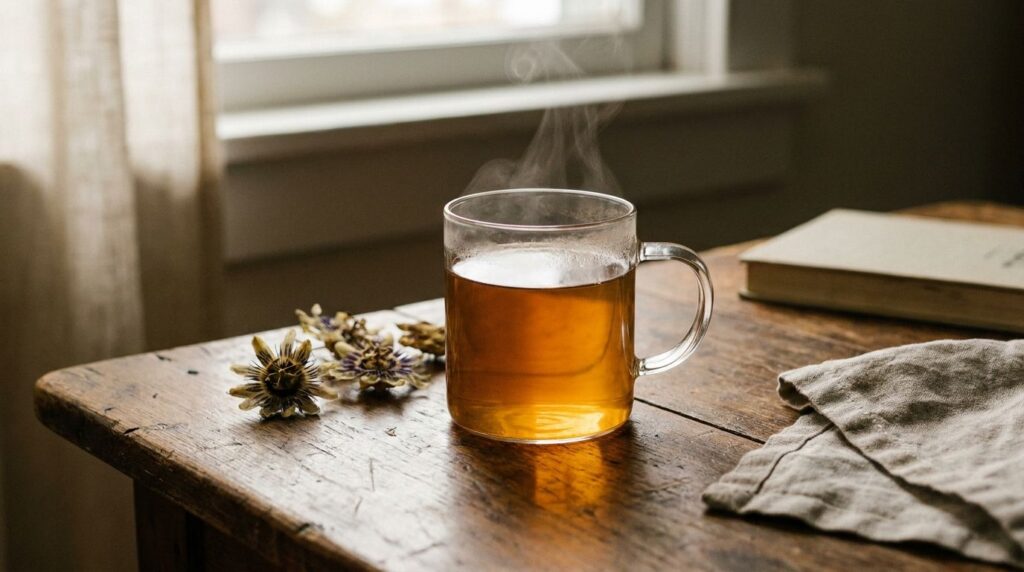 The soothing ritual of preparing and enjoying passion flower tea.
Storage
Proper storage ensures the longevity and potency of your dried passion flower:
- Dried Herb: Store in an airtight container (like a glass jar) in a cool, dark, and dry place. Keep it away from direct sunlight, heat, and moisture, which can degrade its compounds and encourage mold growth. Properly stored, dried passion flower can last up to a year.
- Prepared Tea: Ideally, consume passion flower tea fresh. If you have leftovers, you can store it in a sealed container in the refrigerator for up to 24 hours. Reheating can diminish some of its subtle qualities, so fresh is always best.
Practical Tips
- Combine with Other Calming Herbs: Passion flower pairs well with chamomile, lemon balm, or valerian root for enhanced calming effects. Always research potential interactions when combining herbs.
- Mindful Brewing Ritual: Turn tea preparation into a calming ritual. The act of brewing, steeping, and waiting can itself be a meditative practice.
- Avoid Sweeteners (Initially): Try your tea plain first to get a true sense of its flavor and effects. If needed, add a small amount of natural sweetener like raw honey.
Common Mistakes
Even with a simple tea, a few common errors can reduce its effectiveness:
- Using Boiling Water: Pouring vigorously boiling water directly onto delicate herbs like passion flower can damage some of its beneficial compounds. Always let the water cool for a minute or two after boiling.
- Boiling the Herb: Do not boil the passion flower directly in water. This is an infusion, not a decoction, and boiling can extract too many bitter compounds while destroying delicate ones.
- Not Covering While Steeping: Skipping the cover during steeping allows volatile essential oils, which contribute to the herb’s effects, to escape with the steam.
- Using the Wrong Species: Many ornamental passion flowers are not Passiflora incarnata. Relying on visual identification without knowing the specific species can lead to ineffective or even undesirable results.
- Improper Storage: Storing dried passion flower in a humid or brightly lit environment can quickly degrade its active compounds, making your tea less potent.
Did You Know?
The name ‘passion flower’ was given by missionaries who saw the plant’s intricate parts as symbolic of the Passion of Christ, with the corona resembling the crown of thorns and the stamens representing the wounds.
Cautions / Who Should Avoid It
While generally considered safe for most adults, passion flower isn’t for everyone:
- Pregnancy and Breastfeeding: Due to a lack of sufficient research, passion flower is generally advised against during pregnancy and breastfeeding.
- Sedative Medications: Passion flower can have a sedative effect and may enhance the effects of other sedatives, anti-anxiety medications, and antidepressants. Consult your doctor if you are on any such medications.
- Surgery: Discontinue use at least two weeks before any scheduled surgery due to potential interactions with anesthesia.
- Driving and Operating Machinery: Because of its potential to cause drowsiness, exercise caution when driving or operating heavy machinery after consuming passion flower tea, especially until you know how it affects you.
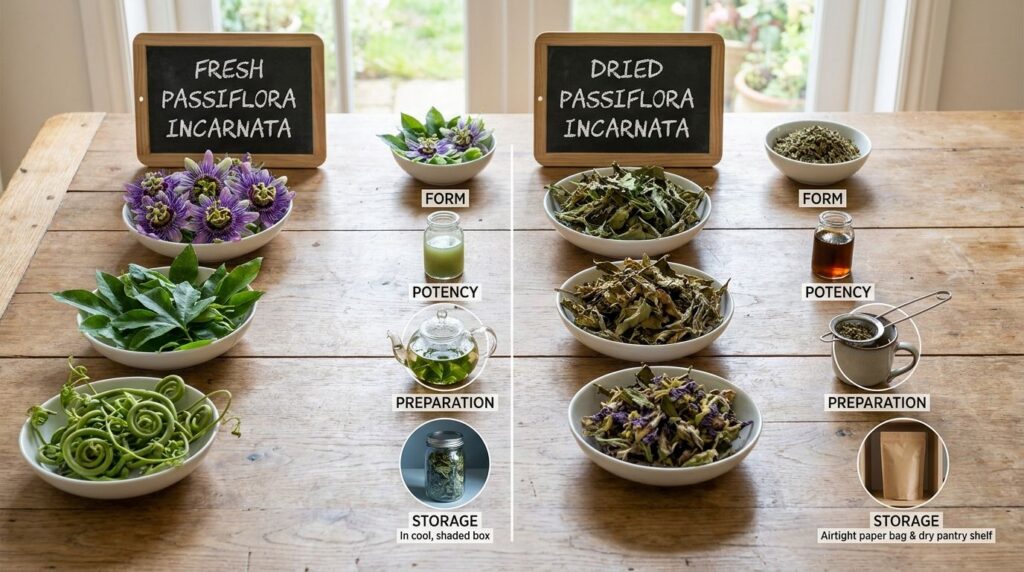 Choose the right form of passion flower for your specific needs.
Quick Summary
For a natural approach to calm, Passiflora incarnata tea is a simple and effective remedy. Steep 1 teaspoon to 1 tablespoon of dried herb in hot (not boiling) water for 10-15 minutes, covered. Enjoy 1-2 times daily, especially before bed or during stress. Store dried herb in an airtight, dark, cool place. Avoid if pregnant/breastfeeding or taking sedatives. Always verify the species and buy from reputable suppliers to ensure you get the true calming benefits.
FAQ
- Can I use fresh passion flower?
- While fresh flowers can be used, dried passion flower is more concentrated and consistently available, making it easier to measure and prepare for therapeutic use.
- How long does passion flower tea take to work?
- Effects can vary, but many people report feeling a gentle calming effect within 30-60 minutes after drinking the tea.
- Can I refrigerate leftover tea?
- Yes, you can refrigerate it in a sealed container for up to 24 hours, but fresh is always recommended for optimal taste and potency.
- Is it safe to drink passion flower tea daily?
- For most healthy adults, consuming passion flower tea daily in moderate amounts is generally considered safe. However, it’s always wise to consult with a healthcare professional, especially if you have underlying health conditions or are taking other medications.
- What part of the passion flower is used for tea?
- The aerial parts, including the dried leaves, flowers, and stems of Passiflora incarnata, are typically used for making tea.
- Can passion flower tea help with sleep?
- Many find passion flower tea helpful for promoting relaxation and improving sleep quality due to its calming properties, making it a good choice before bedtime.
- Does passion flower interact with other herbs?
- Yes, it can. Be cautious when combining passion flower with other sedative herbs like valerian, kava, or skullcap, as their effects may be additive.
Conclusion
Embracing the calming potential of passion flower doesn’t require a complex regimen. With the simple act of brewing a cup of tea, you can tap into a time-honored tradition for fostering a greater sense of peace and tranquility. By following these practical steps and understanding its uses and cautions, you can integrate this beautiful botanical into your wellness routine and discover the profound calm many people have overlooked for too long. Prioritize quality, respect the plant’s gentle power, and let it guide you to a more serene state of being.