Hello, fellow garden lovers! Have you ever dreamt of multiplying your favorite rose bushes, but felt intimidated by the process? Or perhaps you’ve struggled with traditional rooting methods? Today, we’re unveiling a wonderful, natural secret that many experienced gardeners swear by: using the amazing power of aloe vera to root your rose cuttings!
This method isn’t just effective; it’s also incredibly rewarding, allowing you to create new life from your existing plants using a natural, readily available resource. Say goodbye to expensive rooting hormones and hello to the magic of nature!
Why Choose Aloe Vera for Rooting Rose Cuttings?
Aloe vera is more than just a soothing remedy for sunburns; it’s a powerhouse for plant propagation! Here’s why it’s so effective:
- Natural Rooting Hormones: Aloe vera contains natural auxins, which are plant hormones that stimulate root growth.
- Anti-fungal and Anti-bacterial Properties: The gel helps protect your cuttings from common fungal diseases and bacteria that can cause rot, especially during the vulnerable rooting stage.
- Moisture Retention: The thick gel provides a moist environment around the cutting, preventing dehydration while roots develop.
- Cost-Effective and Natural: If you already have an aloe vera plant, this method is virtually free and completely organic, aligning perfectly with sustainable gardening practices.
Getting Started: Your Step-by-Step Guide
Ready to propagate some beautiful roses? Here’s everything you need to know to get started!
1. Choosing and Preparing Your Rose Cuttings
- Timing is Key: The best time to take rose cuttings is in late spring or early summer, after the first flush of blooms, or in early fall.
- Select Healthy Stems: Look for stems that have recently flowered and are about the thickness of a pencil. Avoid very old, woody stems or new, soft growth.
- Cut & Prepare: Use sharp, clean pruning shears to take cuttings about 6-8 inches long. Make the bottom cut just below a leaf node (where a leaf grows from the stem) at a 45-degree angle. Remove all leaves except for the top one or two sets. If there are any thorns on the lower part of the stem, carefully remove them.
2. Preparing Your Aloe Vera
- Harvest an Aloe Leaf: Choose a mature, plump leaf from your aloe vera plant.
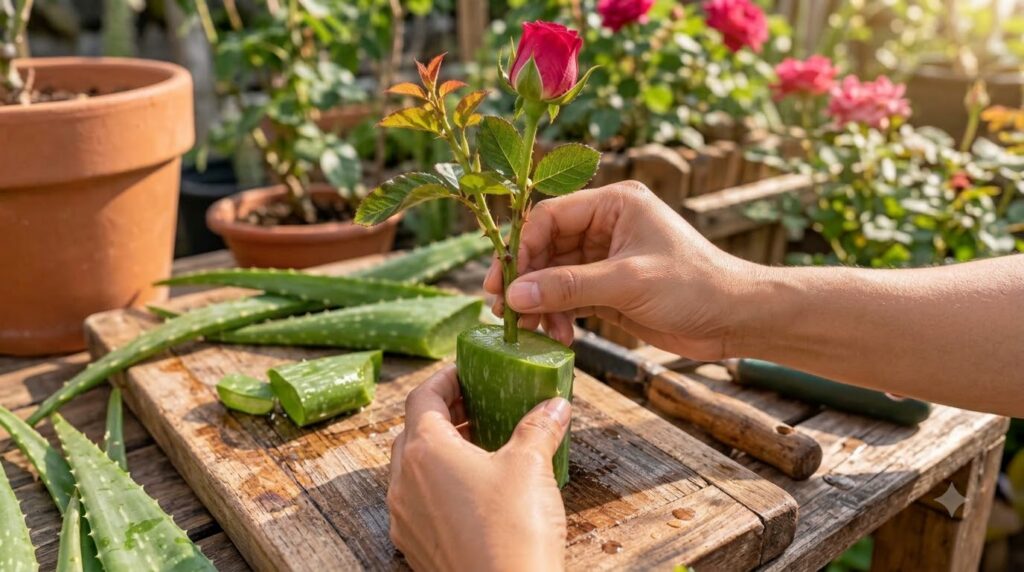
- Extract the Gel: Cut a 2-3 inch segment from the aloe leaf. You can either slice the leaf open lengthwise and scoop out the gel, or simply insert the cutting directly into the fleshy part of the leaf. Many gardeners prefer to just cut a piece of the leaf and insert the stem into it, creating a natural sleeve of gel around the cutting.
3. The Rooting Process
- Insert the Cutting: Dip the bottom 1-2 inches of your rose cutting into the aloe vera gel, ensuring it’s well coated. If you’re using a segment of the aloe leaf, gently push the bottom of the rose cutting into the center of the aloe segment.
- Planting Medium: Prepare a well-draining potting mix. A good option is a mix of equal parts peat moss, perlite, and coarse sand. Fill a small pot or seed tray with this mix.
- Planting the Cutting: Make a small hole in the potting mix using a pencil or your finger. Carefully insert the rose cutting (with the aloe gel/segment attached) into the hole, ensuring the bottom node is buried. Gently firm the soil around the cutting to provide support.
4. Creating the Right Environment
- Humidity is Crucial: Roses love humidity for rooting. You can create a mini-greenhouse effect by covering the pot with a clear plastic bag, a plastic dome, or even a cut-off plastic bottle. Make sure the plastic doesn’t touch the leaves directly.
- Location: Place your potted cutting in a warm spot with bright, indirect light. Avoid direct sunlight, which can scorch the tender cutting.
- Watering: Keep the soil consistently moist but not waterlogged. Mist the leaves occasionally to maintain humidity, especially if you’re not using a cover.
5. Patience and Aftercare
Rooting roses can take anywhere from 4 to 8 weeks, so patience is key! You’ll know your cutting has rooted when you see new leaf growth. Once you notice significant new growth, gradually acclimate your young rose plant to its new environment by removing the plastic cover for longer periods each day over a week or two. Once it’s hardened off, you can transplant it to a larger pot or its permanent spot in the garden.
Embrace the Natural Way!
Using aloe vera for rooting rose cuttings is a fantastic, organic, and effective method for expanding your rose collection. It’s a true testament to the wonders of companion planting and natural gardening solutions. Not only will you save money on store-bought rooting hormones, but you’ll also gain immense satisfaction from growing new roses from scratch!
Have you tried this method before? Or do you have another natural rooting secret? Share your experiences and tips in the comments below! Happy gardening, everyone!