Tired of scrubbing at stubborn soap scum and hard water stains on your shower doors and tiles? If you’re looking for an effective cleaning solution that avoids harsh chemicals, this natural DIY method might be exactly what you need. Using common household ingredients, you can cut through grime and restore the sparkle to your shower, all while being gentle on your home and the environment. It’s a simple, cost-effective way to get a visibly cleaner bathroom.
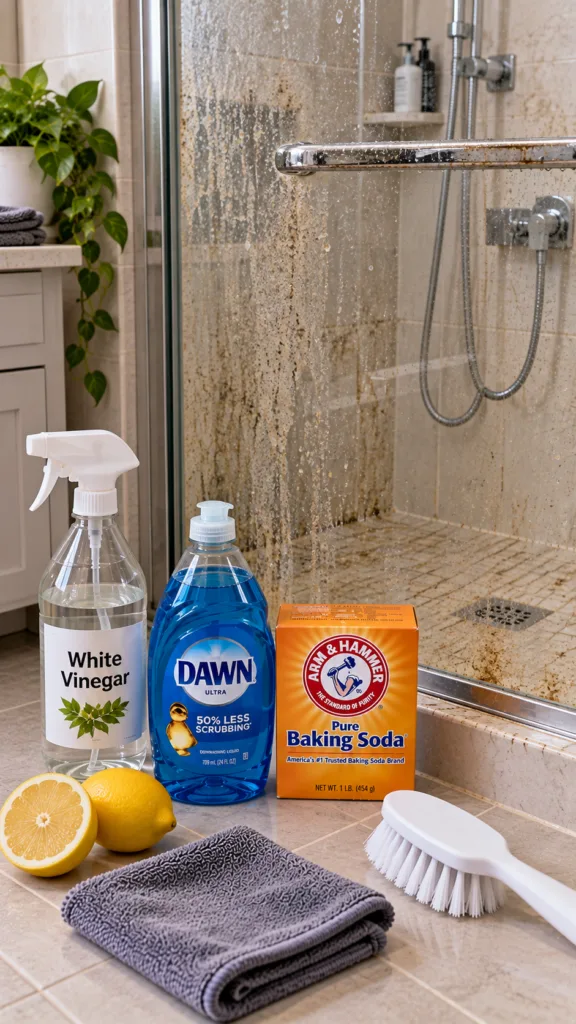 Gathering your natural cleaning arsenal is the first step to a sparkling shower.
What You’ll Need
- 1/2 cup Baking Soda (Arm & Hammer Pure Baking Soda, or similar)
- 1/4 cup Dish Soap (Dawn Ultra, or similar grease-cutting dish soap)
- Juice of 1 fresh Lemon
- 1/2 cup White Vinegar (in a spray bottle)
- Scrubbing brush
- Microfiber towel
- Small mixing bowl
Why This DIY Can Be Useful
This natural cleaning mixture works by combining the strengths of several common household staples. Baking soda acts as a gentle abrasive, helping to scrub away tough grime without scratching surfaces. The dish soap is excellent at cutting through grease and soap scum, which are common culprits behind cloudy shower doors. White vinegar, being acidic, is highly effective at dissolving mineral deposits and hard water stains, leaving surfaces clearer. Finally, lemon juice adds an extra acidic punch to tackle stains, while also leaving a fresh, clean scent.
How to Make It
- In a small mixing bowl, combine the 1/2 cup of baking soda and the 1/4 cup of dish soap.
- Squeeze the juice from one fresh lemon directly into the bowl with the baking soda and dish soap.
- Stir the mixture thoroughly with a spoon or spatula until it forms a consistent paste. It should be thick enough to cling to surfaces.
- Ensure your spray bottle is filled with 1/2 cup of white vinegar, ready for application.
How to Use It
- First, lightly wet your shower doors and tiled walls with warm water.
- Generously spray the entire wet surface of your shower, including glass and tiles, with the white vinegar from your spray bottle. Let the vinegar sit for about 5 to 10 minutes to start breaking down mineral deposits.
- Next, apply the prepared baking soda and dish soap paste directly onto your scrubbing brush.
- Using the scrubbing brush, vigorously scrub all the surfaces, paying extra attention to areas with heavy soap scum or water stains.
- Allow the paste to sit on the surfaces for an additional 10 to 15 minutes. This gives the ingredients time to work their magic on the grime.
- Rinse the entire shower thoroughly with warm water, ensuring all paste and loosened grime are washed away.
- Finally, use a clean microfiber towel to wipe down all the glass and tiled surfaces. This helps prevent new water spots and leaves a streak-free shine.
What to Expect
After using this DIY method, you can expect a noticeably cleaner and shinier shower. Soap scum and hard water stains should be significantly reduced, making your glass doors more transparent and your tiles more vibrant. While it may not make a decades-old shower look brand new instantly, consistent use can help maintain a sparkling appearance and prevent heavy buildup from returning.
Helpful Tips
- For extremely tough spots, you might need to repeat the scrubbing process or let the paste sit for a longer duration.
- To prevent future buildup, consider wiping down your shower surfaces with a microfiber towel after each use.
- Store any leftover paste in an airtight container for future use, though fresh is always best.
- Always ensure good ventilation by opening windows or turning on the exhaust fan while cleaning.
Important Notes / Safety
While these ingredients are natural, it’s always wise to exercise caution. Avoid using vinegar on natural stone surfaces like marble or granite, as its acidity can etch the stone. Always patch test the paste and vinegar on an inconspicuous area first to ensure there are no adverse reactions with your specific shower materials. Ensure good ventilation in your bathroom during the cleaning process. Rinse all surfaces thoroughly to remove any residue, as leaving the mixture on for too long or not rinsing properly could lead to streaking or discoloration on some materials.