Many staple grains fill our plates daily, but truly knowing their nutritional impact can empower smarter fuel choices. From hearty breakfast bowls to dinner side dishes, grains form the backbone of countless meals worldwide. Understanding the unique profiles of popular options like white rice, brown rice, quinoa, and wheat flour is key to aligning your diet with your wellness goals.
This guide delves into the essential nutrition differences of these common grains, providing a clear comparison of their calorie, protein, carbohydrate, fat, and fiber content per 100 grams. By examining these vital metrics, you’ll be equipped to choose the best grains for your individual needs, whether you’re focusing on weight management, sustained energy, or simply boosting your daily fiber intake.
Get ready to make informed decisions that support a healthier, more balanced lifestyle. Let’s compare these staples and uncover the insights that will transform your meal planning.
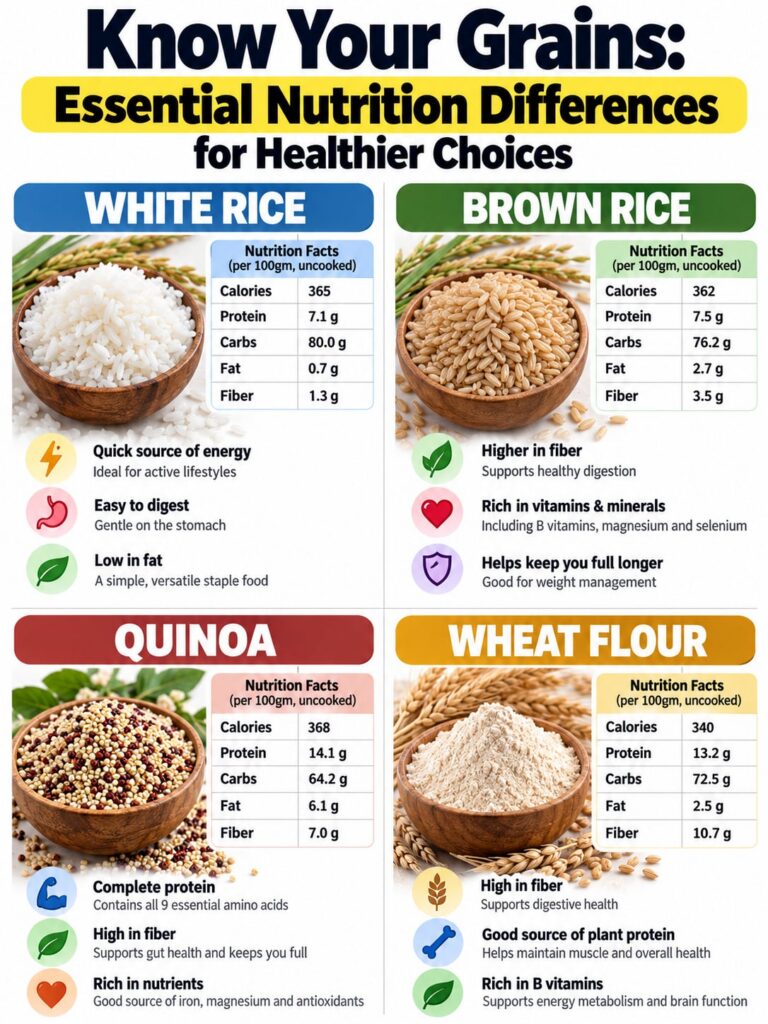
The Nutritional Landscape of Your Plate: White Rice, Brown Rice, Quinoa, and Wheat Flour Compared
While often grouped simply as ‘carbohydrates’, not all grains are created equal. Their processing, inherent composition, and preparation methods significantly influence their nutritional value. Here’s a detailed look at how four common options stack up per 100 grams, as highlighted in our nutritional guide:
White Rice: The Refined Staple
A global dietary staple, white rice undergoes a refining process that removes its husk, bran, and germ. While this makes it quicker to cook and extends its shelf life, it also strips away much of its fiber and some key nutrients. Per 100 grams, white rice provides:
- Calories: 130 kcal
- Protein: 2.7g
- Carbohydrates: 28g
- Fat: 0.3g
- Fiber: 0.4g
White rice offers a quick source of energy due to its high carbohydrate content and low fiber, which can lead to faster digestion and a more rapid rise in blood sugar compared to whole grains.
Brown Rice: The Whole-Grain Alternative
Brown rice is a whole grain, meaning it retains its bran and germ layers. These layers are packed with fiber, vitamins, and minerals, making it a more nutrient-dense option than white rice. Per 100 grams, brown rice contains:
- Calories: 123 kcal
- Protein: 2.7g
- Carbohydrates: 25.6g
- Fat: 0.9g
- Fiber: 1.6g
With a similar calorie and protein count to white rice, brown rice stands out with significantly more fiber and slightly more healthy fats. This higher fiber content helps promote satiety and supports a more gradual release of energy.
Quinoa: The Protein Powerhouse
Often referred to as a ‘superfood’, quinoa is actually a seed that is botanically related to spinach and beets, but it is consumed like a grain. It’s renowned for its impressive nutritional profile. Per 100 grams, quinoa offers:
- Calories: 120 kcal
- Protein: 4.4g
- Carbohydrates: 21.3g
- Fat: 1.9g
- Fiber: 2.8g
Quinoa excels with the highest protein and fiber content among the ‘rice’ alternatives discussed, along with a good source of healthy fats. Its higher protein contribution makes it an excellent choice for plant-based diets and those looking to boost their protein intake.
Wheat Flour: A Versatile Base
Wheat flour is a fundamental ingredient in countless culinary applications, from breads and pastas to pastries. The nutritional content can vary based on whether it is whole wheat or refined, but for this comparison, we refer to the provided data for wheat flour. Per 100 grams, wheat flour contains:
- Calories: 364 kcal
- Protein: 13.7g
- Carbohydrates: 76.3g
- Fat: 1.4g
- Fiber: 2.7g
Wheat flour is notably higher in calories and carbohydrates per 100g compared to the other three. It also provides a substantial amount of protein and fiber, making it a robust ingredient for many dishes. Its fiber content, as presented, is comparable to quinoa.
Making Smarter Choices: A Comparative Breakdown
Understanding these individual profiles allows for more informed decision-making in your kitchen and at the grocery store. Let’s look at how they compare across key nutritional metrics:
- Calories and Carbohydrates: Wheat flour, typically used as a primary ingredient in baked goods or pasta, has significantly higher calories and carbohydrates per 100 grams. White rice, brown rice, and quinoa are more similar in their calorie and carbohydrate counts when eaten as a whole grain or seed.
- Protein Content: Wheat flour leads in protein per 100g, followed closely by quinoa. Both brown and white rice have lower protein levels. Quinoa is particularly valued for its high protein content among whole grain alternatives.
- Dietary Fiber: Quinoa and brown rice offer significantly more fiber than white rice, contributing to better digestive health and prolonged satiety. Wheat flour also presents a good source of fiber, as indicated. Prioritizing fiber-rich grains can support healthy digestion and help manage blood sugar levels.
- Fats: All four options are relatively low in fat. Quinoa and brown rice contain slightly more healthy fats, including essential fatty acids, which are beneficial for overall health.
Choosing your grain strategically can greatly impact your dietary goals, whether that’s sustained energy, weight management, or muscle support.
Integrating Grains into Balanced Meals for Optimal Health
Armed with this knowledge, you can make smarter choices for your daily meals. Here are some practical tips for integrating these grains into a balanced diet:
- Prioritize Whole Grains: Whenever possible, opt for brown rice and quinoa over white rice to naturally boost your fiber, vitamin, and mineral intake. These whole grains can contribute to better digestion and sustained energy.
- Mind Your Portions: Even healthy grains contribute calories and carbohydrates. Pay attention to portion sizes, especially if you are managing your weight or blood sugar.
- Balance with Other Nutrients: Pair your chosen grain with lean proteins (like chicken, fish, or legumes) and plenty of colorful vegetables to create a complete, nutrient-dense meal. This ensures you get a wide array of vitamins, minerals, and antioxidants.
- Explore Versatility: Don’t limit yourself! Use quinoa in salads for a protein boost, serve brown rice as a hearty side dish, or choose whole-grain wheat products for baking and pasta dishes to maximize nutritional benefits.
- Listen to Your Body: Pay attention to how different grains make you feel. Some may provide more sustained energy or better digestive comfort than others. Adjust your choices based on what best supports your well-being.

Final Thoughts
The journey to healthier eating is paved with informed decisions. By understanding the essential nutritional differences between white rice, brown rice, quinoa, and wheat flour, you’re empowered to choose the grains that best support your health goals. Each grain has its place in a balanced diet, but recognizing their unique contributions in terms of calories, protein, carbs, fat, and fiber is key to truly smart meal planning. Make these insights a part of your daily routine and feel the difference in your energy and well-being.
Medical Disclaimer
The information provided in this article is for general knowledge and informational purposes only, and does not constitute medical advice. It is essential to consult with a qualified healthcare professional or registered dietitian before making any significant changes to your diet or health regimen.