Bell peppers are a vibrant, versatile addition to countless meals, known for their crisp texture and sweet, sometimes tangy, flavor. But beyond their colorful appearance, do you know the real nutritional differences between green, yellow, and red bell peppers? Many people wonder if the color change is just cosmetic or if it signifies a shift in their health benefits. The truth is, these popular veggies offer a surprising spectrum of nutrients depending on their ripeness, making each color a unique powerhouse.
From your stir-fries to salads, understanding the distinct profiles of green, yellow, and red bell peppers can help you make more informed choices for your diet. This article will break down the ‘Bell Pepper Battle,’ revealing which color packs the most vitamins, fiber, and even sugar, so you can pick the perfect pepper for your next dish and boost your health.
The Green Contender: Unripe & Robust
Green bell peppers are essentially immature bell peppers. They are harvested before they have a chance to fully ripen and change color, which accounts for their slightly more bitter, less sweet taste. Don’t let their ‘unripe’ status fool you, though; green bell peppers are still packed with beneficial nutrients.
- Digestive Support: Green peppers are a great source of dietary fiber, which is crucial for maintaining a healthy digestive system. Fiber helps promote regularity and can contribute to feelings of fullness.
- Vitamin C Boost: While not as high as their red counterparts, green bell peppers still offer a significant amount of Vitamin C, an essential antioxidant that supports immune function and skin health.
- Lower Sugar Content: For those monitoring their sugar intake, green bell peppers are an excellent choice as they contain less natural sugar compared to yellow and red varieties.
The Sunny Yellow Star: Sweet & Vitamin-Rich
As bell peppers mature, they begin to turn yellow, developing a sweeter flavor and softer texture than their green predecessors. Yellow bell peppers offer a fantastic balance of taste and nutrition, making them a popular choice for many dishes.
- High Vitamin C: Yellow bell peppers elevate the Vitamin C content significantly beyond green peppers, further boosting your immune system and acting as a powerful antioxidant.
- Good Source of Vitamin A: This is where yellow peppers start to shine, providing a notable amount of Vitamin A, which is vital for vision, immune function, and skin health.
- Balanced Sweetness: They offer a moderate sugar content, making them sweeter and more palatable than green peppers without reaching the peak sweetness of red varieties.
The Radiant Red Winner: Fully Ripe & Packed with Power
Red bell peppers are fully ripened peppers, having spent the longest time on the vine. This extended ripening process allows them to develop their characteristic sweet flavor and also concentrates their nutritional compounds, making them a nutritional powerhouse.
- Highest Vitamin C: Red bell peppers are exceptionally rich in Vitamin C, often containing more than an orange! This makes them superb for immune support and collagen production.
- Abundant Vitamin A: They boast the highest Vitamin A content among the three colors, primarily in the form of beta-carotene, which is a potent antioxidant beneficial for eye health and skin.
- Vitamin K Contributor: Red peppers also provide a good amount of Vitamin K, which plays a role in blood clotting and bone health.
- Antioxidant Powerhouse: Their deep red color is indicative of a higher concentration of antioxidants, which help protect your cells from damage.
The Nutritional Scorecard: A Detailed Comparison (per 100g)
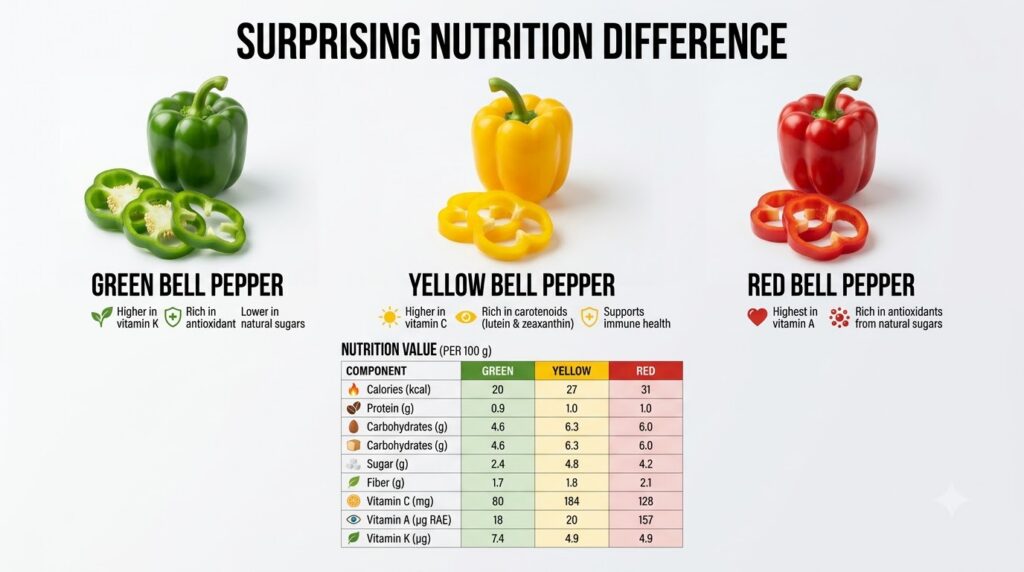
To truly understand the differences, let’s look at a direct comparison of the nutritional values for 100 grams of each bell pepper variety. This table highlights how the ripening process impacts key nutrients.
- Calories:
- Green: ~20 kcal
- Yellow: ~27 kcal
- Red: ~31 kcal
- Protein:
- Green: ~0.9g
- Yellow: ~1.0g
- Red: ~1.0g
- Carbohydrates:
- Green: ~4.6g
- Yellow: ~6.3g
- Red: ~7.6g
- Sugar:
- Green: ~2.4g
- Yellow: ~3.7g
- Red: ~5.1g
- Fiber:
- Green: ~1.7g
- Yellow: ~1.2g
- Red: ~2.1g
- Vitamin C:
- Green: ~80mg
- Yellow: ~183.5mg
- Red: ~190mg
- Vitamin A:
- Green: ~18mcg RAE
- Yellow: ~163mcg RAE
- Red: ~372mcg RAE
- Vitamin K:
- Green: ~7.4mcg
- Yellow: ~7.4mcg
- Red: ~8.2mcg
As you can see, the red bell pepper consistently takes the lead in most vitamin categories, particularly Vitamin C and Vitamin A, due to its full ripeness. Green peppers, however, offer a slightly higher fiber content and lower sugar, which can be beneficial depending on your dietary goals.
Choosing Your Champion: Which Bell Pepper is Right for You?
Ultimately, there’s no single ‘best’ bell pepper. Each color brings unique benefits to the table, and incorporating a variety of colors into your diet is the smartest approach to maximize your nutrient intake.
- For Digestion & Lower Sugar: Opt for green bell peppers. Their slightly bitter taste is excellent in savory dishes and for adding crunch.
- For a Balanced Sweetness & Vitamin Boost: Yellow bell peppers are a fantastic middle-ground, perfect for stir-fries, fajitas, or eaten raw.
- For Maximum Vitamins & Antioxidants: Red bell peppers are your go-to. Their sweetness makes them ideal for roasting, salads, and even sweet dishes.
Consider mixing and matching them in your meals to enjoy a full spectrum of flavors and nutrients. A colorful plate is often a healthy plate!