Creamy Japanese-Style Sesame Egg Sauce – Easy Homemade Blender Recipe
If you love creamy Japanese-inspired sauces, this Sesame Egg Sauce is a simple recipe made with hard-boiled eggs, sesame oil, toasted white sesame seeds, soy sauce, sugar, and mirin.
Everything goes straight into a blender and is blended until thick, silky, and completely smooth. The hard-boiled eggs provide the creamy base, sesame oil gives the sauce its rich nutty aroma, soy sauce brings savory umami flavor, and mirin and sugar add a gentle sweetness.
The finished sauce is perfect for salads, sandwiches, rice bowls, noodles, grilled chicken, vegetables, or dipping. Pour it into a squeeze bottle and keep it refrigerated for an easy homemade sauce whenever you need it.
Creamy Sesame Egg Sauce Recipe
Prep Time: 10 minutes
Blending Time: 1–2 minutes
Total Time: About 12 minutes
Yield: About 1–1½ cups
Difficulty: Easy
Ingredients
- 4 large hard-boiled eggs, peeled
- 3 tablespoons sesame oil
- 2 tablespoons toasted white sesame seeds
- 2 tablespoons soy sauce
- 1 tablespoon granulated sugar
- 1/2 tablespoon (7.5 ml) mirin
- 2–4 tablespoons water, as needed
Optional Ingredients
For extra flavor, you can also add:
- 1 teaspoon rice vinegar
- 1 teaspoon fresh lemon juice
- 1/2 teaspoon Dijon mustard
- A small pinch of black pepper
- 1 teaspoon honey
- 1 small garlic clove
- Extra toasted sesame seeds
How to Make Creamy Sesame Egg Sauce
Step 1: Prepare the Hard-Boiled Eggs
Start with 4 large eggs.
Place them in a saucepan and cover them with water. Bring the water to a boil and cook the eggs until the yolks are completely set, approximately 10–12 minutes.
Immediately transfer the eggs to a bowl filled with cold or ice water.
Allow them to cool completely, then carefully remove the shells.
Pat the peeled eggs dry before adding them to the blender.
Step 2: Add the Eggs to the Blender
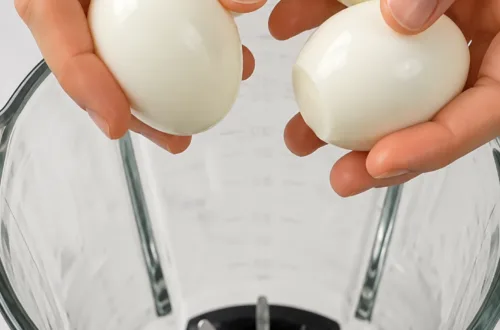
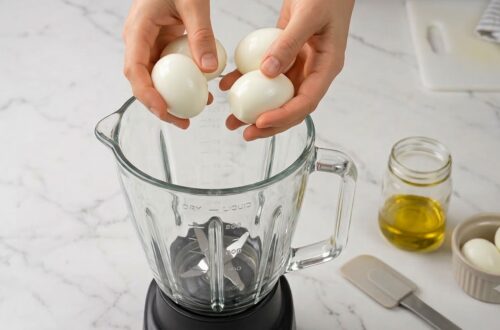
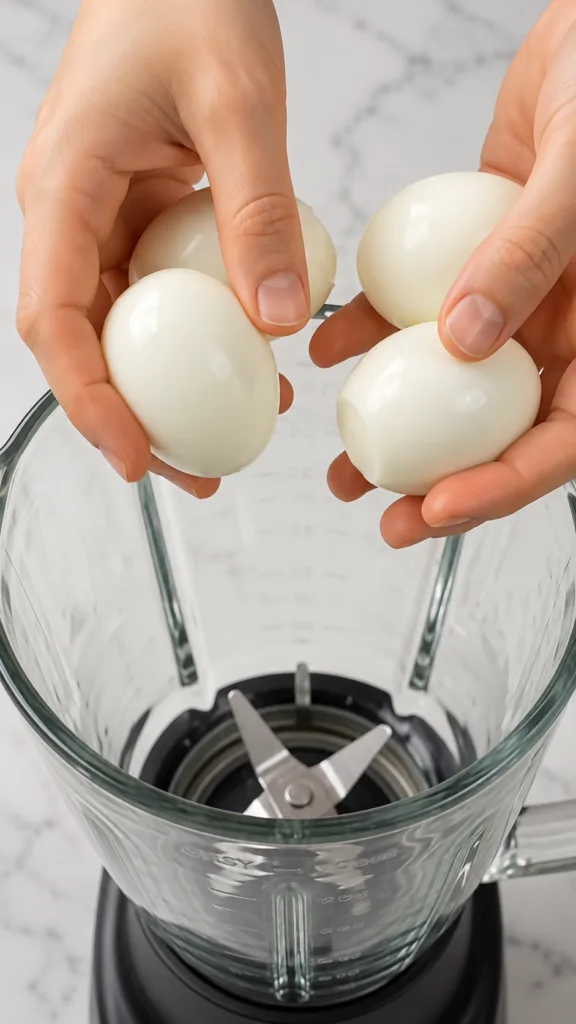
Place all 4 peeled hard-boiled eggs into a high-speed blender.
You can add them whole or cut each egg in half first.
Hard-boiled eggs form the thick, creamy base of this recipe without requiring raw eggs.
Step 3: Add the Sesame Oil
Pour 3 tablespoons of sesame oil over the eggs.
Sesame oil gives this sauce its distinctive nutty flavor and aroma.
If you’re using toasted sesame oil, which has a much stronger flavor, you can start with 1–2 tablespoons and add more after tasting.
Step 4: Add the White Sesame Seeds
Add 2 tablespoons of toasted white sesame seeds.
Toasted sesame seeds provide even more nutty flavor and help give the sauce its characteristic Japanese-inspired sesame taste.
If your sesame seeds aren’t already toasted, place them in a dry skillet over low-to-medium heat for a few minutes, stirring frequently until lightly golden and fragrant.
Let them cool before adding them to the blender.
Step 5: Add the Soy Sauce
Pour 2 tablespoons of soy sauce into the blender.
Soy sauce provides the salty, savory, umami element of the recipe.
Because different soy sauces have different salt levels, don’t add additional salt until you’ve blended and tasted the finished sauce.
Step 6: Add the Sugar
Add 1 tablespoon of granulated sugar.
The sugar isn’t meant to make the sauce taste like a dessert. Instead, it balances the saltiness of the soy sauce and the richness of the sesame oil.
It also gives the finished sauce a slightly sweet flavor similar to many Japanese-style sesame dressings.
Step 7: Add the Mirin
Pour in 1/2 tablespoon (about 7.5 ml) mirin.
Mirin adds gentle sweetness and depth of flavor.
For a no-alcohol version, use an alcohol-free mirin-style seasoning or replace it with a small amount of water plus a touch more sugar.
Step 8: Add a Little Water
Start with 2 tablespoons of water.
This helps the cooked eggs move easily around the blender blades and creates a smoother consistency.
Don’t add too much liquid yet. You can always thin the sauce later.
Step 9: Blend Until Creamy
Secure the blender lid.
Start blending on low speed for several seconds, then gradually increase to high.
At first, the eggs will break into small pieces. The sesame seeds, soy sauce, oil, sugar, and mirin will gradually combine with them.
Continue blending for approximately 30–45 seconds.
The mixture should begin changing into a thick, pale beige cream.
Step 10: Blend Again for an Ultra-Smooth Texture
Stop the blender and scrape down the sides with a spatula.
Blend again on high speed for another 20–30 seconds.
This second blending is especially useful because the cooked egg whites and sesame seeds need enough time to become very smooth.
The finished sauce should look:
- Thick and creamy
- Smooth and glossy
- Pale beige or light golden
- Rich but pourable
- Free of large pieces of egg
- Speckled with very fine sesame particles
Step 11: Check That Beautiful Creamy Texture
Lift the blender lid and scoop up some sauce with a spoon.
It should fall slowly from the spoon in a thick, silky ribbon.
For recipe videos, this is the perfect moment for a tight macro close-up of the finished sauce. Slowly stir or lift the cream with a spoon so viewers can clearly see its smooth, velvety consistency.
If it’s too thick, add 1 teaspoon of water at a time, blending briefly after each addition.
Step 12: Taste and Adjust
Taste the finished sauce.
For a stronger sesame flavor, add a little more sesame oil or toasted sesame seeds.
For more saltiness and umami, add a small splash of soy sauce.
If it’s too salty, add a little water.
For more sweetness, add another 1/2 teaspoon of sugar.
For a brighter flavor, add 1 teaspoon of rice vinegar or lemon juice.
Blend again for approximately 10 seconds after adjusting the seasonings.
Step 13: Pour Into a Bottle
Place a clean squeeze bottle or glass bottle on the counter.
Using a small funnel if necessary, slowly pour the creamy sesame egg sauce into the bottle.
If the sauce is too thick to flow easily through the bottle opening, blend in another tablespoon of water first.
Close the bottle tightly and refrigerate.
How to Serve Sesame Egg Sauce
This creamy sauce can be used in many different dishes. Try it with:
- Fresh green salads
- Cucumber salad
- Chicken salad
- Rice bowls
- Poke-style bowls
- Cold noodles
- Soba noodles
- Sandwiches
- Wraps
- Grilled chicken
- Roasted vegetables
- Steamed broccoli
- Cabbage salad
- Fried or roasted potatoes
You can also serve it as a dipping sauce for vegetables, chicken, or other savory snacks.
Creamy Sesame Salad Dressing
For a thinner salad dressing, prepare the recipe normally and then add 2–3 additional tablespoons of water.
You can also add 1 tablespoon of rice vinegar for a brighter, more dressing-like flavor.
Blend again until completely smooth and pourable.
Drizzle generously over lettuce, cucumber, cabbage, carrots, avocado, or chicken.
Spicy Sesame Egg Sauce
For a spicy variation, add:
- 1 teaspoon chili oil, or
- 1/4 teaspoon chili flakes, or
- A small amount of sriracha
Blend everything together until silky smooth.
The combination of spicy chili, nutty sesame, and savory soy sauce works especially well with noodles and rice bowls.
Garlic Sesame Version
Add 1–2 fresh garlic cloves to the blender along with the other ingredients.
Blend until the garlic is completely incorporated.
This creates a stronger savory sauce that’s excellent with grilled chicken, vegetables, sandwiches, and roasted potatoes.
Tips for the Creamiest Sesame Sauce
Cool the eggs completely. Avoid adding freshly boiled hot eggs directly to the blender.
Toast the sesame seeds. Toasting significantly enhances their nutty aroma.
Be careful with toasted sesame oil. It’s much stronger than regular sesame oil, so add it gradually.
Don’t add extra salt immediately. Soy sauce already provides plenty of saltiness.
Blend thoroughly. Hard-boiled egg whites require enough blending time to become completely smooth.
Add water slowly. Keep the sauce thick if you’re using it as a spread and make it thinner if you’re using it as a dressing.
How to Store Homemade Sesame Egg Sauce
Pour the finished sauce into a clean airtight bottle or container and refrigerate promptly at 40°F (4°C) or below.
Because this recipe contains cooked eggs and no commercial preservatives, make it in relatively small batches and use it within approximately 3–4 days.
Shake or stir the sauce before serving if slight separation occurs.
Always use clean utensils and discard the sauce if you notice an unusual smell, appearance, or texture.
Why You’ll Love This Recipe
This Creamy Japanese-Style Sesame Egg Sauce transforms four simple hard-boiled eggs into a thick, silky homemade sauce.
The eggs create the creamy base, sesame oil and toasted white sesame seeds provide deep nutty flavor, soy sauce adds savory umami, granulated sugar balances the saltiness, and mirin adds subtle sweetness and depth.
The entire process is simple: add the four eggs, sesame oil, white sesame seeds, soy sauce, one tablespoon of sugar, and half a tablespoon of mirin to the blender, blend thoroughly until incredibly creamy, show off the silky texture in a close-up, then pour it into a bottle.
The result is a rich, nutty, sweet-and-savory sauce that’s perfect for salads, noodles, rice bowls, sandwiches, vegetables, chicken, and dipping.