Choosing the right milk can be a key part of maintaining a healthy diet. With so many options available today, it’s easy to feel overwhelmed. Two popular choices often found side-by-side in the dairy aisle are almond milk and cow milk. Each comes with its own unique nutritional profile, benefits, and considerations.
This article will dive deep into the nutritional showdown between almond milk and cow milk. We’ll explore their calorie content, protein levels, fat composition, and essential vitamins and minerals. By understanding the differences, you can make an informed choice that best supports your personal health goals and dietary needs.
Nutrition Comparison: Almond Milk vs. Cow Milk
Let’s start with a quick overview of how these two popular milks stack up nutritionally. Keep in mind that values can vary slightly between brands, especially for fortified versions.
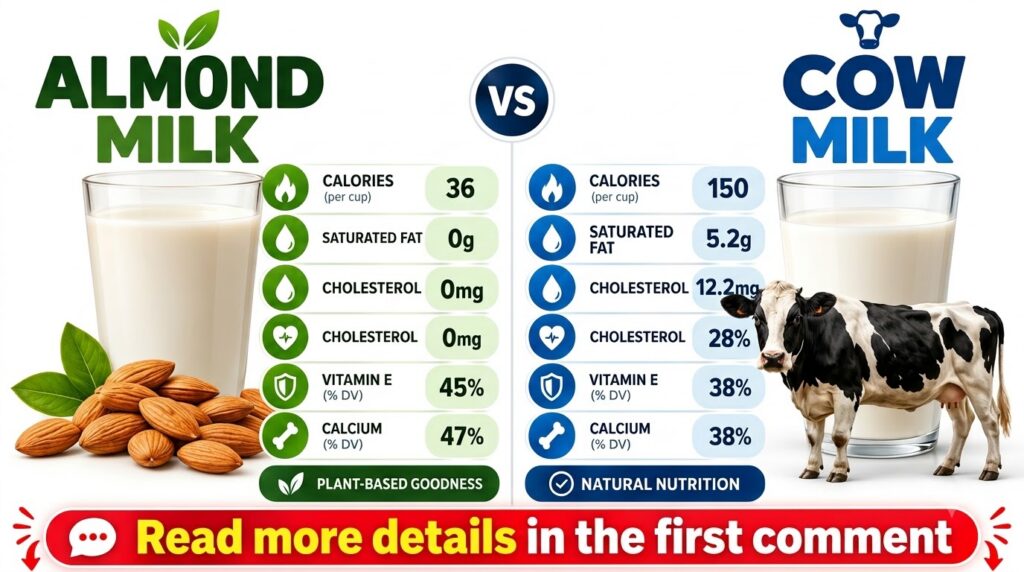
| Nutrient (per 1 cup, unsweetened) | Almond Milk | Cow Milk (2% Fat) |
|---|---|---|
| Calories | 30-40 | 120-130 |
| Protein | 1g | 8g |
| Carbohydrates | 1-2g | 12-13g |
| Fat (Total) | 2.5-3g | 5g |
| Saturated Fat | 0g | 3g |
| Fiber | 1g | 0g |
| Calcium | 45% DV* | 30% DV* |
| Vitamin D | 25% DV* | 25% DV* |
| Vitamin E | 20% DV* | 0% DV* |
| Cholesterol | 0mg | 20mg |
*Daily Value (DV) based on a 2,000-calorie diet.
Calories
For those mindful of their caloric intake, unsweetened almond milk typically has significantly fewer calories than cow milk. A cup of unsweetened almond milk usually contains around 30-40 calories, making it a very light option. In contrast, a cup of 2% cow milk provides about 120-130 calories. If weight management is a primary goal, almond milk might be a favorable choice due to its lower calorie count.
Protein
When it comes to protein, cow milk is a clear winner. A single cup of cow milk delivers a substantial 8 grams of protein, essential for muscle repair, growth, and overall body function. Unsweetened almond milk, on the other hand, contains only about 1 gram of protein per cup. If you’re looking to boost your protein intake, cow milk or other protein-rich plant milks like soy milk would be more effective.
Fat
Both types of milk contain fat, but their profiles differ. Unsweetened almond milk typically has about 2.5-3 grams of total fat per cup, with virtually no saturated fat. Cow milk (2% fat) contains around 5 grams of total fat, with about 3 grams being saturated fat. For individuals monitoring their saturated fat intake, almond milk can be a good alternative. Cow milk also contains a small amount of cholesterol, while almond milk is cholesterol-free.
Carbohydrates
Carbohydrate content varies considerably. Unsweetened almond milk has very low carbohydrates, usually 1-2 grams per cup, making it a suitable choice for those on low-carb diets or managing blood sugar levels. Cow milk, however, contains about 12-13 grams of carbohydrates per cup, primarily from lactose, its natural sugar. Flavored or sweetened almond milk varieties will have much higher sugar and carbohydrate counts, so always check the label.
Vitamins & Minerals
Both milks are often fortified with important vitamins and minerals. Cow milk naturally contains calcium, vitamin D (often added), vitamin B12, and phosphorus. Almond milk is typically fortified with calcium and vitamin D to levels comparable to or even higher than cow milk. It also naturally contains vitamin E, an antioxidant often absent in cow milk. Checking the nutrition label is crucial to ensure you’re getting fortified versions if these nutrients are important to you.

Taste and Texture
Beyond nutrition, taste and texture play a big role in personal preference. Cow milk has a creamy, rich texture and a distinct, slightly sweet flavor. Almond milk is generally thinner and has a subtle, nutty taste. Many people find its texture less rich than cow milk, but it blends well in smoothies and coffee. The taste can also vary widely between different brands of almond milk.
Best For: Who Should Choose Which Milk?
- For Weight Management: Unsweetened almond milk is often preferred due to its significantly lower calorie count.
- For Protein Intake: Cow milk is superior for those needing a significant protein boost in their diet.
- For Lactose Intolerance: Almond milk is naturally lactose-free, making it an excellent choice for individuals with lactose intolerance.
- For Vegan Diets: Almond milk is a plant-based option, suitable for vegan lifestyles.
- For Bone Health: Both milks, when fortified, can contribute to calcium and vitamin D intake essential for strong bones.
- For Nut Allergies: Cow milk is safe for those with nut allergies, while almond milk should be avoided.
- For Managing Blood Sugar: Unsweetened almond milk has a lower carbohydrate content, which may be beneficial for blood sugar control compared to cow milk.
Choosing the Right Milk for You
There isn’t a single

