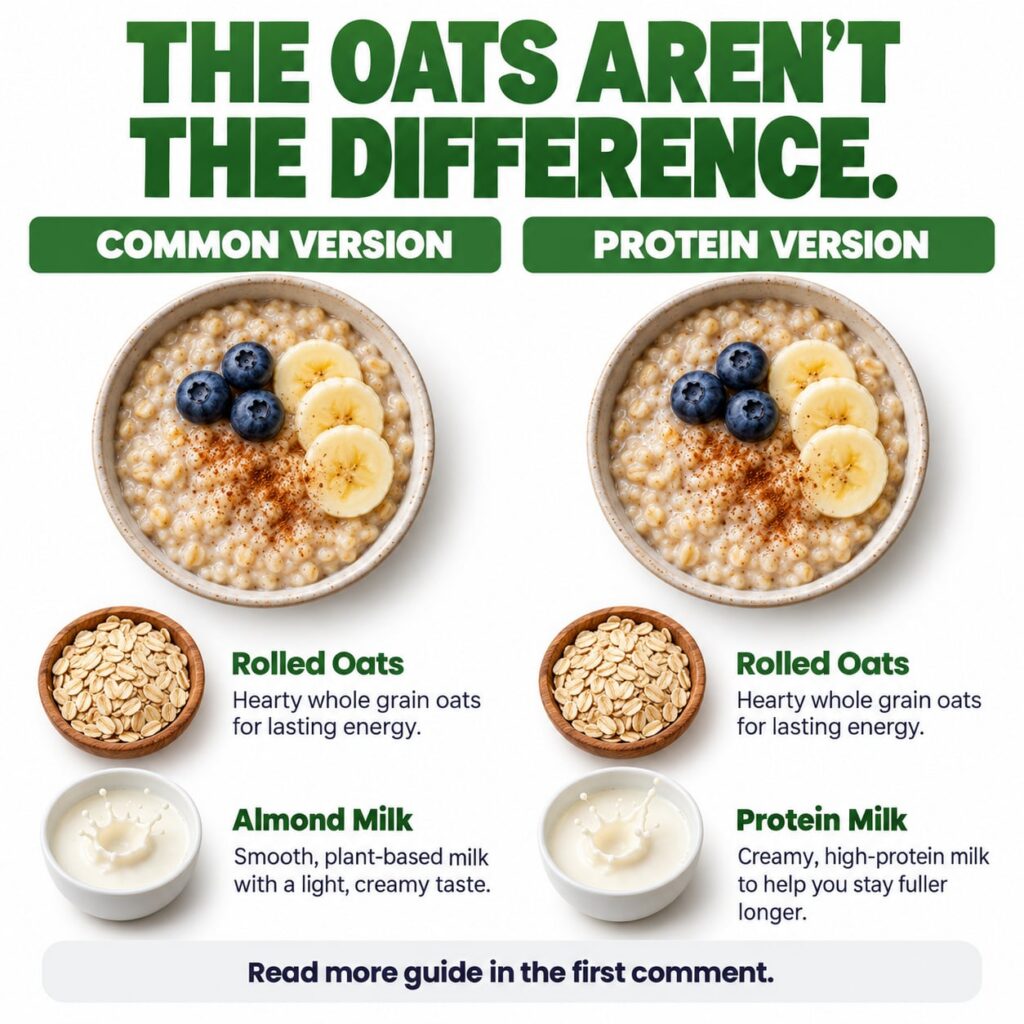
When it comes to crafting the perfect bowl of oatmeal, your choice of milk can significantly impact its nutritional profile and how satisfying it feels. Many people reach for either almond milk or a protein-fortified milk to blend with their hearty oats. But how do these two popular options stack up against each other?
Understanding the differences between almond milk and protein milk can help you make an informed decision that aligns with your dietary preferences and health goals. Whether you’re aiming for fewer calories, more protein, or a specific flavor, this guide will break down what each milk brings to your breakfast bowl.
Let’s dive into a comparison to help you decide which milk is the best fit for your next oatmeal creation!
Nutrition Comparison Table
Here’s a quick glance at how typical unsweetened almond milk compares to a common protein-fortified milk per 1-cup (240ml) serving. Keep in mind that specific values can vary significantly by brand and type (e.g., dairy vs. plant-based protein milk).
| Food | Calories | Protein | Carbs | Fat | Main Nutrients | Best Benefit |
|---|---|---|---|---|---|---|
| Almond Milk (Unsweetened) | 30-40 | 1g | 1-2g | 2.5-3g | Vitamin E, Calcium, Vitamin D | Low calorie, dairy-free |
| Protein Milk (Fortified) | 80-130 | 8-15g | 5-15g | 0-3g | Protein, Calcium, Vitamin D, B Vitamins | High protein, promotes satiety |
Calories
If you’re watching your calorie intake, unsweetened almond milk is typically the lighter choice. A cup usually contains only 30-40 calories, making it a low-impact addition to your meal. Protein-fortified milks, whether dairy or plant-based, generally have a higher calorie count, ranging from 80-130 calories per cup, due to their increased protein and sometimes carbohydrate content.
Protein
This is where protein milk truly shines. A standard serving can provide anywhere from 8 to 15 grams of protein, significantly boosting the satiety and muscle-supporting benefits of your oatmeal. Unsweetened almond milk, on the other hand, offers a minimal amount of protein, usually around 1 gram per cup. If your goal is to increase your protein intake, protein milk is the clear winner.
Carbs
Unsweetened almond milk is very low in carbohydrates, often containing only 1-2 grams per serving. Protein milks can vary more widely, with some containing natural sugars (like lactose in dairy milk) or added sugars in sweetened varieties. Always check the nutrition label to understand the carb content, especially if you are managing blood sugar levels.
Fat
Both unsweetened almond milk and many protein milks can be relatively low in fat. Unsweetened almond milk usually has about 2.5-3 grams of fat, mostly healthy unsaturated fats. Skim or low-fat protein milks will have less fat, sometimes even 0 grams. However, some full-fat dairy or certain plant-based protein milks might contain more fat, so always read the label.
Taste & Texture
Almond milk has a subtle, slightly nutty flavor and a thinner, lighter consistency. It blends smoothly into oatmeal without overpowering other flavors. Protein milk, especially certain fortified varieties, often has a creamier, richer texture and a more robust flavor, which can contribute to a heartier oatmeal experience. The specific taste will depend on whether it’s dairy-based or a plant-based protein blend.
Best For
- Almond Milk: Ideal for those looking for a low-calorie, dairy-free option. It’s great if you prefer a lighter oatmeal that lets other toppings shine, or if you’re aiming for minimal added calories and carbs.
- Protein Milk: Excellent for individuals seeking to increase protein intake, promote satiety, and support muscle health. It’s a fantastic choice for a more filling breakfast that keeps you satisfied longer, making it suitable for weight management or active lifestyles.
Which One Wins?
There’s no single