When it comes to healthy snacking, nuts are often at the top of the list. They’re convenient, satisfying, and packed with nutrients. But with so many options, how do you choose? Today, we’re putting two popular contenders head-to-head: cashews and peanuts. Both are beloved for their distinct flavors and versatility, but how do they stack up nutritionally?
This article will dive deep into the nutritional profiles of cashews and peanuts, comparing their calories, protein, fats, carbs, vitamins, and minerals. By the end, you’ll have a clear understanding of their unique benefits and be able to decide which nut best fits your dietary goals and preferences.
Get ready to discover the subtle yet significant differences between these two nutty powerhouses!
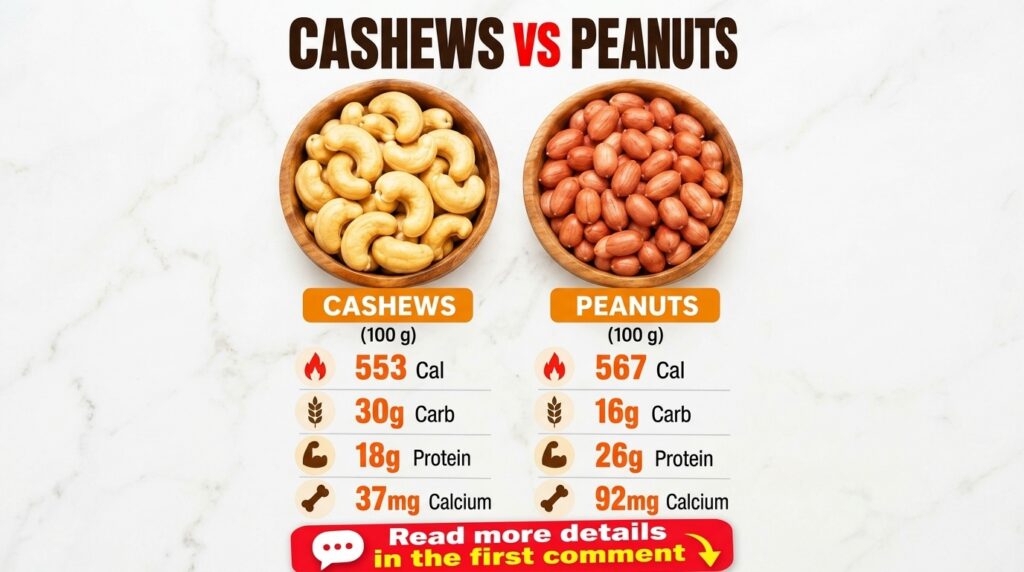
Cashews vs. Peanuts: Nutrition Comparison Table
Let’s start with a quick overview. Here’s how a standard 1-ounce (about 28 grams) serving of raw cashews compares to raw peanuts.
| Nutrient (per 1 oz / 28g) | Cashews (Raw) | Peanuts (Raw) |
|---|---|---|
| Calories | 157 kcal | 161 kcal |
| Protein | 5.2 g | 7.3 g |
| Total Fat | 12.4 g | 14.0 g |
| Saturated Fat | 2.2 g | 1.9 g |
| Carbohydrates | 8.6 g | 4.6 g |
| Fiber | 0.9 g | 2.4 g |
| Sugar | 1.7 g | 1.3 g |
| Magnesium | 83 mg | 49 mg |
| Iron | 1.9 mg | 1.3 mg |
| Zinc | 1.6 mg | 0.8 mg |
| Vitamin K | 9.5 mcg | 0.1 mcg |
| Folate (Vitamin B9) | 7 mcg | 68 mcg |
| Vitamin E | 0.3 mg | 2.3 mg |
*Approximate values for raw, unsalted nuts. Nutritional content can vary slightly based on processing and variety.
Calories
Looking at the table, you’ll notice that the calorie count for both cashews and peanuts is quite similar. A 1-ounce serving of cashews has about 157 calories, while peanuts have approximately 161 calories. This slight difference is negligible in the context of a balanced diet.
Both nuts are calorie-dense due to their high fat content, which is a natural characteristic of most nuts. This density contributes to their satisfying nature, meaning a small portion can help you feel full and keep hunger at bay.
Protein
If you’re looking for a protein boost, peanuts generally have the edge. A 1-ounce serving of peanuts provides about 7.3 grams of protein, making them a fantastic plant-based protein source. Cashews, while still a good source, offer around 5.2 grams per serving.
Protein is essential for building and repairing tissues, producing enzymes and hormones, and supporting satiety. Including protein-rich snacks like peanuts can be particularly beneficial for those following vegetarian or vegan diets, or anyone looking to increase their daily protein intake.
Fat
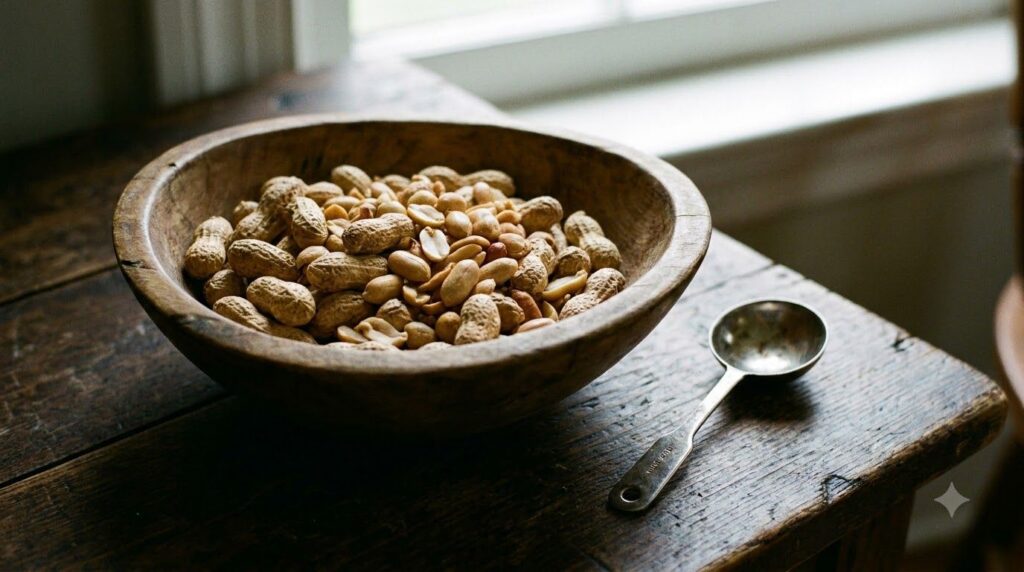
Both nuts are rich in healthy fats, which are crucial for energy, nutrient absorption, and heart health. Peanuts contain slightly more total fat (14.0g) than cashews (12.4g) per ounce. However, the *type* of fat is important to consider.
Monounsaturated and Polyunsaturated Fats
Both cashews and peanuts are primarily composed of monounsaturated and polyunsaturated fats, often referred to as ‘healthy fats.’ These fats may help reduce bad cholesterol levels and lower the risk of heart disease.
Saturated Fat
Cashews have a slightly higher saturated fat content (2.2g) compared to peanuts (1.9g). While saturated fat should be consumed in moderation, the amount in a typical serving of nuts is generally not a concern when part of a balanced diet. The overall fat profile of both nuts remains beneficial.
Carbohydrates and Fiber
When it comes to carbohydrates, cashews are slightly higher, providing about 8.6 grams per ounce, compared to peanuts’ 4.6 grams. However, a significant difference lies in their fiber content.
Peanuts are a better source of dietary fiber, offering 2.4 grams per ounce, while cashews provide 0.9 grams. Fiber is vital for digestive health, helps regulate blood sugar levels, and contributes to feelings of fullness. If you’re focusing on increasing your fiber intake, peanuts might be a slightly better choice.
Vitamins and Minerals
This is where the unique micronutrient profiles of each nut really shine!
Cashews
- Magnesium: Cashews are an excellent source of magnesium, providing about 83 mg per ounce. Magnesium is crucial for muscle and nerve function, blood sugar control, and blood pressure regulation.
- Copper: They are also high in copper, essential for energy production, iron absorption, and connective tissue formation.
- Zinc: Cashews offer a good amount of zinc, important for immune function and wound healing.
- Vitamin K: They contain a notable amount of Vitamin K, which plays a role in blood clotting and bone health.
Peanuts
- Folate (Vitamin B9): Peanuts stand out for their high folate content, with 68 mcg per ounce. Folate is vital for cell growth and function, and particularly important during pregnancy.
- Vitamin E: They are a good source of Vitamin E, a powerful antioxidant that protects cells from damage.
- Niacin (Vitamin B3): Peanuts provide a good amount of niacin, which supports metabolism and nerve function.
- Manganese: This mineral in peanuts is important for bone health and antioxidant defense.
Taste and Texture
Beyond nutrition, taste and texture are often significant factors in our food choices.
Cashews
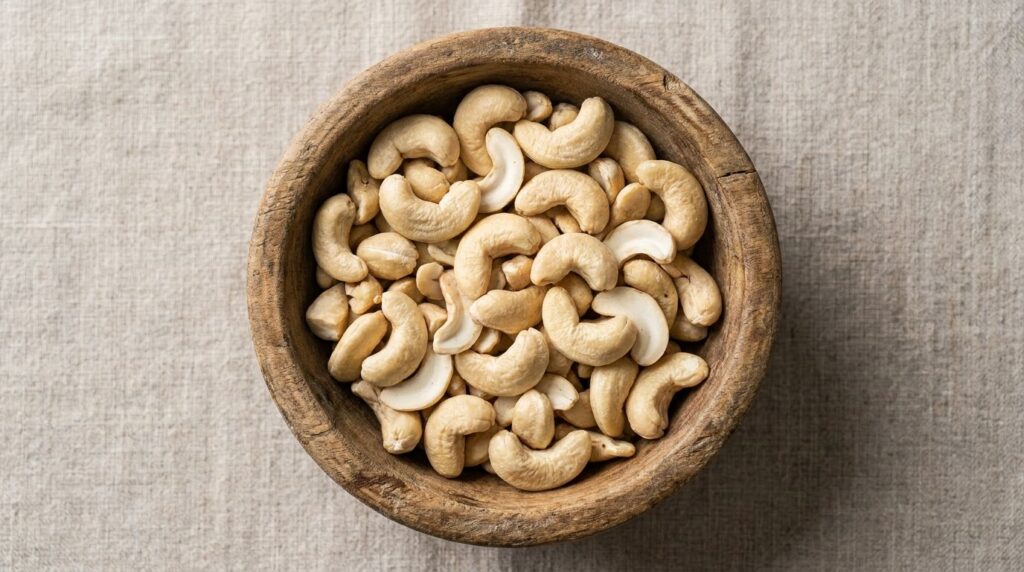
Cashews have a distinctly creamy, slightly sweet flavor with a buttery texture. They’re often used to make dairy-free creams, sauces, and desserts due to their smooth consistency when blended.
Peanuts
Peanuts have a stronger, earthier, and more savory flavor. Their texture is crunchier and drier, making them popular in trail mixes, savory dishes, and, of course, peanut butter.
Best For: Which Nut Fits Your Needs?
Neither nut is definitively

