Bringing the beauty of nature indoors is a wonderful way to enhance your living space, boost your mood, and even purify the air. But with so many stunning indoor plants available, how do you choose the right one for your home? The secret to a thriving indoor jungle isn’t just about picking pretty plants; it’s about matching the right plant to the right environment in your home. Let’s explore how to find your perfect green companion!
Understanding Your Home’s Zones
Before you bring a new plant home, take a moment to observe your space. Different areas of your house offer varying conditions regarding light, humidity, and temperature. Identifying these ‘zones’ will help you select plants that will truly thrive.
- Light: Is it bright indirect light, direct sun, or a shadier corner?
- Humidity: Is it a dry living room or a steamy bathroom?
- Space: Do you have room for a large statement plant or a small desktop companion?
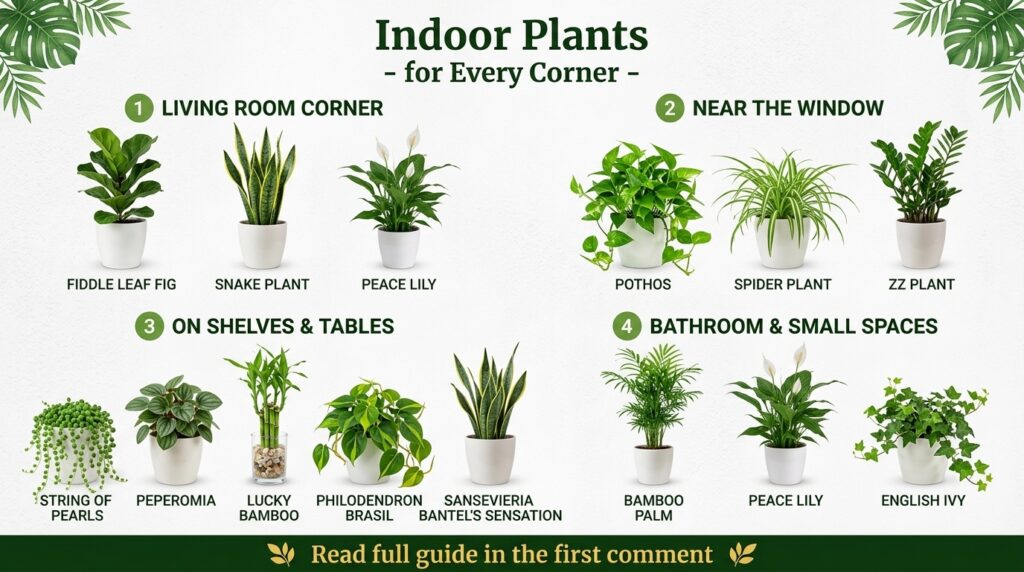
Plants for Living Room Corners (Low to Medium Light, Larger Spaces)
Living room corners often receive less direct light but offer ample space for larger, impactful plants. These plants are often tolerant of lower light conditions.
- Snake Plant (Sansevieria): Extremely low-maintenance, tolerant of low light, and great for air purification. Its upright leaves add a modern touch.
- ZZ Plant (Zamioculcas zamiifolia): Another low-light hero that can handle neglect. It has glossy, dark green leaves and a striking appearance.
- Pothos (Epipremnum aureum): While it can grow long vines, a mature Pothos in a large pot can fill a corner beautifully. It’s forgiving and adaptable to various light levels.
Bright Spots by the Window (High Light)
Windowsills and areas near south or west-facing windows offer the brightest light. These spots are perfect for plants that love a lot of sunshine.
- Fiddle Leaf Fig (Ficus lyrata): A popular choice for its dramatic, large leaves, it thrives in bright, indirect light and can grow quite tall.
- Bird of Paradise (Strelitzia reginae): For a truly tropical feel, this plant loves bright light and can produce stunning, crane-like flowers.
- Succulents & Cacti: If your window gets direct sun, these drought-tolerant beauties are perfect. They come in endless shapes and sizes and require minimal watering.
Shelves and Tabletops (Medium to Bright Indirect Light, Smaller Plants)
These elevated spots are ideal for showcasing smaller plants that spill or trail, adding a touch of greenery to your decor.
- Prayer Plant (Maranta leuconeura): Known for its beautiful patterned leaves that fold up at night, it prefers medium to bright indirect light and good humidity.
- Calathea (various species): Similar to prayer plants, Calatheas boast stunning foliage patterns and appreciate consistent moisture and indirect light.
- Small Pothos or Philodendron: Young plants or smaller varieties can trail beautifully from shelves. They are easy to care for and adapt well to various indirect light conditions.
Bathrooms & Small Spaces (High Humidity, Varying Light)
Bathrooms often have higher humidity, making them perfect for certain moisture-loving plants. Small spaces require plants that won’t overwhelm the area.
- Ferns (e.g., Boston Fern, Maidenhair Fern): Many ferns adore the humid conditions of a bathroom and add a lush, vibrant feel.
- Peace Lily (Spathiphyllum): Known for its elegant white blooms and air-purifying qualities, the Peace Lily thrives in medium to low light and appreciates humidity.
- Lucky Bamboo (Dracaena sanderiana): An easy-to-care-for plant that can grow in water or soil, perfect for small shelves or countertops, bringing good fortune and a touch of zen.
General Care Tips for Lush Indoor Plants
No matter which plant you choose, a few general care principles will help ensure their vibrancy:
- Watering: Always check the soil moisture before watering. Overwatering is a common killer!
- Light: Even ‘low-light’ plants need some light; place them where they can see the sky, not in a dark corner.
- Humidity: Group plants together, use pebble trays, or mist occasionally for humidity lovers.
- Feeding: To keep your plants truly lush, consider a natural DIY fertilizer during their growing season. Worm castings, diluted compost tea, or even crushed eggshells can provide essential nutrients. Remember, happy plants are well-fed plants!
By considering your home’s unique environments and matching them with the right plants, you’re setting yourself up for gardening success. Don’t be afraid to experiment and enjoy the process of creating your very own indoor oasis. Happy planting!