Incorporating a variety of herbs and plant foods into your daily meals is a simple yet powerful way to elevate both flavor and nutrition. These natural additions don’t just make your dishes taste better; they also bring a wealth of naturally occurring plant compounds that can contribute to overall wellness. From aromatic spices to zesty fruits, the plant kingdom offers an incredible palette for healthy eating.
This guide will explore popular herbs and plant foods known for their culinary versatility and beneficial properties. We’ll dive into how ingredients like oregano, turmeric, and ginger can transform your cooking. More importantly, we’ll cover essential precautions and health considerations to ensure you enjoy these natural boosters safely and effectively, emphasizing the importance of informed choices and professional advice.
The Flavor & Nutrient Powerhouses: Why Add Herbs and Plant Foods to Your Diet?
Herbs and plant foods are much more than just seasoning; they are packed with phytochemicals, which are natural compounds that may offer various health-supporting benefits. Adding them to your diet is an easy way to boost your intake of these beneficial compounds without adding significant calories or unhealthy fats. They can also provide a delicious alternative to excessive salt, sugar, or unhealthy fats, helping you create well-balanced, flavorful meals.
Spotlight on Beneficial Herbs and Plant Foods
Let’s take a closer look at some popular ingredients that can enhance your dishes and support your well-being:
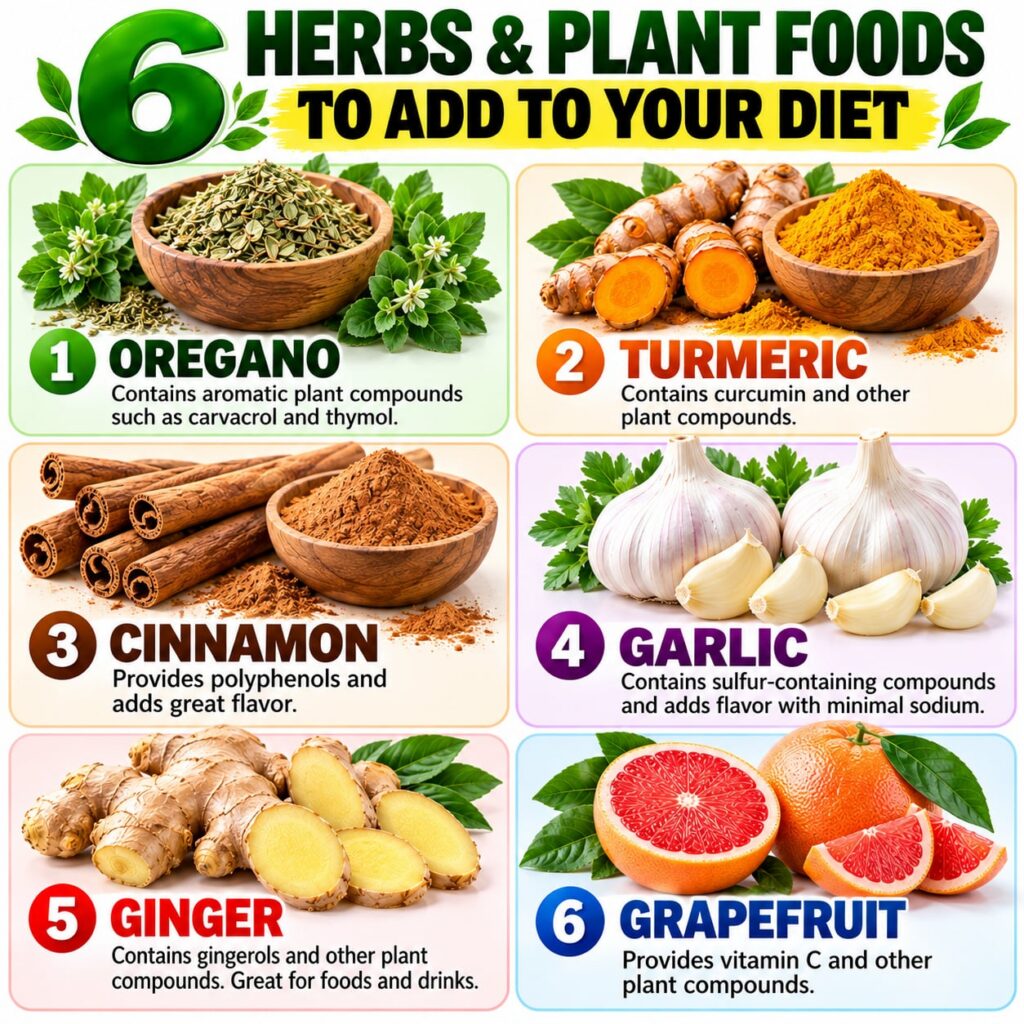
- Oregano: A staple in Mediterranean cuisine, oregano offers a robust, aromatic flavor. It’s wonderful in tomato sauces, on pizza, or sprinkled over roasted vegetables.
- Turmeric: Known for its vibrant yellow color and earthy flavor, turmeric is a key spice in curries and many traditional dishes. It pairs well with lentils, rice, and roasted root vegetables.
- Cinnamon: This sweet and warming spice is incredibly versatile. Beyond baked goods, try it in savory dishes like stews, chili, or sprinkled over oatmeal and coffee for a comforting twist.
- Garlic: A foundational ingredient in countless cuisines, garlic offers a pungent, savory flavor that mellows and sweetens when cooked. It’s excellent in virtually any savory dish, from stir-fries to soups.
- Ginger: With its distinct spicy and sweet notes, ginger is fantastic in Asian-inspired dishes, smoothies, and teas. It adds a refreshing kick to both sweet and savory recipes.
- Grapefruit: This tangy citrus fruit is a refreshing addition to breakfast, salads, or as a light snack. Its bright, slightly bitter flavor can awaken your palate.
Important Health Considerations and Precautions
While the health benefits of herbs and plant foods are widely celebrated, it’s crucial to approach their use with awareness and caution. Certain ingredients, even natural ones, can have significant impacts on your body, especially when used in concentrated forms or alongside medications.
Understanding Antimicrobial Claims: Lab vs. Gut
Many herbs and plant compounds show antimicrobial effects in laboratory settings. These fascinating studies demonstrate how certain plant extracts can inhibit the growth of harmful bacteria or fungi in a petri dish. However, it’s vital to understand that laboratory antimicrobial effects do not mean these foods can kill harmful bacteria or treat an infection inside the human gut. The complex environment of the human digestive system, along with various metabolic processes, means that the effects seen in a lab often do not translate directly to therapeutic outcomes in the body. For any suspected infection, always consult a qualified healthcare professional.
Neem Oil and Supplements: What You Need to Know
Neem is a plant with a long history of use in traditional medicine, particularly for topical applications. However, when it comes to internal use, specific warnings apply. It is crucial to avoid ingesting neem oil due to potential toxicity. If you are considering using neem supplements, which are often in capsule or powder form, it is imperative to ask a qualified healthcare professional before using neem supplements. They can provide guidance on appropriate use, potential side effects, and interactions, ensuring your safety.
Grapefruit and Medication Interactions
Grapefruit is a delicious and nutritious fruit, but it’s well-known for its potential to interact with a wide range of prescription medications. Compounds in grapefruit can inhibit enzymes in the intestine that are responsible for breaking down certain drugs. This can lead to higher-than-normal levels of the medication in your bloodstream, potentially causing serious side effects or increasing the drug’s potency. If you take prescription drugs, it is essential to check with your pharmacist or clinician about potential interactions before consuming grapefruit or grapefruit juice.

Elevating Your Meals Safely: Practical Tips
Embracing the rich world of herbs and plant foods can significantly enhance your culinary experience and nutritional intake. Here are some practical tips to safely incorporate them into your diet:
- Start Small: If you’re new to a particular herb or spice, begin with small amounts to gauge its flavor and your body’s reaction.
- Fresh vs. Dried: Fresh herbs often offer a brighter flavor, while dried herbs are more concentrated. Adjust quantities accordingly.
- Read Labels: When purchasing supplements or concentrated extracts, always read labels carefully and follow dosage instructions.
- Consult Professionals: For any health concerns, or before making significant dietary changes, especially if you have existing conditions or take medication, speak with a doctor, dietitian, or pharmacist.
- Variety is Key: Don’t rely on just one or two ingredients. A diverse intake of healthy whole foods ensures a broader spectrum of beneficial compounds.
Final Thoughts
Herbs and plant foods are incredible gifts from nature, offering a delicious path to more flavorful and potentially more nutritious meals. By understanding their benefits and, critically, their limitations and potential interactions, you can confidently integrate them into a balanced and informed approach to your health. Always remember that while natural, these powerful ingredients demand respect and careful consideration.
Medical Disclaimer
This article is intended for informational purposes only and does not constitute medical advice. Always consult with a qualified healthcare professional, such as a doctor, registered dietitian, or pharmacist, before making any decisions about your diet, health, or starting any new supplements or treatments, especially if you have a medical condition or are taking medication. The information provided here is not a substitute for professional medical advice, diagnosis, or treatment.