Want a stronger, more defined core? Building strong abs isn’t just about endless crunches! While a strong core certainly contributes to a more toned physique, its benefits extend far beyond aesthetics. Your core is the powerhouse of your body, supporting almost every movement you make, from standing and sitting to lifting and running. Focusing on engaging your entire core with controlled movements is essential for better results and crucial for protecting your back from potential strain.
Consistency is key when it comes to strengthening your core. Even short, targeted sessions can make a significant difference over time. Remember to start small and gradually build up your routine as your strength improves. This guide will walk you through effective exercises to help you sculpt your core and enhance your overall stability and strength.
The Benefits of a Strong Core
Before diving into the exercises, let’s explore why a strong core is so vital for your health and well-being:
- Improved Posture: A strong core helps you maintain proper posture, reducing slouching and the associated back pain.
- Reduced Back Pain: By providing support to your spine, a strong core can alleviate and prevent lower back pain.
- Enhanced Balance and Stability: Your core muscles are crucial for maintaining balance, which is important for everyday activities and athletic performance.
- Better Athletic Performance: Most sports and physical activities rely on core strength for power, stability, and endurance.
- Injury Prevention: A stable core helps protect your spine and reduces the risk of injuries during physical exertion.
- Easier Everyday Movements: Simple tasks like bending, lifting, and twisting become easier and safer with a robust core.
Essential Ab Exercises for a Sculpted Core
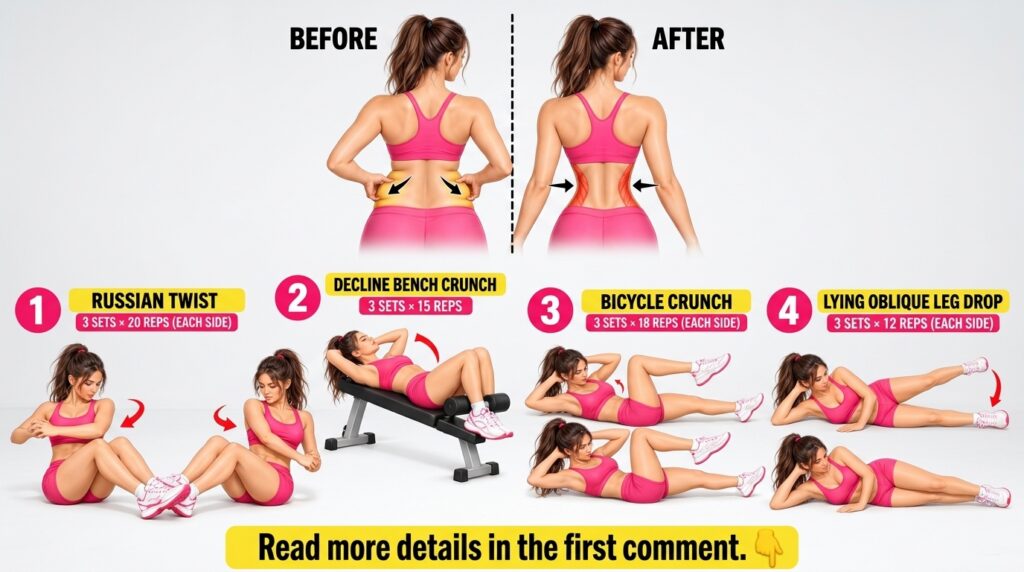
Here are four effective exercises to target different parts of your core, helping you achieve a strong and sculpted midsection.
1. Russian Twist
The Russian Twist is excellent for targeting your obliques and improving rotational strength. It’s a dynamic exercise that requires control and engagement of your entire core.
- How to Perform: Sit on the floor with your knees bent and feet flat. Lean back slightly, keeping your back straight, and lift your feet off the ground (you can keep them on the ground for an easier modification). Clasp your hands together or hold a light weight. Twist your torso from side to side, touching the floor beside your hips with your hands or the weight.
- Tips: Keep your core engaged throughout the movement and avoid using momentum. Focus on the twist coming from your core, not just your arms.
- Sets & Reps: Aim for 3 sets of 10-15 twists per side.
2. Decline Bench Crunch
The Decline Bench Crunch increases the intensity of a traditional crunch by adding a greater range of motion and resistance, effectively targeting your upper and lower abs.
- How to Perform: Lie on a decline bench with your feet securely hooked at the top. Place your hands lightly behind your head or across your chest. Slowly curl your upper body towards your knees, contracting your abdominal muscles. Pause at the top, then slowly lower yourself back down with control.
- Tips: Avoid pulling on your neck. The movement should come from your abs. Focus on a controlled descent to maximize muscle engagement.
- Sets & Reps: Try for 3 sets of 12-15 repetitions.
3. Bicycle Crunch
The Bicycle Crunch is a fantastic exercise for working both your rectus abdominis and obliques simultaneously, mimicking the motion of pedaling a bicycle.
- How to Perform: Lie on your back with your hands behind your head, elbows wide. Lift your shoulders and feet slightly off the floor. Bring your right elbow towards your left knee, extending your right leg straight. Then, switch sides, bringing your left elbow towards your right knee while extending your left leg. Continue alternating in a controlled, fluid motion.
- Tips: Keep your lower back pressed into the floor. Focus on rotating your torso and reaching with your elbow rather than just your hand.
- Sets & Reps: Aim for 3 sets of 15-20 repetitions per side.
4. Lying Oblique Leg Drop
This exercise specifically targets your obliques and helps improve core stability while engaging your lower abdominal muscles.
- How to Perform: Lie on your back with your knees bent and feet flat on the floor. Extend your arms out to the sides, forming a ‘T’ shape, palms down. Keeping your knees bent, lift your feet off the floor until your thighs are perpendicular to the floor and shins parallel. Keeping your knees together, slowly drop both legs to one side, allowing your hips to lift slightly but keeping your shoulders on the ground. Use your core to bring your legs back to the center, then drop them to the other side.
- Tips: Control the movement; don’t let gravity take over. Only lower your legs as far as you can while maintaining control and keeping your shoulders grounded.
- Sets & Reps: Perform 3 sets of 10-12 repetitions per side.
Key Principles for Core Workout Success
To maximize your results and prevent injury, keep these principles in mind:
- Consistency: Regular workouts, even short ones, are more effective than sporadic, intense sessions. Aim for 3-4 core workouts per week.
- Proper Form: Always prioritize correct form over the number of repetitions. Incorrect form can lead to injuries and less effective muscle engagement. If you’re unsure, consider watching instructional videos or consulting a fitness professional.
- Mind-Muscle Connection: Actively think about engaging your core muscles during each exercise. This helps ensure you’re working the intended muscles.
- Progressive Overload: As you get stronger, gradually increase the challenge. This could mean more repetitions, more sets, adding weights, or trying more advanced variations of exercises.
- Listen to Your Body: Pay attention to any pain signals. Some muscle soreness is normal, but sharp pain is a sign to stop and rest.
- Breathe: Don’t hold your breath! Exhale on exertion and inhale as you return to the starting position.
Important Disclaimer
The information provided in this article is for general educational purposes only and is not intended as a substitute for professional medical advice, diagnosis, or treatment. Always seek the advice of your physician or other qualified health provider with any questions you may have regarding a medical condition or before undertaking any new diet, fitness, or wellness program.
Start Sculpting Your Core Today!
Building a strong core is a journey, not a destination. By incorporating these exercises into your routine and focusing on consistency and proper form, you’ll be well on your way to a more stable, powerful, and sculpted midsection. Remember, every small step you take towards a stronger core is a step towards a healthier, more balanced you!