Have you ever wondered which onion to grab at the grocery store? With so many varieties available, choosing the right one can transform your meal from good to truly great. Each type of onion boasts a unique flavor profile, and understanding these nuances is key to culinary success. This simple guide helps you pick the perfect onion for any dish, ensuring your flavors are always on point.
From adding a delicate sweetness to a savory sauce to providing a sharp bite in a fresh salad, onions are fundamental to countless recipes. Let’s peel back the layers and discover how to master your cooking with the right type of onion every time.
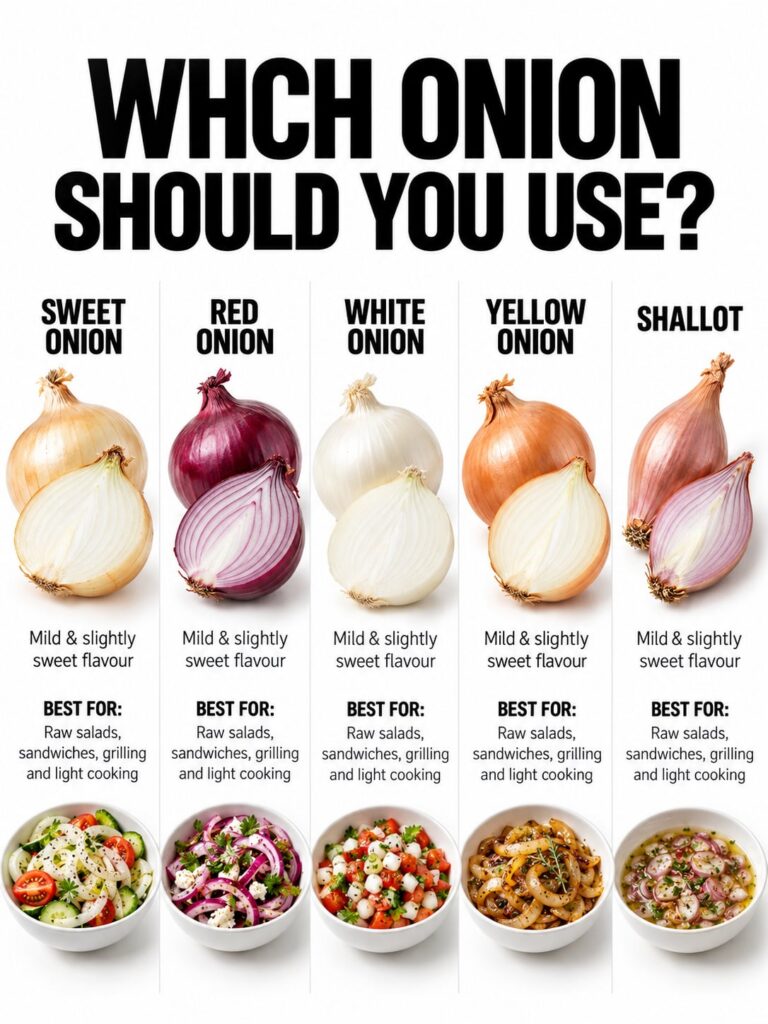
Understanding Your Onion Options
The world of onions is diverse, offering a spectrum of flavors from mild and sweet to pungent and sharp. Knowing these differences empowers you to make informed decisions in the kitchen, enhancing the overall taste and aroma of your meals. Let’s explore the essential characteristics of the most common onion varieties.
The Essential Onion Flavor Guide
Sweet Onion: The Caramelizing Champion
Sweet onions, often recognized by their flatter shape and lighter skin, are true culinary gems. As their name suggests, they have a remarkably mild and sugary flavor, with a significantly lower sulfur content compared to other varieties. This makes them less pungent when raw and exceptionally delicious when cooked, as their natural sugars caramelize beautifully.
- Flavor Profile: Mild, sweet, juicy, very low pungency.
- Best Uses: Excellent eaten raw in salads, sandwiches, and as a topping for burgers. They are superb for making onion rings, caramelizing for soups or tarts, and grilling to bring out their tender sweetness.
Yellow Onion: The Versatile All-Rounder
The most common onion in many kitchens, the yellow onion is a true workhorse. It boasts a robust, assertive flavor when raw, which mellows considerably and develops a rich sweetness and depth when cooked. Its sturdy texture holds up well to various cooking methods, making it incredibly versatile.
- Flavor Profile: Pungent and sharp when raw, sweetens and deepens when cooked.
- Best Uses: Ideal for sautéing, roasting, and building the flavor base for soups, stews, sauces, and casseroles. It’s the go-to for most everyday cooking tasks.
Red Onion: The Vibrant & Zesty Choice
With its striking purple-red skin and crisp white flesh, the red onion adds both visual appeal and a distinctive taste to dishes. When raw, it offers a pungent and slightly peppery bite. However, cooking, grilling, or pickling them transforms their flavor into something much milder and sweeter, often with a hint of tang.
- Flavor Profile: Sharp and spicy when raw, sweeter and milder when cooked or pickled.
- Best Uses: Perfect for adding a pop of color and zest to salads, salsas, sandwiches, and wraps. They are also fantastic grilled, roasted, or quickly pickled to accompany tacos and other savory dishes.
White Onion: The Crisp & Sharp Contributor
White onions are known for their crisp texture and sharper, more assertive flavor compared to yellow onions. They tend to be slightly less sweet and more pungent when raw, making them a favorite in specific cuisines where a strong onion presence is desired. They also have a thinner, papery skin.
- Flavor Profile: Sharper, tangier, and more pungent than yellow onions; crisp texture.
- Best Uses: Commonly used in raw applications like salsas, relishes, and guacamole. They are also popular in Mexican cuisine and for quick sautés where their distinctive bite can shine.
Shallots: The Delicate & Aromatic Gem
Often considered the gourmet cousin of the onion family, shallots are smaller, elongated, and have a more delicate flavor. They offer a sweet, subtle onion taste with hints of garlic, making them less aggressive than larger onions. Their complexity makes them a favorite among chefs.
- Flavor Profile: Milder, sweeter, and more complex than regular onions, with garlic-like undertones.
- Best Uses: Excellent for delicate sauces, vinaigrettes, dressings, and roasted with vegetables or meats. They are a staple in French cuisine and elevate many sophisticated dishes.
Green Onions (Scallions): The Fresh Finisher
Green onions, also known as scallions, are young onions harvested before the bulb fully develops. Both the white and green parts are edible, offering a mild, fresh, and slightly grassy flavor. They provide a gentle oniony note without overpowering other ingredients.
- Flavor Profile: Mild, fresh, slightly pungent, and grassy.
- Best Uses: Primarily used as a garnish for stir-fries, soups, eggs, and salads. They add a fresh, aromatic finish to Asian dishes, tacos, and baked potatoes.
Quick Tips for Onion Storage & Preparation
To get the most out of your onions, proper storage and preparation are key:
- Storage: Store whole, unpeeled onions in a cool, dry, dark, and well-ventilated place, away from potatoes, which can cause them to spoil faster. Once cut, store them in an airtight container in the refrigerator and use within a few days.
- Reducing Tears: Chill onions in the refrigerator for 30 minutes before cutting, use a very sharp knife, or cut them near a vent or open window to minimize eye irritation.
- Chopping: Learn different chopping techniques for various dishes – from fine dices for salsas to thick wedges for roasting – to achieve the desired texture and flavor release.
Final Thoughts
Choosing the right onion can profoundly impact the success of your culinary creations. By understanding the unique characteristics of sweet, yellow, red, white, shallot, and green onions, you are now equipped to make confident choices in the kitchen. Experiment with different types in your favorite recipes, and discover how this humble vegetable can elevate your cooking to new heights. Happy cooking!
Medical Disclaimer
The information provided in this article is for general knowledge and informational purposes only, and does not constitute medical advice. Always consult with a qualified healthcare professional before making any decisions about your health or diet.