When it comes to healthy eating, both carrots and sweet potatoes are nutritional powerhouses. These vibrant root vegetables are staples in many diets, celebrated for their unique flavors and versatility. But have you ever stopped to consider the specific nutritional differences between a carrot vs. sweet potato?
While both are excellent choices for a balanced diet, they offer distinct profiles that might better suit your individual dietary goals. This article will break down the key nutritional facts, helping you understand which veggie provides what, from calories and carbohydrates to fiber and potassium. Let’s dive into this nutrient showdown and discover how each can add a healthy boost to your meals!
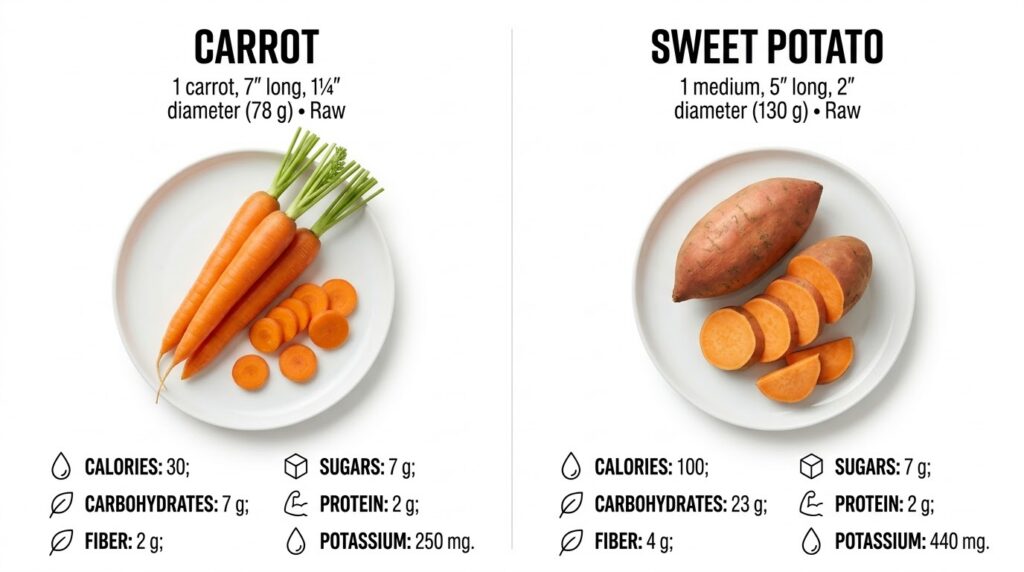
The Vibrant Carrot: A Crunchy Powerhouse
Carrots are widely recognized for their crisp texture and earthy sweetness, making them a popular snack and a versatile ingredient in countless dishes. Beyond their satisfying crunch, carrots pack a surprising nutritional punch, especially given their low-calorie count.
Nutritional Profile of 1 Medium Carrot (61g):
- Calories: 25
- Carbohydrates: 6g
- Fiber: 2g
- Sugars: 3g
- Protein: 1g
- Potassium: 195mg
Rich in beta-carotene, which the body converts to Vitamin A, carrots are well-known for their potential benefits for vision health. They also provide a good source of fiber, supporting digestive health and contributing to satiety without adding significant calories.
Sweet Potato: The Naturally Sweet & Satisfying Choice
Sweet potatoes, with their creamy texture and naturally sweet flavor, often feel more indulgent than their orange counterpart. They are a fantastic source of complex carbohydrates, providing sustained energy, and are a beloved side dish or main ingredient in healthy meal prep.
Nutritional Profile of 1/2 Medium Sweet Potato (61g):
- Calories: 52
- Carbohydrates: 12g
- Fiber: 2g
- Sugars: 4g
- Protein: 1g
- Potassium: 228mg
Like carrots, sweet potatoes are an excellent source of beta-carotene and Vitamin A. Their higher carbohydrate content makes them a great option for energy, particularly before or after physical activity. They also offer a slightly higher potassium content, an essential mineral for blood pressure regulation and overall heart health.
Side-by-Side: Key Nutritional Differences
While both vegetables are undeniably healthy, a direct comparison reveals where each truly shines:
- Calories: A carrot (25 calories) has significantly fewer calories than half a sweet potato (52 calories) for the same 61g serving size. This makes carrots an excellent choice for those managing calorie intake.
- Carbohydrates: Sweet potatoes contain more carbohydrates (12g) compared to carrots (6g). If you’re looking for a quick energy boost or a more substantial carb source, sweet potatoes may be more beneficial.
- Fiber: Both vegetables offer a respectable 2g of fiber per serving, contributing to digestive health and feelings of fullness.
- Sugars: Sweet potatoes have slightly more natural sugars (4g) than carrots (3g), contributing to their distinct sweetness.
- Protein: Both provide a modest 1g of protein per serving, highlighting their primary role as carbohydrate and vitamin sources rather than protein powerhouses.
- Potassium: Sweet potatoes come out slightly ahead with 228mg of potassium, compared to carrots’ 195mg. Both contribute to daily potassium intake, which is vital for many bodily functions.
When choosing between the two, consider your immediate needs: carrots are ideal for a low-calorie, nutrient-dense snack, while sweet potatoes offer more energy and a slightly higher potassium boost.
Making Your Choice: Which Veggie for Your Goals?
Understanding the nutritional differences can help you tailor your food choices to your health objectives. Here’s a quick guide:
- For Weight Management: Carrots, with their lower calorie and carbohydrate count, can be a great choice for those aiming for a calorie deficit. Their fiber content helps promote satiety.
- For Sustained Energy: Sweet potatoes are a fantastic option for athletes or anyone needing a more substantial and sustained energy release due to their higher complex carbohydrate content.
- For Boosting Vitamin A: Both are champions here! You can’t go wrong with either for a significant boost in beta-carotene, which converts to Vitamin A.
- For Electrolyte Balance: While both offer potassium, sweet potatoes have a slight edge, making them a good choice for replenishing electrolytes, especially after exercise.
Ultimately, incorporating both carrots and sweet potatoes into your diet offers a wider spectrum of nutrients and health benefits. Variety is key to healthy eating!
Incorporating Carrots and Sweet Potatoes into Your Diet
Both carrots and sweet potatoes are incredibly versatile. You can enjoy carrots raw as a snack, grated into salads, roasted alongside other vegetables, or blended into soups. Sweet potatoes are delicious baked, roasted, mashed, or even cubed and added to stews and curries. Experiment with different cooking methods and seasonings to maximize their flavor and nutritional benefits.
Final Thoughts
The nutrient showdown between carrots and sweet potatoes reveals that while both are incredibly beneficial for your health, they offer slightly different nutritional profiles. Carrots provide a lighter, lower-calorie option rich in fiber and Vitamin A, while sweet potatoes offer more sustained energy, a touch more potassium, and that satisfying sweetness. No matter your preference, both of these vibrant root vegetables are excellent additions to any healthy eating plan. Enjoy them regularly to reap their diverse benefits!
Medical Disclaimer
The information provided in this article is for educational purposes only and is not intended as medical advice. Always consult with a qualified healthcare professional before making any decisions about your health or diet, especially if you have any underlying health conditions.