Do you have wooden furniture that’s lost its luster? Over time, coffee tables, dressers, and other wooden pieces can start to look dull, faded, or show minor scratches from everyday use. Instead of investing in expensive refinishing, a simple DIY polish can bring them back to life, creating a refreshed and inviting atmosphere in your home. This easy method can enhance your wood’s natural beauty and is a practical, affordable way to maintain your beloved pieces.
What You’ll Need
- Baby Oil: Approximately 1-2 tablespoons per square foot of surface, or as needed.
- Soft Microfiber Cloths: Two to three clean, dry cloths. One for application, one for buffing, and an optional third for a final wipe.
Why This DIY Can Be Useful
Baby oil is an excellent, gentle choice for conditioning wood. It helps to moisturize the wood fibers, which can prevent further drying and cracking. By penetrating the surface, it effectively enhances the wood’s natural color and brings out its inherent shine. This can also help to temporarily minimize the appearance of minor surface scratches and scuffs, making your furniture look more uniform and vibrant without the need for harsh chemicals.
How to Use It
- Clean the Surface: Before applying any polish, ensure your wooden furniture is clean and free of dust and grime. Use a soft, damp cloth to wipe down the surface, then dry it thoroughly.
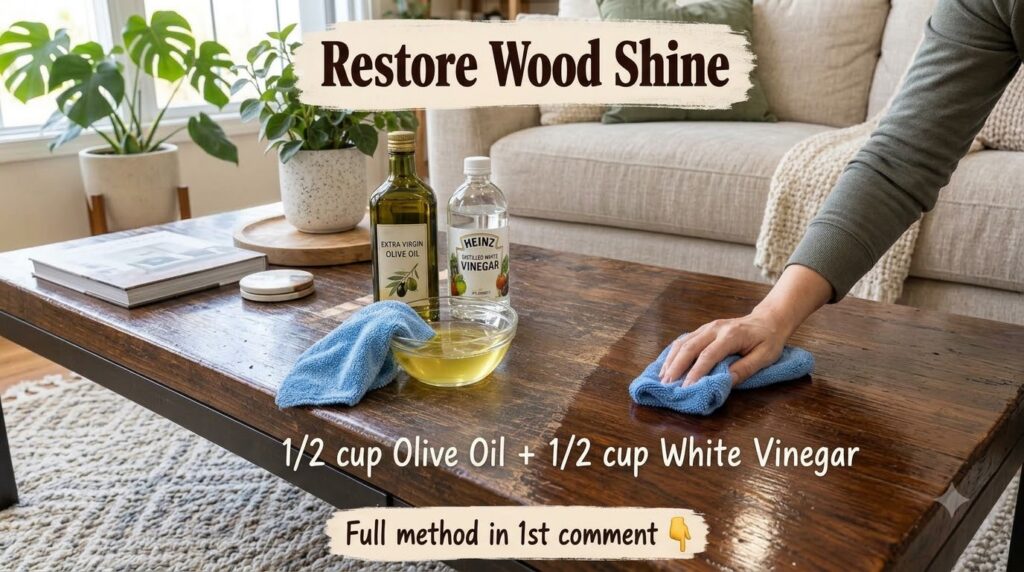
- Apply the Polish: Pour a small amount of baby oil (start with about a tablespoon) onto one of your microfiber cloths. Do not pour directly onto the wood.
- Wipe Evenly: Gently rub the oiled cloth onto the wooden surface, moving in the direction of the wood grain. Apply light, even pressure, ensuring you cover the entire area you wish to polish. Work in small sections if your furniture piece is large.
- Let it Absorb (Optional): For very dry or dull wood, you can let the oil sit for 5-10 minutes to allow it to penetrate. For most surfaces, you can proceed directly to buffing.
- Buff to a Shine: Using a second clean, dry microfiber cloth, buff the polished surface vigorously. This step is crucial for removing any excess oil and bringing out a smooth, non-greasy shine. Continue buffing until the wood feels dry to the touch and has a beautiful sheen.
- Final Wipe (Optional): If any residue remains, use a third clean, dry cloth for a final light wipe.
What to Expect
After applying this effortless polish, you can expect a noticeable improvement in the appearance of your wooden furniture. The wood’s natural color will appear richer and deeper, and you’ll likely see a healthy, subtle sheen. Minor surface scratches and dull areas will be less prominent, giving your furniture a more cared-for look. This DIY offers a cosmetic enhancement and is not a permanent restoration; it will require reapplication periodically as the wood starts to look faded again.
Helpful Tips
- Patch Test: Always test a small, inconspicuous area of your furniture first to ensure compatibility and desired results.
- Less is More: Start with a small amount of baby oil. It’s easier to add more than to remove excess. Too much oil can leave a greasy residue that attracts dust.
- Regular Maintenance: For best results, incorporate this polish into your routine every few months or whenever your wood starts to look dull.
- Clean First: For very dirty surfaces, consider using a mild wood cleaner before applying the baby oil to ensure optimal absorption and shine.
Important Notes / Safety
- Not for All Woods: Avoid using this method on unfinished, unsealed, or waxed wood, as it may cause discoloration or an undesirable finish. It is best suited for sealed or varnished wood.
- Avoid Painted Surfaces: Do not use baby oil on painted wooden furniture unless you intend to strip or alter the paint, as it can potentially damage or lift certain types of paint.
- Wipe Away Excess: Always buff thoroughly to remove all excess oil. Leftover oil can create a sticky surface that attracts dust and dirt.
- Ventilation: Work in a well-ventilated area, especially if you are sensitive to scents.
- Flammability: While baby oil itself is not highly flammable, cloths saturated with oil can be. Dispose of used cloths properly by washing them immediately or allowing them to air dry completely before discarding, to prevent potential fire hazards.