Nurturing New Growth: A Simple Guide to Banana Plant Propagation
There’s something incredibly satisfying about watching your garden flourish, and even more so when you can multiply your favorite plants right from your own home! Banana plants, known for their lush, tropical foliage and delightful fruit, are surprisingly easy to propagate. If you have an established banana plant, you might have noticed little ‘pups’ or suckers emerging from its base. These are your tickets to a bigger, more beautiful banana grove!
Propagating banana plants is not just a fantastic way to expand your collection; it also helps maintain the health and vigor of your parent plant. By removing these pups, you allow the main plant to focus its energy on producing fruit or growing stronger. Ready to get started?
Why Propagate Banana Plants?
Beyond simply getting more plants, there are several great reasons to propagate your banana plants:
- Expand Your Garden: More banana plants mean more lush greenery and potentially more fruit!
- Healthier Parent Plant: Removing pups reduces competition for nutrients, allowing the main plant to thrive.
- Share with Friends: Pups make wonderful gifts for fellow gardening enthusiasts.
- Save Money: Grow new plants for free instead of buying them.
- Ensure Longevity: If your main plant eventually dies after fruiting (which some varieties do), you’ll have new plants ready to take its place.
When is the Best Time to Propagate?
The ideal time to propagate banana plant pups is during the warmer months, typically spring or early summer, when the plants are actively growing. Look for pups that are at least 1-3 feet tall and have developed a few leaves of their own. Pups of this size are usually robust enough to survive the separation process and establish themselves independently.
Tools You’ll Need
- A sharp, sterilized shovel or knife (a serrated edge can be helpful).
- Gloves (to protect your hands).
- New pots with good drainage (if potting individually).
- Well-draining potting mix.
- Watering can.
Step-by-Step Guide to Propagating Banana Pups
Step 1: Prepare Your Tools and Work Area
Before you begin, ensure your shovel or knife is clean and sharp. Sterilizing your tools with rubbing alcohol or a bleach solution helps prevent the spread of diseases to both the parent plant and the new pup.
Step 2: Identify Healthy Pups
Scan the base of your mature banana plant for healthy suckers. As mentioned, look for pups that are between 1 and 3 feet tall and have their own leaves. These pups have developed a corm (a bulb-like underground stem) and a root system strong enough to sustain them once separated.
Step 3: The Separation Process
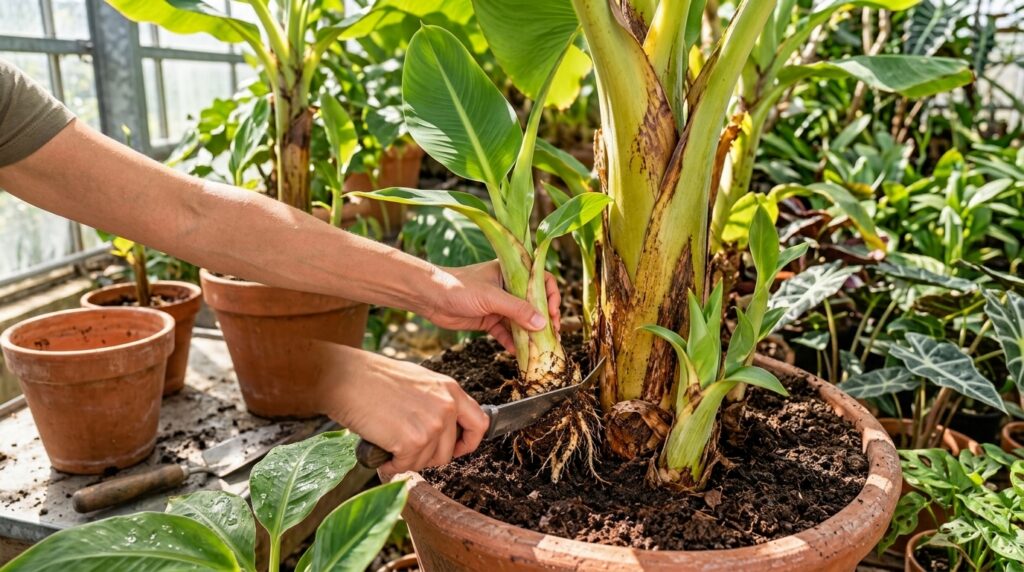
This is where precision is key. Gently clear away some soil around the base of the chosen pup to expose its connection to the parent plant’s corm. Using your sharp, sterilized tool, make a clean cut to separate the pup from the main corm. Aim to take a good portion of the pup’s own root system with it. Be careful not to damage the main plant’s roots excessively.
Step 4: Potting the New Pup
Once separated, your banana pup is ready for its new home. If you’re growing in containers, choose a pot that is slightly larger than the pup’s root ball, ensuring it has drainage holes. Fill the pot with a well-draining potting mix. Plant the pup at the same depth it was growing previously, making sure its roots are spread out in the soil. Gently firm the soil around the base of the pup.
If you’re planting directly into the ground, choose a sunny spot with rich, well-draining soil. Dig a hole twice as wide as the pup’s root ball and just as deep. Place the pup, backfill with soil, and gently firm.
Step 5: Initial Care for Your New Banana Plant
Immediately after potting or planting, give your new banana pup a good watering. This helps settle the soil around the roots and provides much-needed hydration. Keep the soil consistently moist but not waterlogged. For the first few weeks, a slightly shadier spot can help the pup recover from the transplant shock before moving it to full sun.
Ongoing Care Tips
- Watering: Banana plants are thirsty! Water regularly, especially during dry periods, keeping the soil consistently moist.
- Sunlight: They thrive in full sun (at least 6-8 hours a day).
- Fertilizing: Once established, feed your banana plants with a balanced, slow-release fertilizer during their growing season.
- Protection: If you live in a cooler climate, be prepared to protect your banana plants from frost or bring container-grown plants indoors during winter.
With a little patience and care, you’ll soon have a thriving family of banana plants, adding a touch of the tropics to your garden. Happy propagating!