Unlock Your Wok: 6 Homemade Stir-Fry Sauces for Every Craving!
Say goodbye to bland takeout and hello to vibrant, flavorful homemade stir-fries! The secret to an incredible stir-fry often lies in its sauce, and with this guide, you’ll learn how to craft 6 homemade stir-fry sauces that will transform your weeknight meals. Making your own stir-fry sauce from scratch is not only incredibly easy, but it also allows you to control the ingredients, tailor the flavors to your liking, and avoid unwanted additives found in many store-bought options.
Whether you crave something savory, sweet, spicy, or a delightful combination, this guide provides a versatile base recipe and inspires you to create a range of sauces that will unlock new culinary possibilities in your kitchen. Get ready to elevate your stir-fry game and impress your family and friends with these customizable, delicious options!
Why You’ll Love These Homemade Stir-Fry Sauces
- Easy to Make: Most sauces come together in minutes with minimal effort.
- Simple Ingredients: You likely have most of the staple ingredients in your pantry already.
- Customizable: Easily adjust flavors, sweetness, and spice to suit your preference.
- Healthier Option: Control sugar and sodium levels, avoiding artificial preservatives.
- Meal-Prep Friendly: Make a batch ahead of time for quick weeknight cooking.
- Versatile: Perfect for any protein (chicken, beef, shrimp, tofu) and a rainbow of vegetables.
Understanding the Anatomy of a Stir-Fry Sauce
Before diving into specific variations, it’s helpful to understand the core components that make a balanced and flavorful stir-fry sauce:
- Savory Base: Often soy sauce, tamari, or oyster sauce. This provides umami and saltiness.
- Sweetener: Brown sugar, honey, maple syrup, or agave. Balances the savory and acidic notes.
- Acid: Rice vinegar, lime juice, or mirin. Adds brightness and cuts through richness.
- Aromatics & Heat: Fresh ginger, garlic, chili flakes, Sriracha, or other hot sauces. Essential for depth and kick.
- Thickener: Cornstarch or arrowroot powder mixed with water (slurry). Creates that signature glossy, clingy texture.
- Flavor Enhancer: Sesame oil, white pepper, or a pinch of five-spice powder. Adds an extra layer of complexity.
The Ultimate Base Homemade Stir-Fry Sauce Recipe
This foundational sauce is excellent on its own and serves as the perfect canvas for all the variations we’ll explore. It’s simple, balanced, and incredibly versatile.
Ingredients for Base Stir-Fry Sauce
- ½ cup (120 ml) low-sodium soy sauce (or tamari for gluten-free)
- ½ cup (120 ml) water or vegetable broth
- 2-3 tablespoons (30-45 g) light brown sugar (packed), or honey/maple syrup
- 1 tablespoon (15 ml) rice vinegar
- 1 tablespoon (8 g) cornstarch
- 1 teaspoon (5 ml) sesame oil
- 2 cloves garlic, minced
- 1 teaspoon (5 g) fresh ginger, grated
- Optional: ¼ teaspoon white pepper
Ingredient Notes
- Soy Sauce: Low-sodium is recommended to prevent the sauce from being overly salty. Tamari is an excellent gluten-free alternative.
- Sweetener: Adjust the amount of brown sugar based on your sweetness preference. Honey or maple syrup can be used for a slightly different flavor profile.
- Thickener: Cornstarch creates a smooth, glossy sauce. Ensure it’s fully dissolved in the liquid before cooking to prevent lumps.
- Aromatics: Freshly minced garlic and grated ginger make a huge difference in flavor compared to dried versions.
- Sesame Oil: Always use toasted sesame oil for its distinct nutty aroma, and add it at the end or when mixing the sauce for best flavor.
Equipment You’ll Need
- Medium mixing bowl
- Whisk
- Measuring cups and spoons
- Airtight jar or container for storage
How to Make Your Homemade Stir-Fry Sauces (The Base)
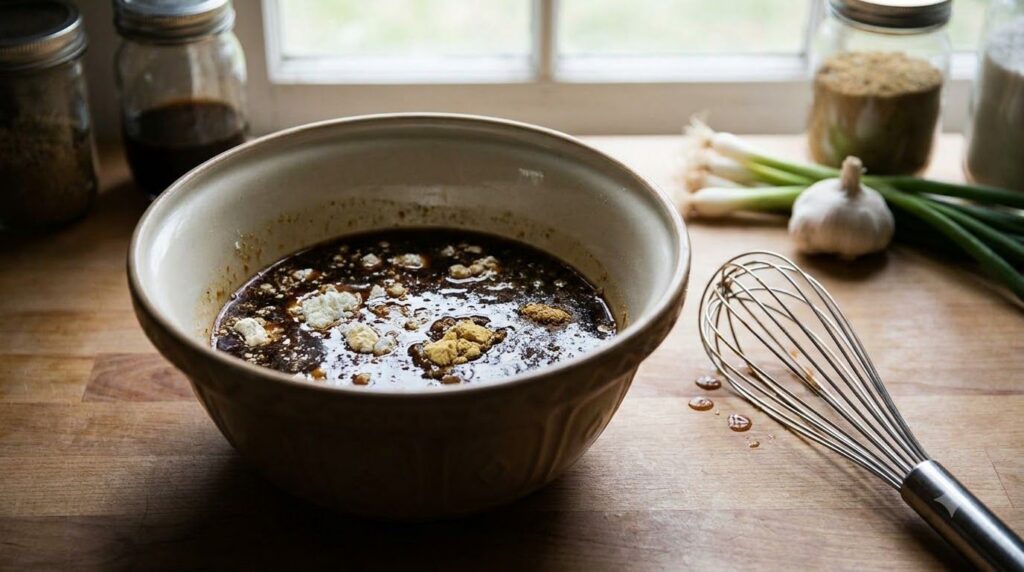
- Combine Liquids and Sweetener: In a medium bowl, whisk together the low-sodium soy sauce, water or vegetable broth, brown sugar, rice vinegar, cornstarch, and sesame oil. Whisk continuously until the sugar and cornstarch are completely dissolved and the mixture is smooth.
- Add Aromatics: Stir in the minced garlic and grated fresh ginger. If using, add the optional white pepper now.
- Taste and Adjust: Taste the sauce and adjust any elements to your preference. Need more sweetness? Add a pinch more sugar. Too salty? A tiny splash more water or vinegar can help.
- Ready to Use or Store: Your base stir-fry sauce is now ready! You can use it immediately in your stir-fry, adding it in the last 1-2 minutes of cooking as it will thicken quickly when heated. Alternatively, transfer it to an airtight container and refrigerate.
6 Flavorful Homemade Stir-Fry Sauce Variations
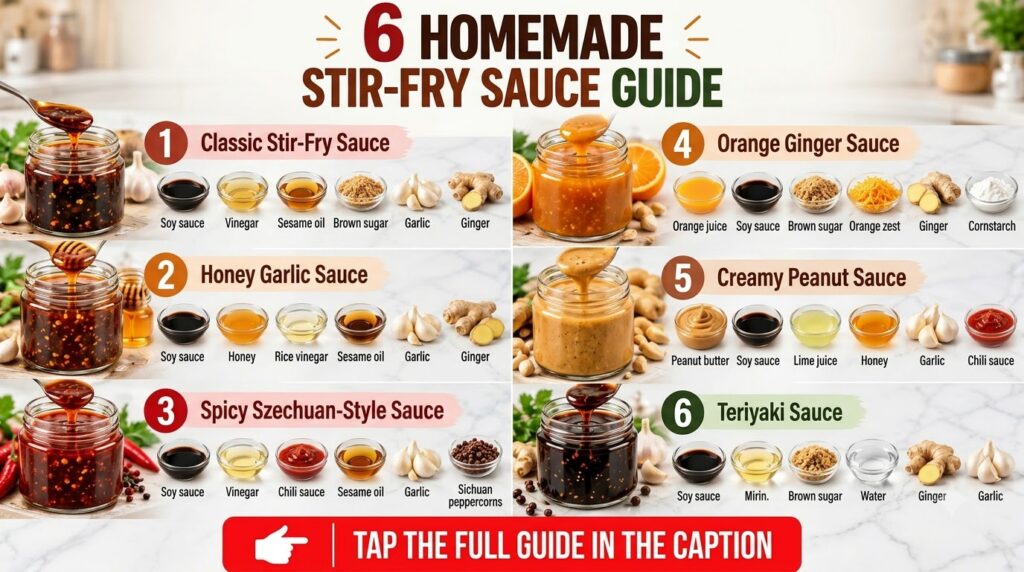
Now, let’s take that fantastic base and transform it into 6 homemade stir-fry sauces with distinct flavor profiles!
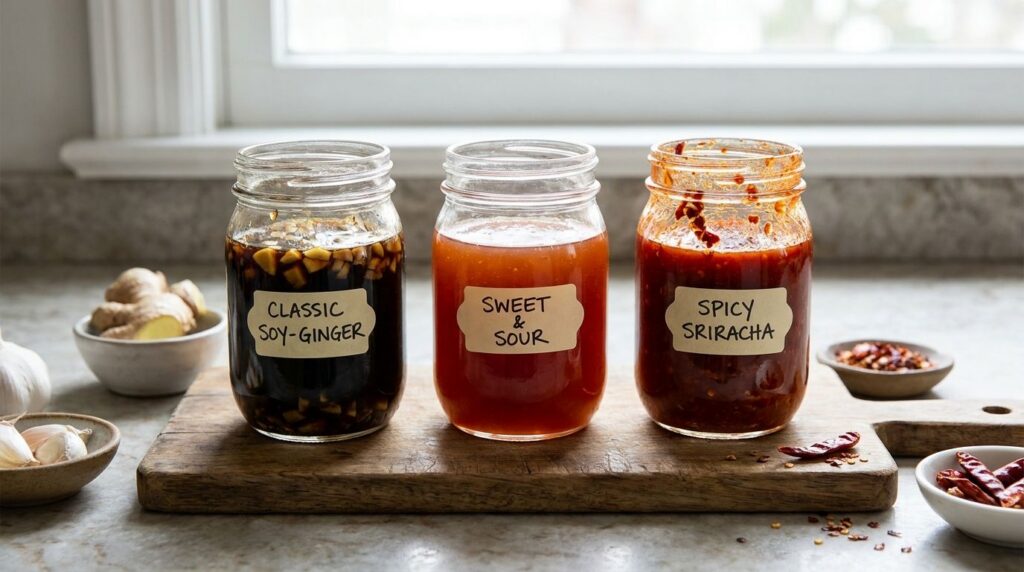
1. Classic Soy-Ginger
This is the quintessential stir-fry flavor – savory, aromatic, and comforting.
- Base Sauce + Additions: Increase ginger to 1 tablespoon, add an extra ½ teaspoon of sesame oil, and a pinch of red pepper flakes for a subtle kick.
2. Sweet and Sour
A tangy, vibrant sauce that’s a favorite for many, balancing sweetness with a delightful zing.
- Base Sauce + Additions: Increase brown sugar to 4 tablespoons, increase rice vinegar to 2 tablespoons, and add 2 tablespoons (30 ml) of ketchup or tomato paste for color and depth. A squeeze of fresh orange or pineapple juice can also brighten the flavor.
3. Spicy Sriracha
For those who love a little heat, this sauce brings a fiery kick to your stir-fry.
- Base Sauce + Additions: Add 1-2 tablespoons (15-30 ml) of Sriracha or your favorite chili garlic sauce. You can also include a dash of cayenne pepper for extra heat. Adjust to your desired spice level.
4. Garlic-Sesame
Richly aromatic with a strong nutty profile, this sauce is simple yet deeply satisfying.
- Base Sauce + Additions: Increase minced garlic to 3 cloves and increase sesame oil to 1 ½ teaspoons. Add 1 tablespoon (10 g) of toasted sesame seeds for texture and intensified sesame flavor.
5. Teriyaki-Style
A glossy, sweet, and savory sauce perfect for chicken, beef, or salmon stir-fries.
- Base Sauce + Additions: Replace ¼ cup of water/broth with mirin (sweet rice wine). Increase brown sugar to 3-4 tablespoons. Add ¼ teaspoon of onion powder for extra umami.
6. Peanut Sauce (Inspired)
Creamy, nutty, and slightly spicy, this variation adds a rich, comforting dimension.
- Base Sauce + Additions: Whisk in ¼ cup (60 g) of smooth peanut butter until fully incorporated. Add an extra tablespoon of water or broth to maintain consistency. A squeeze of lime juice and a pinch of red pepper flakes or Sriracha will enhance the flavor.
Pro Tips for the Best Results
- Fresh Aromatics are Key: Always use fresh garlic and ginger for the most vibrant flavor. Pre-minced or jarred versions won’t deliver the same punch.
- Adjust to Taste: Taste your sauce before adding it to your stir-fry. It’s easier to adjust the sweetness, saltiness, or acidity when it’s separate from the other ingredients.
- Cornstarch Slurry: Ensure your cornstarch is fully dissolved in cold liquid before heating. This prevents lumps and ensures a smooth, glossy sauce.
- Don’t Over-Thicken: Add the sauce to your stir-fry in the last minute or two of cooking. It will thicken quickly. If it becomes too thick, a splash of water or broth can thin it out.
- Make Ahead: These sauces are perfect for meal prepping. Make a larger batch and store them for quick weeknight stir-fries.
Common Mistakes to Avoid
- Too Salty: This often happens from using regular soy sauce instead of low-sodium, or simply too much soy sauce. Always start with low-sodium and add water/broth if it tastes too intense.
- Lumpy Sauce: Not properly dissolving cornstarch in cold liquid before heating will result in a lumpy sauce. Whisk well!
- Too Thin or Too Thick: If too thin, mix a bit more cornstarch with a tablespoon of cold water and slowly whisk into the simmering stir-fry. If too thick, add a tablespoon of water or broth at a time until desired consistency.
- Overcooking Aromatics: If adding fresh garlic and ginger directly to your stir-fry, add them towards the end of the cooking process to preserve their fresh flavor and prevent burning.
Serving Suggestions
These 6 homemade stir-fry sauces are incredibly versatile and can elevate any stir-fry combination:
- Proteins: Chicken, beef, shrimp, pork, tofu, or tempeh.
- Vegetables: Broccoli, carrots, bell peppers, snap peas, mushrooms, bok choy, onions, corn.
- Grains & Noodles: Serve over steamed white or brown rice, stir-fried noodles (lo mein or rice noodles), or quinoa.
- Garnish: Finish with toasted sesame seeds, chopped green onions, fresh cilantro, or a drizzle of extra sesame oil.
Storage & Reheating
- Refrigerator Storage: Store any unused homemade stir-fry sauce in an airtight container or jar in the refrigerator for up to 5-7 days.
- Freezer Suitability: Most of these sauces (especially the base, soy-ginger, and spicy sriracha) can be frozen for up to 1-2 months. Thaw in the refrigerator overnight before use. Give it a good whisk or shake before using, as some separation might occur.
- Reheating: When ready to use, simply add the chilled sauce to your hot stir-fry during the last few minutes of cooking. It will thicken as it heats. If reheating a stir-fry with sauce already incorporated, gently warm in a pan over medium heat or in the microwave until heated through.
FAQ
Can I make these sauces ahead of time?
Absolutely! Preparing your sauces in advance is highly recommended for quick meal prep. They keep well in the refrigerator for up to a week.
Can I freeze stir-fry sauce?
Yes, many stir-fry sauces, especially those without dairy, freeze well. Store in an airtight, freezer-safe container or ice cube trays for individual portions. Thaw in the refrigerator before using.
What can I substitute for cornstarch?
Arrowroot powder can be used as a 1:1 substitute for cornstarch. It’s also gluten-free and creates a similar clear, glossy texture.
Why did my sauce turn out too thin or too thick?
The thickness of a sauce can vary based on exact measurements and cooking time. If too thin, create another small cornstarch slurry (1 tsp cornstarch + 1 tbsp cold water) and whisk into the simmering sauce gradually. If too thick, thin it with a tablespoon of water or broth until it reaches your desired consistency.
Can I use regular soy sauce instead of low-sodium?
You can, but be mindful of the salt content. You may need to reduce the amount of soy sauce or add a bit more water/broth to balance the flavors. Always taste and adjust.
What’s the best way to incorporate the sauce into my stir-fry?
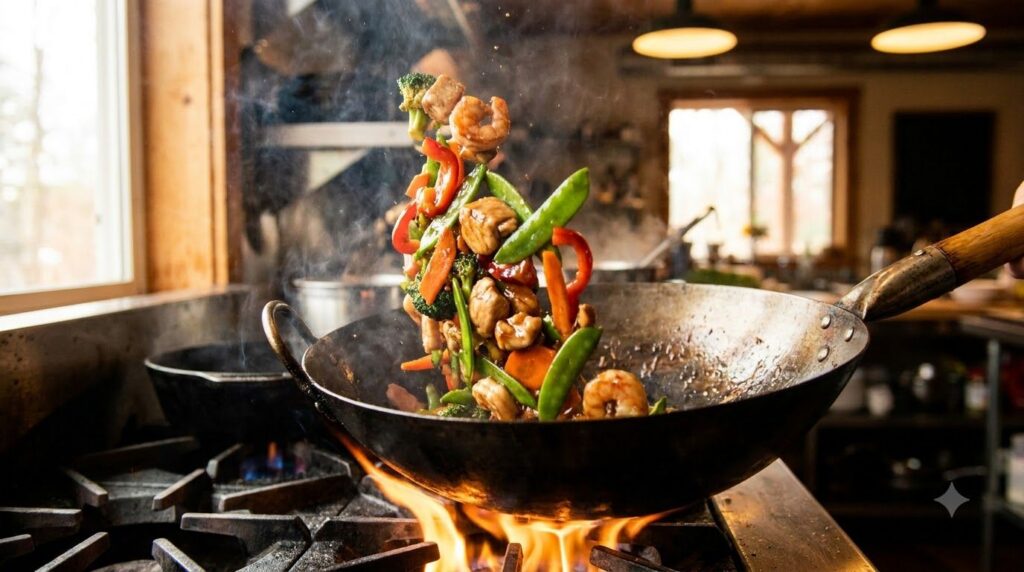
Add the sauce during the last 1-2 minutes of stir-frying, after all your proteins and vegetables are cooked through. Stir constantly as it heats and thickens to coat everything evenly. Don’t cook it for too long, or it might become too thick.
Recipe Card: Versatile Base Homemade Stir-Fry Sauce
Recipe Name: Versatile Base Homemade Stir-Fry Sauce
Short Description: A fundamental stir-fry sauce recipe, perfect for customization into 6 different delicious variations like Classic Soy-Ginger, Sweet & Sour, and Spicy Sriracha. This easy-to-make sauce is the key to elevating your weeknight stir-fries.
Prep Time: 5 minutes
Cook Time: 2-3 minutes (when added to stir-fry)
Total Time: 5 minutes
Servings: Approximately 1 cup (enough for 4 servings of stir-fry)
Course: Sauce, Condiment
Cuisine: Asian-inspired, Fusion
Cooking Method: Whisking, Simmering (when cooked with stir-fry)
Ingredients:
- ½ cup (120 ml) low-sodium soy sauce (or tamari for gluten-free)
- ½ cup (120 ml) water or vegetable broth
- 2-3 tablespoons (30-45 g) light brown sugar (packed), or honey/maple syrup
- 1 tablespoon (15 ml) rice vinegar
- 1 tablespoon (8 g) cornstarch
- 1 teaspoon (5 ml) sesame oil
- 2 cloves garlic, minced
- 1 teaspoon (5 g) fresh ginger, grated
- Optional: ¼ teaspoon white pepper
Instructions:
- Combine Liquids and Sweetener: In a medium bowl, whisk together the low-sodium soy sauce, water or vegetable broth, brown sugar, rice vinegar, cornstarch, and sesame oil. Whisk continuously until the sugar and cornstarch are completely dissolved and the mixture is smooth.
- Add Aromatics: Stir in the minced garlic and grated fresh ginger. If using, add the optional white pepper now.
- Taste and Adjust: Taste the sauce and adjust any elements to your preference.
- Ready to Use or Store: Your base stir-fry sauce is now ready! Use immediately or transfer to an airtight container and refrigerate. When cooking, add it to your hot stir-fry during the last 1-2 minutes, stirring constantly until it thickens.
Notes: This base sauce is highly adaptable. Refer to the article above for 6 flavorful variations and how to achieve them by adding specific ingredients to this foundation. For the best flavor, use fresh aromatics like garlic and ginger.
Storage: Store unused sauce in an airtight container in the refrigerator for up to 5-7 days. Can be frozen for 1-2 months; thaw in the refrigerator and whisk well before use.
Nutrition: Nutrition information is an estimate and may vary depending on the ingredients and brands used.