Do your baking sheets look like they’ve seen better days? Stubborn, baked-on grease and food residue can accumulate over time, making your once-shiny pans appear beyond repair. Before you toss them out or reach for harsh chemicals, consider this simple, effective DIY cleaning hack using common household ingredients. It’s an affordable and practical way to bring new life back to your trusty baking sheets.
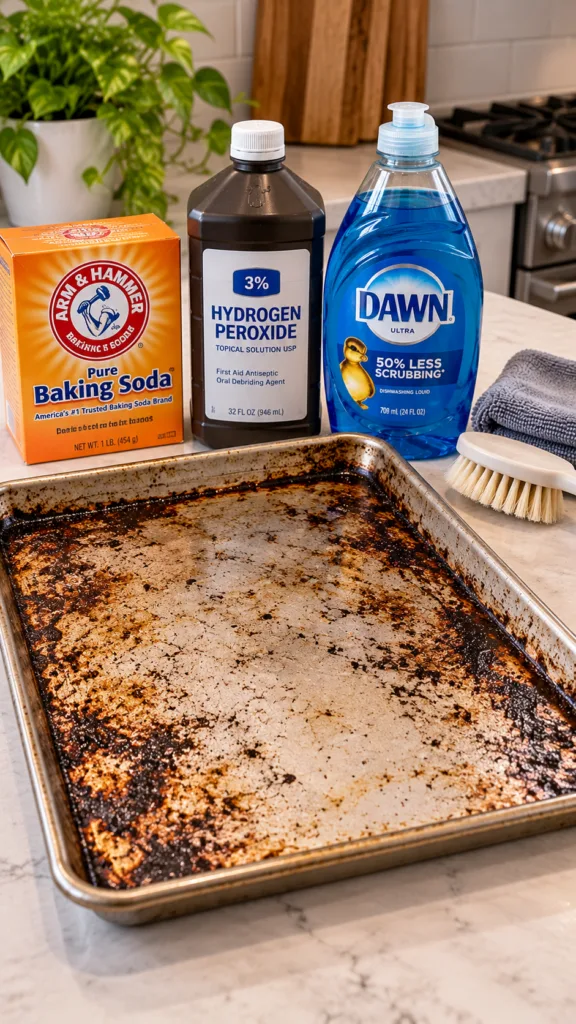 Give your grimy baking sheets a new lease on life with this simple DIY.
What You’ll Need
Ingredients
- 1/2 cup Baking Soda (such as Arm & Hammer Pure Baking Soda)
- 2-3 tablespoons 3% Hydrogen Peroxide
- 1 teaspoon Dishwashing Liquid (such as Dawn Ultra)
Tools
- Your soiled metal baking sheet
- Small mixing bowl
- Spoon or spatula for mixing
- Scrub brush (with stiff bristles)
- Microfiber cloth or sponge
- Rubber gloves (optional, but recommended for sensitive skin)
Why This DIY Can Be Useful
This cleaning solution combines the power of three everyday household products, each playing a crucial role in tackling tough grime:
- Baking Soda: This mild abrasive helps to gently scrub away stuck-on food and grease without scratching your pan. It also acts as a natural deodorizer.
- Hydrogen Peroxide: A gentle oxidizer, 3% hydrogen peroxide works to break down organic matter and lift stains. It can help loosen the bonds of baked-on residue.
- Dishwashing Liquid: Known for its grease-cutting properties, dish soap helps to emulsify oily residues, making them easier to rinse away. It also helps the paste adhere to the surface.
Together, these ingredients create a powerful, yet relatively mild, cleaning paste that can significantly improve the appearance of your baking sheets.
How to Make It
- In your small mixing bowl, combine 1/2 cup of baking soda with 2-3 tablespoons of 3% hydrogen peroxide.
- Add 1 teaspoon of dishwashing liquid to the mixture.
- Stir well with a spoon or spatula until a thick, spreadable paste forms. The consistency should be similar to toothpaste. If it’s too runny, add a little more baking soda. If it’s too dry, add a few more drops of hydrogen peroxide.
How to Use It
Follow these steps to clean your grimy baking sheets:
- Prepare the Baking Sheet: If your baking sheet has any loose crumbs or debris, quickly rinse it off. Do not pre-wet the entire surface heavily, as you want the paste to adhere well.
- Apply the Paste: Using your spoon, spatula, or even gloved hands, generously spread the cleaning paste over all the grimy areas of your baking sheet. Ensure a thick, even layer, especially on the toughest spots.
- Let it Sit: Allow the paste to sit on the baking sheet for at least 30 minutes. For heavily soiled sheets, let it sit for 1-2 hours, or even overnight for the most stubborn stains. The longer it sits, the more time the ingredients have to work their magic on the baked-on residue.
- Scrub: After the waiting period, use your stiff-bristled scrub brush to vigorously scrub the paste into the grimy areas. You’ll notice the paste turning brown as it lifts the dirt. Apply firm pressure, focusing on the dark spots.
- Rinse Thoroughly: Once you’ve scrubbed all areas, rinse the baking sheet under warm running water. Use your microfiber cloth or sponge to wipe away any remaining paste and residue. You may need to scrub a bit more under the water to ensure all grime is removed.
- Dry: Dry your baking sheet completely with a clean towel to prevent water spots.
What to Expect
You can expect a significant improvement in the cleanliness and shine of your baking sheets. Most baked-on grime should loosen and come off, revealing a much cleaner surface. For very old or extremely burnt-on stains, a single application might not make it look brand new, but it will certainly be much better. You might need to repeat the process for particularly stubborn areas or very heavily stained pans.
Helpful Tips
- For Very Stubborn Spots: If certain areas remain difficult, reapply a small amount of the paste directly to those spots, let it sit for another hour, and then scrub again.
- Regular Maintenance: To prevent future heavy buildup, clean your baking sheets promptly after each use with hot soapy water. Consider giving them a quick DIY cleaning treatment like this once every few months.
- Protect Your Pans: Lining your baking sheets with parchment paper or silicone mats can help prevent food from directly baking onto the surface, making cleanup much easier in the long run.
Important Notes / Safety
- Ventilation: While hydrogen peroxide is generally mild, it’s always a good idea to ensure good ventilation when working with cleaning products.
- Skin Sensitivity: If you have sensitive skin, consider wearing rubber gloves to protect your hands from the cleaning mixture.
- Patch Test: If you are unsure about using this mixture on a particular type of metal or finish, test a small, inconspicuous area first.
- Rinse Thoroughly: Always rinse your baking sheet completely after cleaning to remove all residue before using it for food preparation.