Boosting Blooms: A Smart Guide to Using Baking Soda for 11 Flowering Plants
 Unlock the potential of your garden with surprising household helpers.
Many home gardeners are always on the lookout for simple, natural ways to give their plants an extra edge. The idea of using common household items, like baking soda, in the garden often sparks curiosity. Can this pantry staple truly make your flowers ‘go wild’ as some claim? While it’s not a magic bullet, baking soda (sodium bicarbonate) offers some surprising benefits when used thoughtfully and correctly. Understanding its properties and how to apply it safely can help you support healthier growth and more abundant blooms for certain flowering plants.
This guide will demystify the use of baking soda in your flower garden, offering practical advice for 11 popular flowering plants. We’ll explore its potential roles, from managing common fungal issues to subtly influencing soil pH, empowering you to make informed decisions for a thriving, beautiful landscape. Let’s dig into the details and learn how to use this simple ingredient to its best effect.
Understanding Baking Soda in the Garden
Baking soda, chemically known as sodium bicarbonate, is mildly abrasive and has fungicidal properties. Its alkalinity is key to its action. When applied as a foliar spray, it can alter the pH on leaf surfaces, making it less hospitable for certain fungal diseases, most notably powdery mildew. In soil, baking soda acts as a mild alkali, increasing soil pH. This can be beneficial for plants that prefer neutral to slightly alkaline conditions, or to correct overly acidic soil. However, it’s crucial to remember that baking soda also contains sodium, which can accumulate in the soil and become detrimental to plant health over time, leading to leaf burn or inhibited growth if overused.
How to Use Baking Soda Safely for Flowering Plants
The key to success with baking soda in the garden is moderation and precision. Avoid haphazard application, and always start with dilute solutions. Test on a small area first if you’re unsure about a plant’s sensitivity.
Foliar Spray for Fungal Issues
For powdery mildew and other superficial fungal problems, a baking soda spray can be effective. Mix one tablespoon of baking soda with one gallon of water. You can enhance its efficacy by adding one tablespoon of horticultural oil or insecticidal soap (not dish soap, which can strip leaf waxes). Mix thoroughly until the baking soda dissolves. Apply this solution to affected foliage, both tops and undersides, in the early morning or late evening to avoid leaf burn in strong sunlight. Reapply every 7-10 days as needed, but avoid continuous use for extended periods.
Soil Amendment for pH Adjustment (Use with Extreme Caution)
While baking soda can raise soil pH, it’s generally not recommended as a primary method for long-term pH adjustment due to its sodium content. For plants that strongly prefer alkaline soil, a very occasional, light dusting around the base of the plant, followed by watering, might offer a temporary lift. However, a soil test is essential before attempting any pH modification. For consistent pH adjustment, agricultural lime or wood ash are safer, more sustainable alternatives. Never apply large quantities of baking soda to soil.
Flowering Plants That May Benefit from Baking Soda
Here’s how baking soda might specifically help some of your favorite flowering plants, always with the caveats of careful application and moderation.
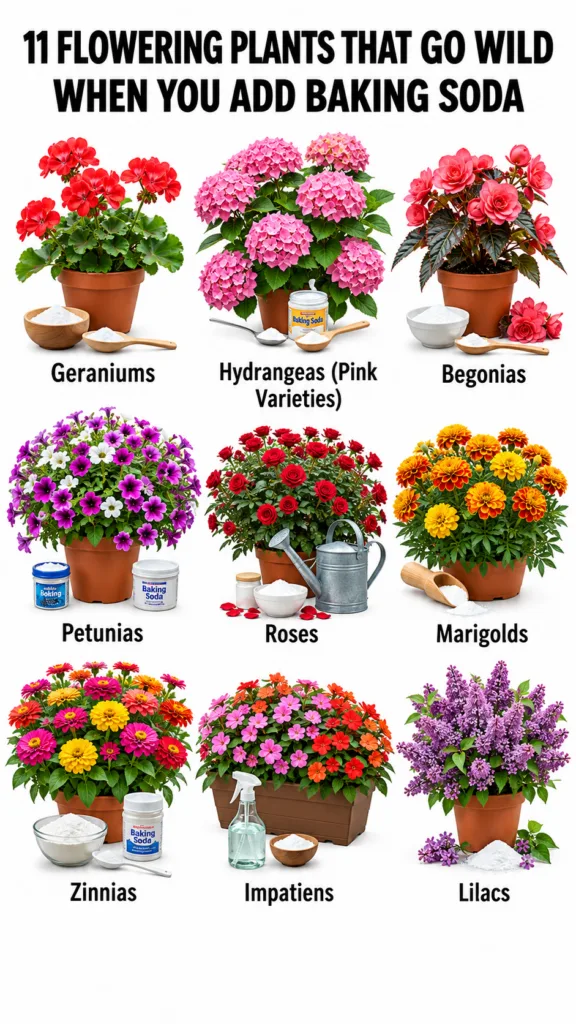
1. Geraniums (Pelargonium spp.)
Hardiness: Zones 9-11 (typically grown as annuals elsewhere)
Plant type: Annual, perennial, houseplant
Exposure: Full sun to partial shade
Height: 1-3 feet
Spread: 1-2 feet
Geraniums are susceptible to botrytis blight and leaf spot. A dilute baking soda spray can help create an environment less favorable for these fungal diseases on foliage. Ensure good air circulation to further deter fungal growth. Water the soil, not the leaves.
2. Roses (Rosa spp.)
Hardiness: Zones 3-10 (varies by cultivar)
Plant type: Shrub
Exposure: Full sun
Height: 2-8 feet
Spread: 2-6 feet
Roses are notoriously prone to powdery mildew and black spot. The baking soda spray (as described above with horticultural oil/soap) can be an effective preventative and treatment for these common issues. Apply regularly during humid periods, but stop if you notice any leaf discoloration.
3. Hydrangeas (Hydrangea spp.)
Hardiness: Zones 3-9 (varies by cultivar)
Plant type: Shrub
Exposure: Partial shade
Height: 3-10 feet
Spread: 3-10 feet
Hydrangea bloom color is often influenced by soil pH. Baking soda can raise soil pH, which encourages pink or red blooms. To shift blue hydrangeas to pink, a very light, occasional dusting of baking soda around the base, followed by watering, can be tried cautiously. However, a dedicated soil alkalinizer is a safer, more controlled method.
4. Impatiens (Impatiens walleriana and I. hawkeri)
Hardiness: Zones 10-11 (typically grown as annuals)
Plant type: Annual
Exposure: Partial to full shade
Height: 1-2 feet
Spread: 1-2 feet
Impatiens can occasionally suffer from downy mildew or stem rot in damp conditions. While baking soda is less effective against downy mildew, it can help manage general fungal spots. Ensure excellent drainage and avoid overhead watering to keep foliage dry.
5. Lilacs (Syringa vulgaris)
Hardiness: Zones 3-7
Plant type: Deciduous shrub/small tree
Exposure: Full sun
Height: 8-15 feet
Spread: 6-12 feet
Lilacs thrive in neutral to slightly alkaline soil. If your soil is too acidic, a very light application of baking soda (or better yet, agricultural lime) can help adjust the pH. Lilacs are also susceptible to powdery mildew, especially in humid, shaded conditions, where a foliar spray can be beneficial.
6. Petunias (Petunia x hybrida)
Hardiness: Zones 9-11 (typically grown as annuals)
Plant type: Annual
Exposure: Full sun
Height: 6-18 inches
Spread: 1-3 feet
Petunias generally prefer slightly acidic to neutral soil, so avoid direct soil application of baking soda. However, they can sometimes develop fungal leaf spots if kept too wet or in high humidity. A dilute baking soda spray can help deter these superficial issues on their delicate foliage.
7. Marigolds (Tagetes spp.)
Hardiness: Annual
Plant type: Annual
Exposure: Full sun
Height: 6 inches – 3 feet
Spread: 6 inches – 2 feet
Marigolds are generally robust and pest-resistant, but they can occasionally get powdery mildew in very humid conditions. A baking soda spray can be used as a preventative or early treatment. Ensure good air circulation around plants to minimize humidity buildup.
8. Zinnias (Zinnia elegans)
Hardiness: Annual
Plant type: Annual
Exposure: Full sun
Height: 1-4 feet
Spread: 1-2 feet
Zinnias are highly susceptible to powdery mildew, especially older varieties or in crowded, humid environments. A baking soda foliar spray is a popular and often effective treatment. Start applying at the first sign of white powdery spots and ensure thorough coverage.
9. Begonias (Begonia spp.)
Hardiness: Zones 9-11 (often grown as annuals or houseplants)
Plant type: Annual, perennial, houseplant
Exposure: Partial to full shade
Height: 6 inches – 3 feet
Spread: 1-2 feet
Begonias, particularly tuberous begonias, are very prone to powdery mildew and botrytis in humid conditions. A dilute baking soda spray can help manage these fungal issues on their broad leaves. Focus on good airflow and avoiding overhead watering.
10. Phlox (Phlox paniculata)
Hardiness: Zones 4-8
Plant type: Perennial
Exposure: Full sun to partial shade
Height: 2-4 feet
Spread: 1-3 feet
Garden phlox is highly susceptible to powdery mildew, especially older cultivars. A preventative baking soda spray, applied before signs of infection, or at the first hint, can significantly reduce the severity. Ensure plants are spaced adequately for air circulation and choose resistant varieties when possible.
11. Bee Balm (Monarda didyma)
Hardiness: Zones 4-9
Plant type: Perennial
Exposure: Full sun to partial shade
Height: 2-4 feet
Spread: 2-3 feet
Bee Balm is another perennial that commonly struggles with powdery mildew, particularly in humid climates. Regular application of a baking soda spray can help keep the foliage clean and healthy, allowing the beautiful blooms to shine. Thinning out dense clumps annually also improves air circulation.
Common Mistakes to Avoid When Using Baking Soda
Even with good intentions, using baking soda incorrectly can harm your plants. Here are pitfalls to steer clear of:
- Over-Concentration: Too much baking soda can cause leaf scorch or burn, especially in hot, direct sunlight. Always stick to the recommended dilution ratios for foliar sprays.
- Ignoring Sodium Accumulation: Repeated soil applications can lead to a buildup of sodium, which is toxic to most plants and can damage soil structure. Reserve baking soda primarily for foliar sprays.
- Using as a Fertilizer: Baking soda provides no essential plant nutrients. It is not a fertilizer and should not be used as a substitute for balanced feeding.
- Applying in Direct Sun: Sprays applied when the sun is strong can magnify light and cause leaf burn, even with proper dilution. Early morning or late evening applications are best.
- Expecting a Cure-All: Baking soda is a preventative and mild treatment for certain superficial fungal issues, not a remedy for all plant diseases or a replacement for good plant care.
Regional and Climate Considerations
The effectiveness and safety of using baking soda can vary depending on your local climate and growing conditions. In humid regions (like the Southeast U.S.), fungal issues like powdery mildew are more prevalent, making baking soda sprays potentially more useful. However, the frequent rainfall in such areas can also wash away foliar applications, requiring more frequent reapplication. Conversely, in arid climates, soil sodium levels can become problematic more quickly if baking soda is applied to the soil, due to less rainfall to leach it away. Always observe your plants closely and adjust your practices based on their response and local conditions. Consulting your local university extension service can provide tailored advice for your specific area.
Cultivate Confidence, Not Confusion
Baking soda can be a valuable, natural tool in your gardening arsenal, particularly for managing powdery mildew on susceptible flowering plants. However, like any garden treatment, it requires a thoughtful, informed approach. By understanding its limitations and applying it judiciously, you can support healthier, more vibrant blooms without risking harm to your beloved plants or soil. Remember, keen observation and consistent, good gardening practices—like proper watering, spacing, and nutrition—remain the foundation of a truly thriving garden. Happy gardening!