Have you ever found yourself wondering about the tiny powerhouses known as chia seeds and sabja seeds? They both swell up in liquid, create a unique gel-like texture, and have a reputation for being super healthy. But despite their similar appearance and behavior, these two seeds are distinctly different, each offering a unique set of nutritional benefits and culinary applications.
This article will dive deep into the world of chia seeds versus sabja seeds, breaking down their nutritional profiles, exploring their unique health advantages, and guiding you on how to best incorporate them into your diet. By the end, you’ll be able to confidently choose the right seed to match your health goals and culinary adventures.
Chia vs. Sabja: Nutrition Comparison Table
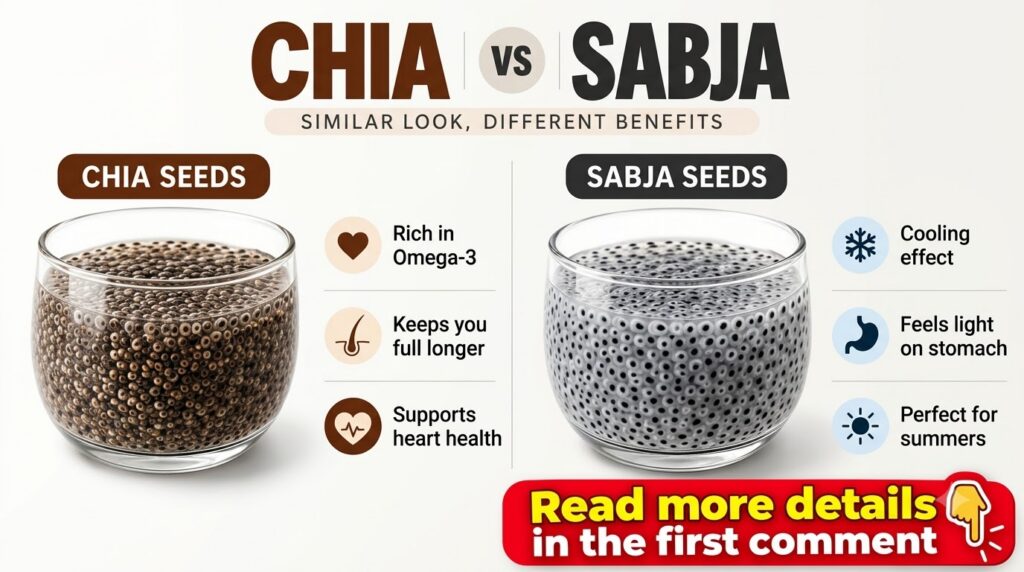
Let’s start by looking at a quick overview of their nutritional content. Please note that these are approximate values for a 1-ounce (28-gram) serving of dry seeds, and values can vary slightly between sources.
| Nutrient | Chia Seeds (approx.) | Sabja Seeds (approx.) |
|---|---|---|
| Calories | 138 | 130 |
| Protein | 4.7 g | 4.5 g |
| Carbs | 12 g | 12 g |
| Fiber | 10 g | 7 g |
| Fat | 8.7 g | 0.6 g |
| Omega-3s | 5 g (ALA) | Trace |
| Main Nutrients | Fiber, Omega-3s, Calcium, Magnesium, Phosphorus | Fiber, Calcium, Magnesium, Iron |
| Best Benefit | Heart health, satiety, energy | Digestive aid, cooling properties, hydration |
Calories, Protein, and Carbs
Both chia and sabja seeds are relatively low in calories for their nutritional density. They offer a good amount of protein, making them excellent plant-based additions to support muscle health and satiety. While their total carbohydrate content is similar, a significant portion of these carbs comes from fiber, which we’ll discuss next.
Fiber Content: The Digestive Difference
Fiber is where both seeds truly shine, but with a slight difference. Chia seeds are incredibly rich in fiber, with a mix of soluble and insoluble types. This robust fiber content contributes to digestive health, helps regulate blood sugar, and promotes a feeling of fullness. Sabja seeds, on the other hand, are particularly renowned for their high soluble fiber content. This type of fiber forms a thick gel, which can be very beneficial for digestion, soothing the stomach, and aiding in bowel regularity. This makes sabja seeds especially popular for their potential role in alleviating constipation.
Fats: Omega-3 Powerhouse vs. Low-Fat Profile
Here’s one of the most significant distinctions. Chia seeds are famous for being one of the richest plant-based sources of omega-3 alpha-linolenic acid (ALA). These essential fatty acids are crucial for heart health, brain function, and reducing inflammation. Sabja seeds, in contrast, have a very low-fat content and contain only trace amounts of omega-3s. If you’re looking to boost your omega-3 intake from a plant source, chia seeds are the clear choice.
Vitamins and Minerals
Both seeds offer a decent profile of micronutrients. Chia seeds are a good source of calcium, magnesium, and phosphorus, which are vital for bone health. They also provide smaller amounts of zinc and B vitamins. Sabja seeds also contribute calcium, magnesium, and iron, supporting bone health and oxygen transport in the body. While neither is a complete multivitamin, they both offer valuable additions to a balanced diet.
Taste and Texture
When it comes to taste, both seeds are fairly neutral, allowing them to blend seamlessly into various dishes without overpowering other flavors. The texture difference is more noticeable. Chia seeds develop a more distinct, gelatinous coating and often retain a slight crunch in the center, even after soaking. Sabja seeds create a much thicker, more pronounced gel almost immediately upon contact with liquid, and they tend to be softer throughout. The gel from sabja seeds can be quite voluminous.
Best For: Culinary Uses and Health Goals
Chia Seeds are excellent for:
- Boosting Omega-3s: Ideal for heart health and anti-inflammatory diets.
- Thickening: Great for making chia pudding, smoothies, and as an egg substitute in baking.
- Satiety: Their fiber and protein content can help you feel full longer, potentially aiding weight management.
- Adding Crunch: Sprinkle dry chia seeds over salads, yogurt, or oatmeal for added texture.
Sabja Seeds are excellent for:
- Hydration and Cooling: Popular in traditional drinks like falooda and sherbets, especially in hot climates, for their cooling effect.
- Digestive Support: The mucilaginous fiber helps soothe the stomach and promote regular bowel movements.
- Detoxification (traditional use): Often used in traditional medicine for their perceived cleansing properties.
- Filling Drinks: Their strong gelling action makes them perfect for creating thick, satisfying beverages.
Key Differences: A Quick Recap
- Omega-3s: Chia seeds are rich; Sabja seeds have trace amounts.
- Gelling Property: Sabja seeds gel much faster and more substantially, creating a thicker, softer texture. Chia seeds form a gel but often retain some crunch.
- Traditional Uses: Chia seeds are widely used in Western health foods; Sabja seeds are prominent in Ayurvedic and traditional Asian beverages for cooling and digestion.
Practical Tips for Incorporating Chia and Sabja Seeds
- Soaking is Key: Both seeds should ideally be soaked before consumption, especially sabja seeds, to ensure proper digestion and activate their gelling properties.
- Start Small: If you’re new to high-fiber foods, begin with a small amount (e.g., 1 teaspoon) and gradually increase to avoid digestive discomfort.
- Stay Hydrated: Always drink plenty of water when consuming these seeds, as their high fiber content absorbs liquid.
- Experiment with Recipes: Don’t be afraid to try them in smoothies, yogurt, oatmeal, salads, or even healthy desserts. Chia seeds are particularly versatile in baking as an egg substitute.
FAQs About Chia and Sabja Seeds
Are chia seeds and sabja seeds the same?
No, they are different seeds from different plant families. Chia seeds come from Salvia hispanica, while sabja seeds come from sweet basil (Ocimum basilicum).
Which seed is better for weight loss?
Both can support weight management due to their high fiber content, which promotes satiety. Chia seeds offer the added benefit of omega-3s, while sabja seeds are excellent for digestive regularity.
Can I use chia and sabja seeds interchangeably?
While they both form a gel, their distinct textures and nutritional profiles mean they are not perfectly interchangeable. Chia is better for omega-3s and some baking, while sabja’s stronger gelling action makes it ideal for specific drinks and soothing digestion.
Do I need to soak them before eating?
It’s highly recommended to soak both, especially sabja seeds, which expand significantly and can be challenging to digest if eaten dry. Soaking also helps activate their beneficial properties.
Do sabja seeds have any side effects?
When consumed in moderation and with enough water, sabja seeds are generally safe. However, excessive consumption without adequate fluid intake could potentially lead to choking or digestive blockages due to their swelling properties. Pregnant women and young children should consult a doctor before consuming them.
Where can I buy chia and sabja seeds?
Both are widely available in health food stores, most major supermarkets, and online retailers.
Conclusion
Both chia and sabja seeds are nutritional powerhouses that can bring unique benefits to your diet. Chia seeds stand out for their rich omega-3 fatty acid content, offering excellent support for heart and brain health, along with versatile culinary uses. Sabja seeds, with their remarkable gelling ability and high soluble fiber, are champions for digestive health, hydration, and their traditional cooling properties.
Instead of choosing a ‘winner,’ consider incorporating both into your diet to enjoy their complementary benefits. Experiment with them in different recipes, pay attention to how your body responds, and discover new ways to enhance your well-being. Happy exploring!
This content is for educational purposes only and should not be considered medical advice. Consult a qualified healthcare professional for personalized dietary recommendations.