When you walk through the produce aisle or the dried fruit section, you often face a delicious dilemma: fresh figs or dried figs? Both forms of this ancient fruit offer unique flavors and textures, but they also come with distinct nutritional profiles. Understanding these differences can help you make the best choice for your dietary needs and culinary adventures.
Fresh figs are a seasonal delight, known for their sweet, juicy flesh and delicate skin. Dried figs, on the other hand, are available year-round and offer a concentrated burst of sweetness and nutrients. But which one truly reigns supreme in a nutritional showdown? Let’s dive in and compare these two fantastic forms of figs!
This article will explore the nutritional breakdown of fresh versus dried figs, highlighting their calorie content, fiber, vitamins, and minerals. You’ll learn which fig might be better for certain dietary goals and how to best enjoy them both.
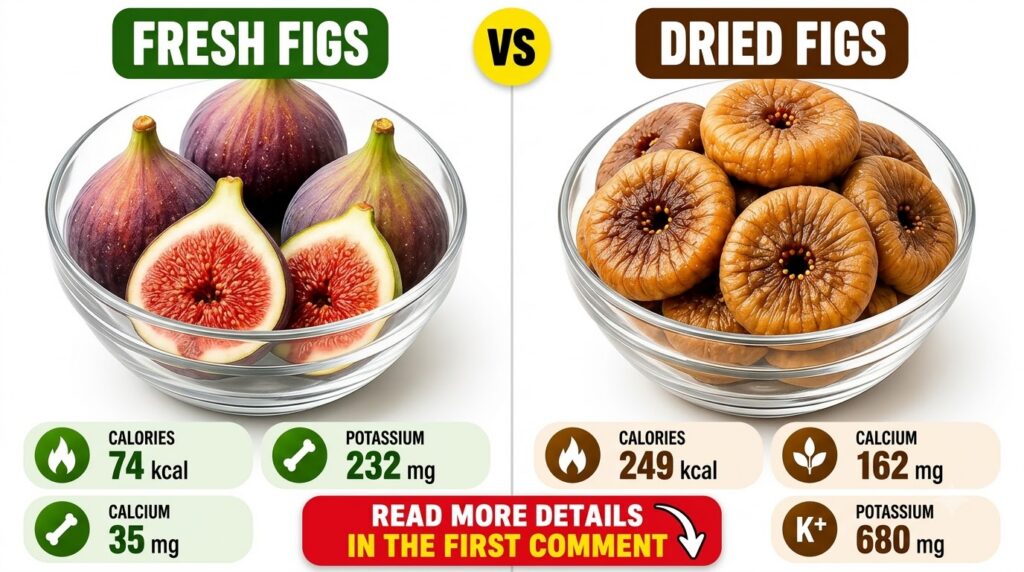
Fresh vs. Dried Figs: Nutritional Comparison Table (per 100g)
To give you a clear overview, here’s a comparison of the key nutritional values for 100 grams of both fresh and dried figs:
| Nutrient | Fresh Figs (approx. 2 medium) | Dried Figs (approx. 4-5 small) |
|---|---|---|
| Calories | 74 kcal | 249 kcal |
| Protein | 0.7 g | 3.3 g |
| Carbohydrates | 19.2 g | 63.9 g |
| Fat | 0.3 g | 0.9 g |
| Fiber | 2.9 g | 9.8 g |
| Potassium | 232 mg | 680 mg |
| Calcium | 35 mg | 162 mg |
| Magnesium | 17 mg | 68 mg |
| Iron | 0.4 mg | 2.0 mg |
| Vitamin K | 4.7 mcg | 15.6 mcg |
Calories: Energy Density
One of the most significant differences between fresh and dried figs lies in their calorie count. Fresh figs contain a high percentage of water, making them less calorie-dense. A 100-gram serving of fresh figs has around 74 calories, making them a relatively light snack or addition to a meal.
Dried figs, however, have had their water content removed, which concentrates their sugars and, consequently, their calories. The same 100-gram serving of dried figs can pack about 249 calories. This makes them a more energy-dense option, ideal for sustained energy or for those looking to gain weight in a healthy way.
Protein: A Minor Contributor
Neither fresh nor dried figs are significant sources of protein, but dried figs do offer a slightly higher amount due to the concentration effect. While fresh figs provide about 0.7 grams of protein per 100 grams, dried figs offer around 3.3 grams. While not a primary protein source, this can contribute to your daily intake, especially when combined with other protein-rich foods.
Carbohydrates: Sweetness and Energy
Figs are naturally sweet, and this sweetness comes from their carbohydrate content, primarily sugars. Fresh figs contain about 19.2 grams of carbohydrates per 100 grams. This provides a quick burst of natural energy.
Dried figs, with their concentrated sugars, contain significantly more carbohydrates, around 63.9 grams per 100 grams. This makes them an excellent choice for athletes or anyone needing a quick, natural energy boost before or after physical activity. However, individuals managing blood sugar levels should consume dried figs in moderation due to their higher sugar concentration.
Fat: Naturally Low
Both fresh and dried figs are naturally very low in fat. With less than 1 gram of fat per 100-gram serving for both varieties, figs make a heart-healthy snack option. They contain mostly unsaturated fats, which are considered beneficial for overall health.
Fiber: Digestive Health Powerhouses
Figs are well-known for their impressive fiber content, which is crucial for digestive health. Fresh figs provide a good amount of dietary fiber, with about 2.9 grams per 100 grams. This can help promote regular bowel movements and support a healthy gut.
Dried figs are an even more potent source of fiber, boasting around 9.8 grams per 100 grams. This significant fiber content can be particularly helpful for relieving constipation and contributing to feelings of fullness, which may support weight management efforts. The fiber in figs is a mix of soluble and insoluble fiber, offering comprehensive digestive benefits.
Vitamins: Essential Micronutrients
While figs are not typically lauded for their vitamin content, they do offer some important ones. Fresh figs contain a modest amount of Vitamin K, which plays a vital role in blood clotting and bone health.
Dried figs also provide some Vitamin K, often in higher concentrations due to the drying process. Additionally, they may offer small amounts of B vitamins, which are important for energy metabolism and nerve function.
Minerals: Bone, Muscle, and Blood Support
Figs shine when it comes to minerals, especially in their dried form. Dried figs are an excellent source of several essential minerals:
- Potassium: Crucial for maintaining fluid balance and blood pressure. Dried figs have significantly more potassium (680 mg) than fresh figs (232 mg) per 100g.
- Calcium: Essential for strong bones and teeth, and for muscle function. Dried figs offer a notable amount of calcium (162 mg), making them a good plant-based source.
- Magnesium: Involved in over 300 biochemical reactions in the body, including muscle and nerve function, blood glucose control, and blood pressure regulation. Dried figs contain around 68 mg of magnesium.
- Iron: Important for oxygen transport in the blood. While not a primary source, dried figs provide a decent amount of iron (2.0 mg), which can be beneficial, particularly for those on plant-based diets.
Taste and Texture: A Sensory Experience
Beyond nutrition, the sensory experience of fresh and dried figs is quite different.
- Fresh Figs: Offer a delicate, subtly sweet flavor with a juicy, somewhat jammy interior and a soft, edible skin. They have a pleasant chewiness from their tiny seeds.
- Dried Figs: Have a much more intense, concentrated sweetness and a chewy, dense texture. The flavor is richer and more caramel-like.
Best For: Choosing Your Fig
Knowing their differences can help you decide which fig is best for various situations:
- Choose Fresh Figs for: Light snacks, desserts, salads, cheese boards, or when you want a hydrating, lower-calorie option with a delicate sweetness. They are perfect for enjoying during their peak season.
- Choose Dried Figs for: Sustained energy, hiking snacks, baking, adding to oatmeal or yogurt, or when you need a higher fiber and mineral boost. Their convenience and longer shelf life make them versatile.
The Winner: It’s a Tie!
In the nutritional showdown between fresh and dried figs, there isn’t a single winner. Both offer incredible health benefits and can be a wonderful addition to a balanced diet. Your choice depends on your specific nutritional needs, calorie goals, and taste preferences. Fresh figs offer hydration and fewer calories, while dried figs provide a concentrated dose of fiber, minerals, and energy.
Practical Tips for Enjoying Figs
- Snack Smart: Enjoy fresh figs on their own for a light, sweet treat. For a more substantial, energy-boosting snack, a handful of dried figs can be great.
- Pair with Protein: Combine both fresh and dried figs with nuts, seeds, or cheese to balance their natural sugars and enhance satiety.
- Incorporate into Meals: Slice fresh figs into salads or onto toast with goat cheese. Chop dried figs into oatmeal, cereals, or use them in baked goods.
- Hydrate with Dried Figs: Since dried figs are concentrated, remember to drink plenty of water when consuming them to help the fiber work effectively and aid digestion.
FAQs About Figs
Q1: Are dried figs healthier than fresh figs?
Neither is inherently

