When it comes to healthy eating and making informed dietary choices, the classic debate of sweet potato vs. white potato often arises. Both are beloved root vegetables, versatile in countless dishes, and staple foods across many cultures. But have you ever truly wondered which potato takes the nutritional crown?
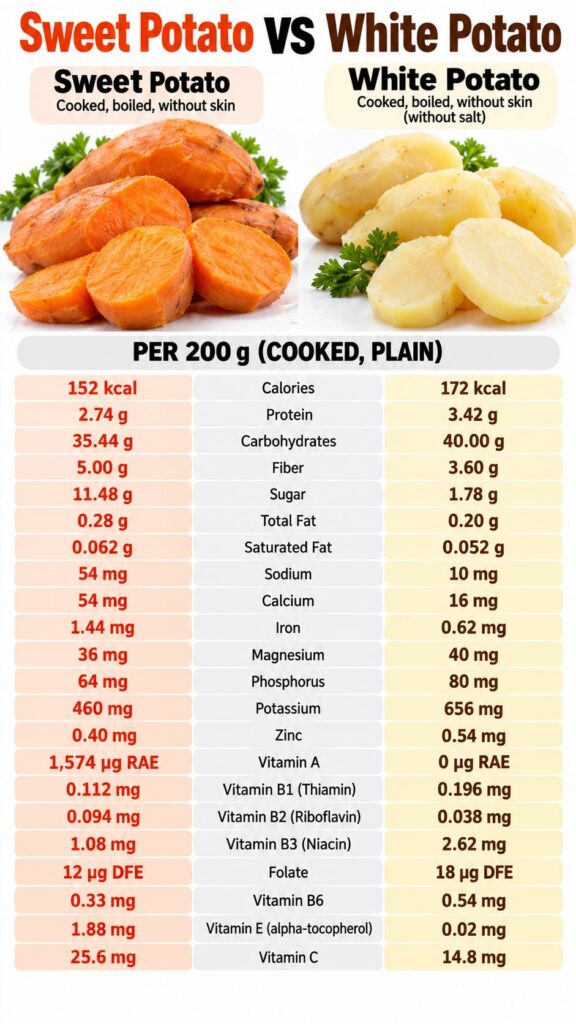
While both offer valuable nutrients, they do differ in key areas that might influence your meal planning. This detailed breakdown, based on a 200g serving of cooked, plain potatoes, will explore their caloric content, macronutrients, and a host of essential vitamins and minerals, empowering you to make the best choice for your health goals.
Let’s dive into the data and uncover the unique strengths of each.
Calorie and Macronutrient Breakdown
Understanding the fundamental building blocks of nutrition—calories, protein, carbohydrates, and fats—is crucial for managing energy levels and overall health.
Calories for Energy
- Sweet Potato: 180 calories per 200g
- White Potato: 200 calories per 200g
For those mindful of their calorie intake, sweet potatoes offer a slightly lower calorie count. Both provide sustained energy, making them excellent choices for active individuals.
Protein for Muscle Support
- Sweet Potato: 4g per 200g
- White Potato: 4g per 200g
Interestingly, both potato varieties offer the same amount of protein. While not considered high-protein foods, they contribute to your daily intake, essential for muscle repair and growth, especially when paired with other protein sources.
Carbohydrates for Fuel
- Sweet Potato: 40g per 200g
- White Potato: 44g per 200g
As expected from starchy vegetables, both are rich in carbohydrates, providing readily available fuel for your body and brain. White potatoes have a slightly higher carb content, but both are excellent complex carbohydrate sources for sustained energy.
Fat Content: Naturally Low
- Sweet Potato: 0g per 200g
- White Potato: 0g per 200g
Both sweet and white potatoes are naturally fat-free in their plain, cooked form. This makes them a great base for healthy meals, allowing you to control the fat content by choosing lean protein and healthy oil pairings.
Fiber for Digestive Health
- Sweet Potato: 6g per 200g
- White Potato: 4g per 200g
Here, the sweet potato takes a clear lead with a higher fiber content. Dietary fiber is vital for digestive health, promoting regularity, aiding in satiety, and helping to regulate blood sugar levels. Including fiber-rich foods like sweet potatoes in your diet can contribute to better gut health.
Micronutrient Spotlight: Vitamins and Minerals
Beyond macronutrients, the array of vitamins and minerals found in these potatoes truly highlights their nutritional value.
Vitamin A: The Vision Powerhouse
- Sweet Potato: 500% Daily Value (DV) per 200g
- White Potato: 0% Daily Value (DV) per 200g
This is where sweet potatoes truly shine! They are an exceptional source of Vitamin A, primarily in the form of beta-carotene, which is converted to Vitamin A in the body. Vitamin A is crucial for vision, immune function, and skin health. White potatoes, on the other hand, contain virtually no Vitamin A.
Vitamin C: Immune Support
- Sweet Potato: 60% Daily Value (DV) per 200g
- White Potato: 40% Daily Value (DV) per 200g
Sweet potatoes provide a higher percentage of your daily Vitamin C needs. This powerful antioxidant supports your immune system, aids in collagen production for healthy skin, and helps protect cells from damage.
Calcium for Strong Bones
- Sweet Potato: 6% Daily Value (DV) per 200g
- White Potato: 2% Daily Value (DV) per 200g
While neither is a primary source of calcium, sweet potatoes offer a modest but noticeably higher amount compared to white potatoes. Calcium is essential for bone health, muscle function, and nerve transmission.
Iron for Energy and Oxygen Transport
- Sweet Potato: 4% Daily Value (DV) per 200g
- White Potato: 14% Daily Value (DV) per 200g
In terms of iron, the white potato comes out significantly ahead. Iron is vital for producing hemoglobin, a protein in red blood cells that carries oxygen from the lungs to all parts of the body, and for preventing iron-deficiency anemia, which can cause fatigue.
Potassium for Heart Health
- Sweet Potato: 20% Daily Value (DV) per 200g
- White Potato: 24% Daily Value (DV) per 200g
Both potatoes are excellent sources of potassium, with white potatoes offering a slightly higher amount. Potassium is a crucial electrolyte that plays a key role in maintaining fluid balance, nerve signals, and muscle contractions, and can help support healthy blood pressure.
Magnesium for Overall Wellness
- Sweet Potato: 10% Daily Value (DV) per 200g
- White Potato: 12% Daily Value (DV) per 200g
Similar to potassium, both types provide beneficial amounts of magnesium, with white potatoes again having a slight edge. Magnesium is involved in over 300 biochemical reactions in the body, including muscle and nerve function, blood glucose control, and blood pressure regulation.
Which Potato is Right for Your Plate?
As this nutrient showdown reveals, both sweet potatoes and white potatoes offer unique nutritional advantages, and neither is inherently “bad.” The best choice often depends on your specific dietary needs and what other foods you pair them with.
- Choose Sweet Potatoes if: You’re looking for a significant boost of Vitamin A, more fiber, and a slightly lower calorie count. Their natural sweetness also makes them a favorite for both savory and sweet dishes.
- Choose White Potatoes if: You need more iron or potassium, and are looking for a versatile starch that pairs well with a wide range of flavors.
For a balanced approach, consider incorporating both into your diet to benefit from their diverse nutrient profiles. They are fantastic foundations for healthy meal prep, whether roasted, mashed, or baked.
Versatile Ways to Enjoy Both Potatoes
Embracing the nutritional benefits of both sweet and white potatoes is easy given their versatility. Consider these simple ideas to integrate them into your healthy eating routine:
- Roasted Cubes: Toss with a little olive oil, salt, pepper, and herbs for a simple, flavorful side.
- Mashed: A healthier alternative to traditional mashed potatoes, try them with a splash of milk and a touch of garlic.
- Baked: A classic, healthy meal base. Load up a baked potato (sweet or white) with lean protein, vegetables, and a dollop of Greek yogurt.
- In Stews & Curries: Both hold up well in hearty dishes, adding substance and nutrients.
- Homemade Fries: A healthier alternative to fast food, simply slice, lightly oil, and bake until crispy.
Making Smart Choices for Your Health
Ultimately, the nutritional value of potatoes can be greatly influenced by how they are prepared and what they are served with. Opt for baking, roasting, or steaming over deep-frying, and be mindful of high-fat toppings like butter, sour cream, and excessive cheese. Focus on incorporating them into balanced meals with plenty of lean protein and non-starchy vegetables for optimal health benefits.

Final Thoughts
The sweet potato vs. white potato debate isn’t about declaring one an absolute winner, but rather understanding their individual strengths. Both are wholesome, nutrient-dense foods that can contribute significantly to a healthy diet. Sweet potatoes offer a vibrant dose of Vitamin A and more fiber, while white potatoes provide a higher concentration of iron and potassium.
By understanding these differences, you can intelligently incorporate both into your meal planning, maximizing the array of vitamins and minerals your body receives. Enjoy the diverse flavors and health benefits these incredible root vegetables have to offer!