Welcome to a recipe that’s about to become a new family favorite: homemade Chicken Katsu Curry! If you’ve ever dreamed of recreating that authentic Japanese comfort food experience right in your own kitchen, this is your moment. This dish brings together the best of all worlds: incredibly crispy, golden-fried chicken cutlets paired with a rich, savory, and slightly sweet curry sauce, all served over fluffy white rice. It’s pure comfort in a bowl!
There’s something truly special about the contrast of textures in a good katsu curry. The satisfying crunch of the panko-crusted chicken, the tender and juicy meat inside, and the velvety smooth curry sauce create an unforgettable meal. Don’t be intimidated; while it looks impressive, this recipe is surprisingly straightforward and perfect for home cooks of all skill levels. Get ready to impress your taste buds and your loved ones with this absolutely delicious homemade Japanese Chicken Katsu Curry.
Why You’ll Love This Recipe
- Irresistibly Crispy: Golden panko breading gives the chicken a fantastic crunch.
- Rich & Flavorful Curry: A deep, savory sauce that perfectly complements the katsu.
- Family Favorite: A crowd-pleasing meal that everyone will ask for again and again.
- Comfort Food at Its Best: Perfect for a cozy night in or a satisfying weekend dinner.
- Customizable: Easy to adjust spices and add your favorite vegetables.
- Beginner Friendly: Simple steps make this classic dish accessible for all home cooks.
Ingredients for Chicken Katsu Curry
For the Chicken Katsu:
- 2 boneless, skinless chicken breasts: About 6-8 ounces each, butterflied and pounded thin. You can also use chicken thighs for a juicier result.
- 1/2 cup all-purpose flour: For dredging.
- 2 large eggs: Beaten, for dipping.
- 1 1/2 cups panko breadcrumbs: Japanese breadcrumbs are key for extra crispiness. Do not substitute with regular breadcrumbs if you can help it!
- 1/2 tsp salt: Plus more for seasoning.
- 1/4 tsp black pepper: Plus more for seasoning.
- 2-3 cups vegetable oil: Or canola oil, for frying. Enough to come up about 1 inch in your skillet.
For the Japanese Curry Sauce:
- 1 tbsp vegetable oil: Or butter.
- 1 large onion: Chopped.
- 2 cloves garlic: Minced.
- 1 inch fresh ginger: Grated or minced.
- 4 cups chicken or vegetable broth: Low sodium is preferred.
- 1 large carrot: Peeled and diced.
- 1 large potato: Peeled and diced into 1-inch pieces.
- 1 package (7.8 oz/220g) Japanese curry roux blocks: Look for brands like S&B Golden Curry or Vermont Curry at Asian grocery stores or international aisles. Choose your desired spice level!
- 1 tbsp soy sauce: For umami depth.
- 1 tsp honey or sugar: To balance the flavors.
To Serve:
- 3 cups cooked short-grain white rice: Steamed and hot.
- Optional garnishes: Chopped green onions, pickled ginger (fukujinzuke), or a sprinkle of sesame seeds.
Kitchen Equipment
- Cutting board
- Sharp knife
- Meat mallet or rolling pin
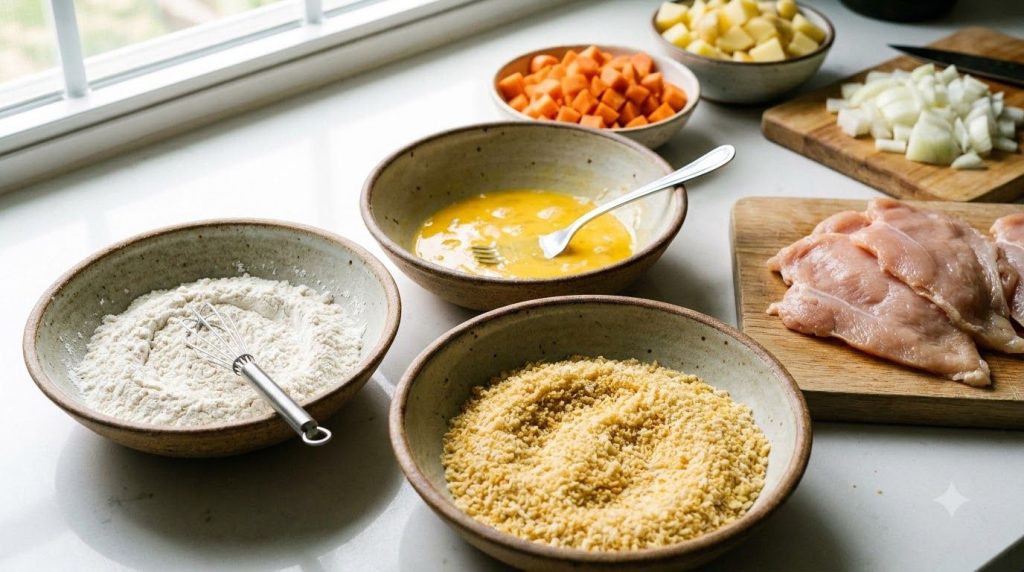
- 3 shallow dishes (for dredging)
- Large heavy-bottomed skillet or Dutch oven
- Large pot (for rice)
- Whisk
- Spatula or tongs
- Paper towel-lined plate or wire rack
Step-by-Step Instructions
Preparing the Chicken Katsu:
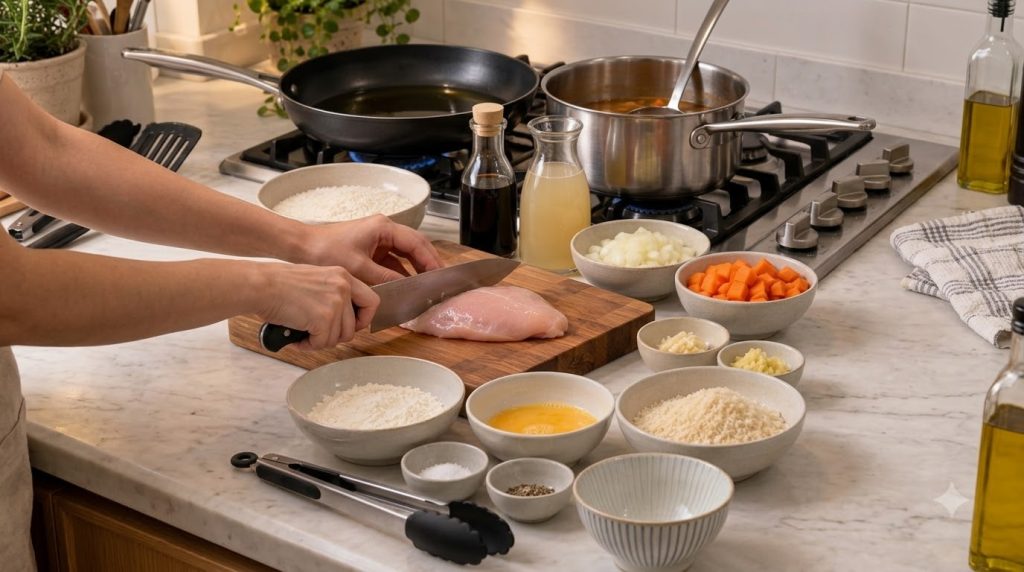
- Butterfly and Pound Chicken: Place each chicken breast on a cutting board. Carefully slice horizontally through the thickest part to create two thinner cutlets, or butterfly them open. Place each cutlet between two pieces of plastic wrap and pound evenly with a meat mallet or rolling pin until about 1/2-inch thick. Season both sides with salt and pepper.
- Set Up Breading Station: Prepare three shallow dishes. In the first, add the flour. In the second, whisk the eggs. In the third, add the panko breadcrumbs.
- Bread the Chicken: Dredge each chicken cutlet first in flour, shaking off any excess. Then dip it into the beaten egg, ensuring it’s fully coated. Finally, press it firmly into the panko breadcrumbs, making sure every surface is well covered. Set aside on a clean plate.
Making the Japanese Curry Sauce:
- Sauté Aromatics: In a large heavy-bottomed skillet or Dutch oven, heat 1 tablespoon of vegetable oil over medium heat. Add the chopped onion and cook for 5-7 minutes until softened and translucent. Add the minced garlic and grated ginger, cooking for another minute until fragrant.
- Add Vegetables and Broth: Stir in the diced carrot and potato. Pour in the chicken or vegetable broth. Bring the mixture to a boil, then reduce the heat to a simmer. Cover and cook for 10-15 minutes, or until the vegetables are tender.
- Dissolve Curry Roux: Remove the pot from the heat. Break the curry roux blocks into smaller pieces and add them to the hot broth. Stir gently with a whisk until the roux completely dissolves and the sauce thickens. If needed, return to low heat to fully dissolve, but do not boil after adding roux.
- Season and Simmer: Stir in the soy sauce and honey (or sugar). Return the pot to very low heat and simmer, uncovered, for 5-10 minutes, stirring occasionally, until the sauce reaches your desired thickness. Keep warm while you fry the chicken.
Frying the Chicken Katsu:
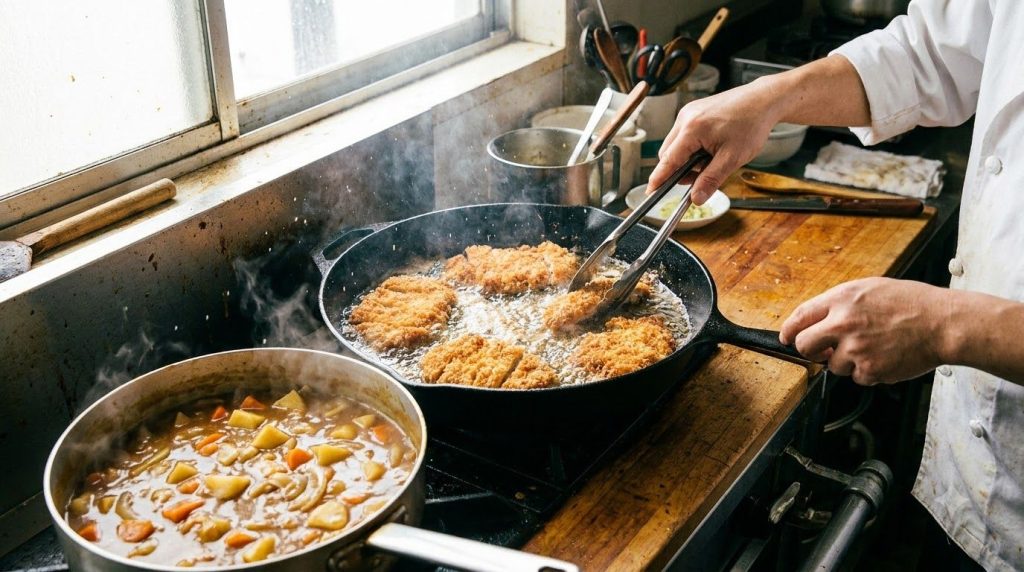
- Heat Oil: In a separate large skillet, heat 2-3 cups of vegetable oil over medium-high heat until it reaches about 350°F (175°C). If you don’t have a thermometer, a small piece of panko should sizzle immediately and turn golden brown in about 30 seconds.
- Fry Katsu: Carefully place one or two breaded chicken cutlets into the hot oil, ensuring not to overcrowd the pan. Fry for 3-5 minutes per side, or until deep golden brown and cooked through. The internal temperature should reach 165°F (74°C).
- Drain Excess Oil: Transfer the fried chicken katsu to a paper towel-lined plate or a wire rack set over a baking sheet to drain any excess oil.
Assemble and Serve:
- Slice Katsu: Once all chicken is fried, slice each katsu cutlet into 1/2-inch thick strips.
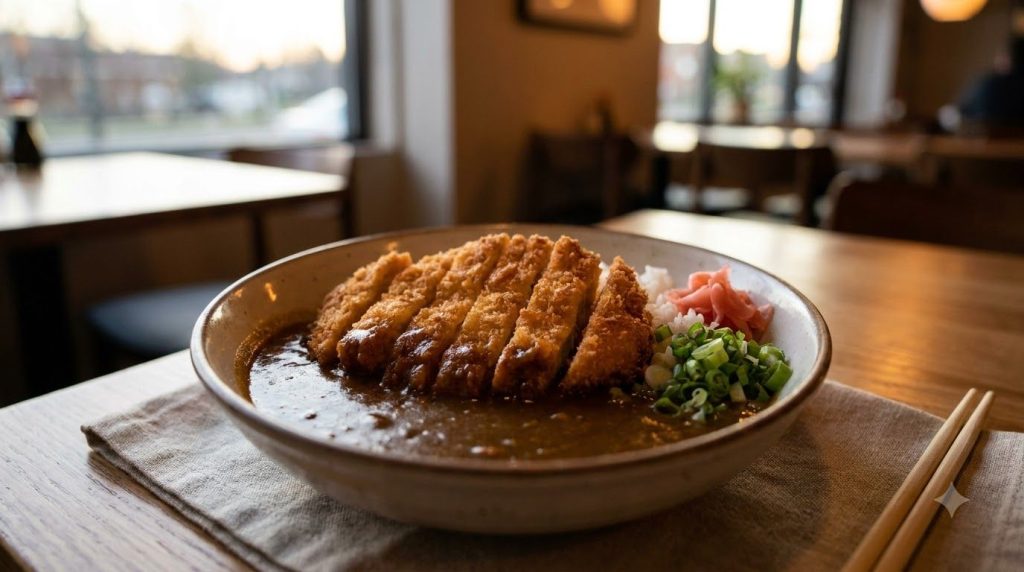
- Serve: Arrange a generous scoop of hot steamed rice on a plate or in a bowl. Place the sliced chicken katsu next to or on top of the rice. Ladle a generous amount of the warm Japanese curry sauce over the katsu and rice. Garnish with chopped green onions or pickled ginger, if desired, and serve immediately.
Expert Tips for Perfect Chicken Katsu Curry
- Pound Chicken Evenly: Pounding the chicken to an even thickness ensures it cooks uniformly and quickly, preventing dry spots.
- Use Panko: This is non-negotiable for true katsu crispiness. Panko breadcrumbs are lighter and airier than regular breadcrumbs, absorbing less oil and yielding a superior crunch.
- Don’t Overcrowd the Pan: Frying in batches is crucial. Overcrowding lowers the oil temperature, leading to greasy, less crispy katsu.
- Maintain Oil Temperature: Use a thermometer if you have one. If the oil is too cool, the katsu will be greasy; too hot, and it will burn before cooking through.
- Don’t Boil Curry After Roux: Once the curry roux blocks are added and dissolved, only simmer on low heat. Boiling can break down the roux and alter the sauce’s texture.
- Adjust Curry Thickness: If your curry sauce is too thick, add a little more broth or water until it reaches your desired consistency. If it’s too thin, let it simmer uncovered for a few more minutes to reduce.
Variations
- Pork Katsu Curry: Easily swap chicken breasts for pork loin cutlets for a traditional Tonkatsu Curry.
- Vegetarian Katsu Curry: Use firm tofu or tempeh instead of chicken, bread it in the same way, and ensure you use vegetable broth and a vegetarian curry roux.
- Spicy Kick: For those who love heat, add a pinch of cayenne pepper, a dash of shichimi togarashi (Japanese seven-spice blend), or a drizzle of chili oil to your curry sauce.
- Extra Veggies: Feel free to add other vegetables to your curry sauce like green beans, bell peppers, or even mushrooms during the simmering stage.
- Air Fryer Katsu: For a lighter version, spray your breaded chicken liberally with cooking oil and air fry at 375°F (190°C) for 15-20 minutes, flipping halfway, until golden and cooked through.
What to Serve With Chicken Katsu Curry
Chicken Katsu Curry is a meal in itself, but a few simple additions can make it even better!
- Classic Sides: Steamed short-grain white rice is traditional, but brown rice can also work.
- Simple Salad: A light green salad with a ginger-sesame dressing provides a refreshing contrast.
- Pickled Vegetables: Japanese pickled ginger (fukujinzuke) or rakkyo (pickled shallots) are commonly served to cut through the richness.
- Miso Soup: A warm bowl of miso soup makes for a lovely starter.
- Drinks: Japanese green tea, iced tea, or a cold lager would be perfect.
- Dessert: Finish with something light like fresh fruit or mochi ice cream.
Storage
- Refrigerator: Store leftover chicken katsu and curry sauce separately in airtight containers in the refrigerator for up to 3 days. The katsu will lose some of its crispiness, but the flavor remains great.
- Freezer: The curry sauce can be frozen in an airtight container for up to 2-3 months. Thaw overnight in the refrigerator before reheating. The fried chicken katsu can also be frozen for up to 1 month, but the texture will change significantly after thawing and reheating.
- Reheating: For the best results, reheat the curry sauce gently on the stovetop over low heat, stirring occasionally, until warmed through. Reheat chicken katsu in a toaster oven or air fryer at 350°F (175°C) for 10-15 minutes until crispy and heated through. Microwaving the katsu will make it soft.
Frequently Asked Questions
What is chicken katsu curry?
Chicken Katsu Curry is a popular Japanese dish consisting of crispy, panko-breaded fried chicken cutlets (katsu) served with a rich, savory Japanese curry sauce and steamed rice.
Can I make chicken katsu in advance?
You can bread the chicken cutlets a few hours in advance and keep them in the refrigerator before frying. You can also make the curry sauce a day or two ahead, as the flavors often deepen overnight.
What kind of curry blocks should I use?
Look for Japanese curry roux blocks like S&B Golden Curry, Vermont Curry, or House Foods Curry. They come in different spice levels (mild, medium hot, hot).
Why is my chicken katsu not crispy?
Lack of crispiness usually comes from not using panko breadcrumbs, overcrowding the frying pan (which lowers oil temperature), or not frying at the correct oil temperature. Ensure your oil is hot enough and don’t skip the panko!
Can I use boneless, skinless chicken thighs instead of breasts?
Absolutely! Chicken thighs will result in a juicier katsu, though they might take slightly longer to cook. Pound them to an even thickness just like the breasts.
Is Japanese curry spicy?
It depends on the curry roux you choose. Japanese curry typically ranges from very mild to hot. Many brands offer mild or medium-hot options that are kid-friendly.
How do I make the curry sauce thicker?
If your curry sauce isn’t thick enough, you can simmer it uncovered for a bit longer to allow it to reduce. Alternatively, you can mix a small amount of cornstarch with cold water to create a slurry and stir it into the simmering curry until it thickens to your liking.
Nutrition
Approximate values only per serving (1 chicken cutlet with curry and rice):
- Calories: 650-750 kcal
- Protein: 35-40 g
- Fat: 30-40 g
- Carbs: 60-70 g
- Fiber: 4-6 g
- Sugar: 5-8 g
- Sodium: 800-1000 mg
Nutritional information is an estimate and may vary.
Conclusion
There you have it—your guide to making a truly delicious and satisfying homemade Japanese Chicken Katsu Curry! This dish is a fantastic way to bring the flavors of Japan into your home kitchen, creating a meal that’s both comforting and exciting. The crispy chicken combined with the rich, aromatic curry sauce is a match made in culinary heaven, and it’s sure to become a cherished recipe in your household.
Don’t wait any longer; gather your ingredients and give this recipe a try tonight! I promise you won’t be disappointed. If you make it, please come back and leave a comment below to let me know how it turned out. Your feedback means the world to me! And if you loved this recipe, be sure to explore more of our easy and family-friendly meals here on the website. Happy cooking!