How to Boil Potatoes Perfectly Every Time
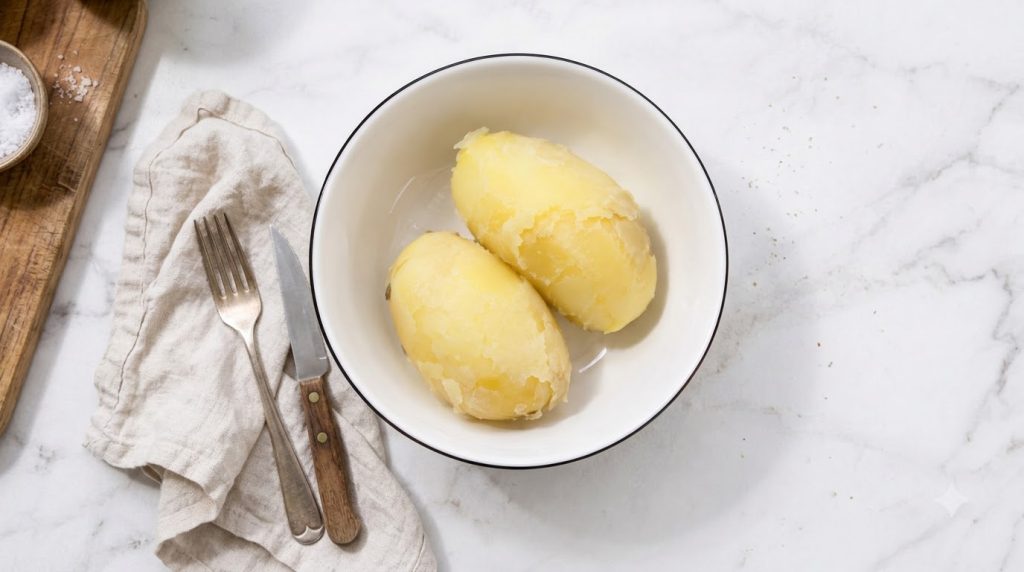
Freshly boiled potatoes are truly one of life’s simple pleasures. Their comforting texture and gentle warmth make them the perfect canvas for almost any meal. Whether you’re aiming for a fluffy mashed potato side, a robust potato salad, or just a wholesome accompaniment to your main course, knowing how to boil potatoes perfectly is a fundamental cooking skill that every home cook should master.
This guide will walk you through the simple steps to achieve tender, flavorful boiled potatoes every single time. Forget mushy or undercooked spuds – with a few easy tips, you’ll be boiling potatoes like a pro, ready to transform them into countless delicious dishes.
Why You’ll Love This Recipe
- Surprisingly Simple: Boiling potatoes is straightforward, making it perfect for beginners and busy weeknights.
- Incredibly Versatile: Boiled potatoes are the foundation for so many recipes, from creamy mashed potatoes to hearty stews.
- Wholesome & Healthy: A naturally gluten-free and nutrient-rich vegetable, offering a great source of energy and fiber.
- Ultimate Comfort Food: There’s something undeniably comforting about a warm, tender potato.
- Easy to Customize: Season them simply with salt and butter, or load them up with your favorite herbs and spices.
Ingredients
- 2 pounds (about 900 g) potatoes, such as Yukon Gold, Red Bliss, or Russet
- 8 cups (about 2 liters) cold water, or enough to cover potatoes by at least 1 inch
- 1 tablespoon (15 g) kosher salt, plus more to taste
Ingredient Notes
- Potatoes: The type of potato you choose can impact the final texture. Waxy potatoes like Red Bliss or Yukon Gold hold their shape well and are great for potato salads or simply served as a side. Starchy potatoes like Russets break down easily and are ideal for mashing or making fluffy baked potatoes. All-purpose varieties offer a good balance.
- Salt: Don’t skip salting the water! Just like pasta, potatoes absorb flavor from the cooking liquid. Salting the water seasons the potatoes from the inside out, resulting in a much more flavorful end product.
- Water: Always start with cold water. This allows the potatoes to cook more evenly. If you start with hot water, the outside of the potato will cook faster than the inside, leading to uneven texture.
Equipment You’ll Need
- Large pot (at least 5-quart capacity)
- Sharp knife and cutting board (if peeling or cutting potatoes)
- Colander
- Fork or paring knife for testing doneness
How to Make Boiled Potatoes Perfectly
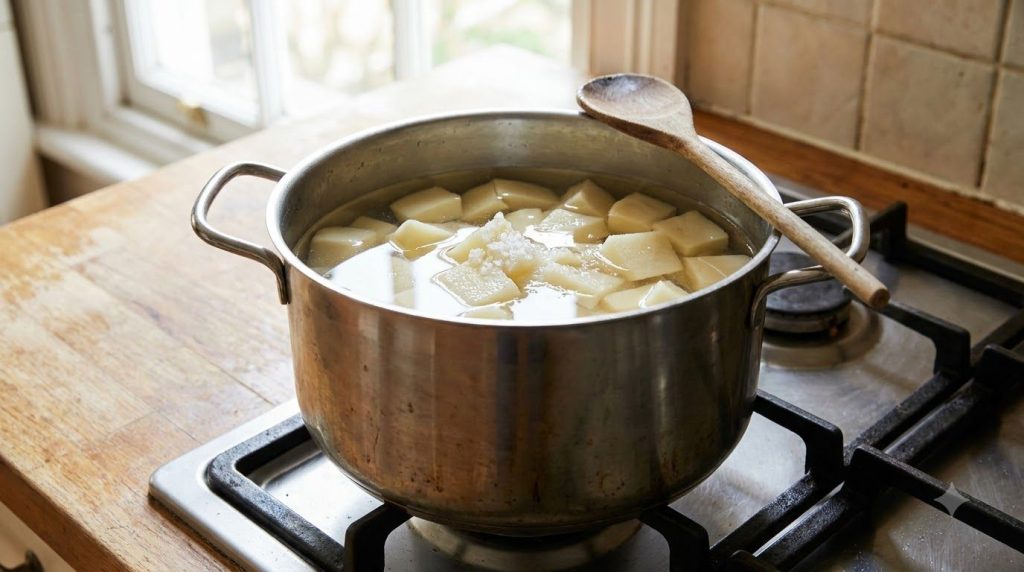
- Prepare the Potatoes: Wash your potatoes thoroughly under cold running water. Decide if you want to peel them. For mashed potatoes or a very smooth texture, peeling is recommended. For a more rustic dish or added nutrients, leave the skins on. If your potatoes are large, cut them into roughly 1 to 2-inch (2.5 to 5 cm) pieces to ensure even cooking. Try to make all pieces a similar size.
- Place in Pot with Cold Water: Put the prepared potatoes into a large pot. Add enough cold water to cover the potatoes by at least 1 inch (2.5 cm).
- Season the Water: Add 1 tablespoon (15 g) of kosher salt to the water. This is crucial for seasoning the potatoes as they cook.
- Bring to a Boil: Place the pot on the stovetop over high heat. Bring the water to a rolling boil.
- Simmer Until Tender: Once boiling, reduce the heat to medium-low to maintain a gentle simmer. Cook the potatoes until they are fork-tender. This means a fork or a small paring knife can easily pierce the largest potato piece without resistance.
- Small potatoes (whole): 10-15 minutes
- Medium potatoes (cut): 15-20 minutes
- Large potatoes (cut): 20-30 minutes
- Drain Thoroughly: Carefully pour the potatoes into a colander in the sink to drain all the hot water. Allow them to sit for a minute or two to let any excess steam escape, which helps prevent a watery texture, especially if you’re mashing them.
- Serve or Use Immediately: Your perfectly boiled potatoes are now ready to be enjoyed as a simple side dish, mashed, or incorporated into your favorite recipes.
Pro Tips for the Best Results
- Start Cold: Always place potatoes in cold water and bring it to a boil. This ensures even cooking from the outside in.
- Salt Generously: Don’t skimp on salt in the cooking water. It imparts flavor throughout the potato.
- Cut Evenly: Uniformly sized potato pieces will cook at the same rate, preventing some from being mushy while others are undercooked.
- Don’t Overcrowd: Give your potatoes room in the pot. Overcrowding can lower the water temperature and lead to uneven cooking.
- Test for Doneness: Use a fork or thin knife to test the largest potato piece. It should slide in easily.
- Drain Well: After draining, let the potatoes sit in the colander for a minute or two to steam dry. This removes excess moisture, leading to better texture, especially for mashing.
Common Mistakes to Avoid
- Starting in Hot Water: This causes the outsides to cook faster and potentially break down before the insides are tender.
- Not Salting the Water: Bland potatoes are a common result of unsalted cooking water.
- Unevenly Sized Cuts: This leads to a mix of perfectly cooked, overcooked, and undercooked pieces.
- Overcooking: Potatoes that are cooked too long become mushy and crumbly, losing their desirable texture.
- Not Draining Properly: Excess water can make your potatoes watery and dilute their flavor, particularly if you’re mashing or making a salad.
Variations & Substitutions
- Aromatic Boost: Add a bay leaf, a few smashed garlic cloves, or a sprig of fresh rosemary to the cooking water for subtle flavor infusion.
- Vinegar Trick: A splash of vinegar in the cooking water can help waxy potatoes maintain their shape better, especially useful for potato salads.
- Flavorful Finish: After draining, toss hot potatoes with fresh herbs like parsley or chives, a knob of butter, a drizzle of olive oil, or a sprinkle of garlic powder and black pepper.
- Smash Roasted: For a delicious textural variation, boil potatoes until tender, then lightly smash them on a baking sheet, drizzle with oil, season, and roast until crispy.
Serving Suggestions
Perfectly boiled potatoes are a culinary chameleon! Here are a few ways to enjoy them:
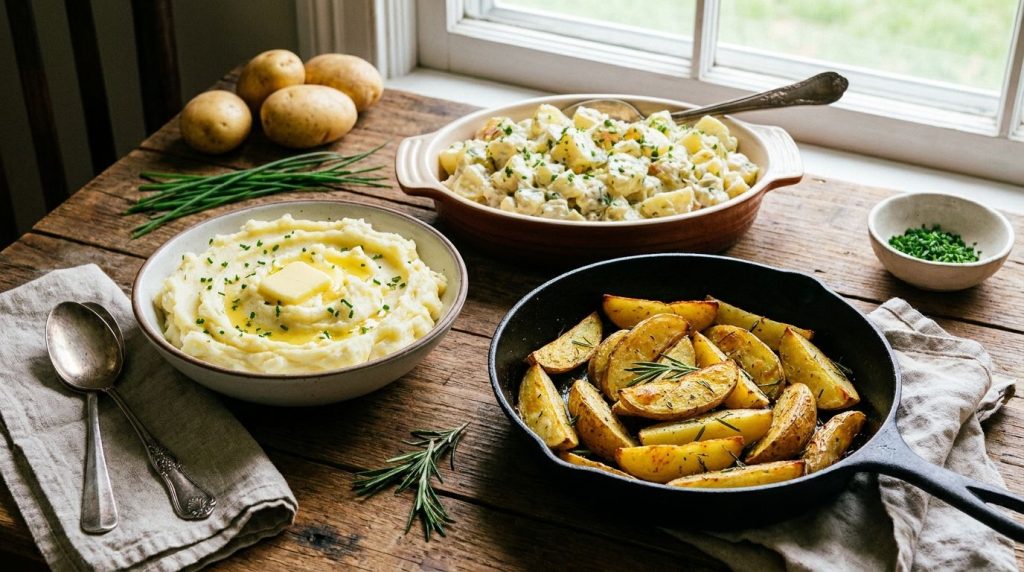
- Simple Side: Toss with butter, fresh parsley, salt, and pepper. A classic for a reason!
- Mashed Potatoes: Mash with butter, warm milk or cream, and seasonings for a creamy, comforting side.
- Potato Salad: Cool and cube for a classic potato salad with mayonnaise, celery, and herbs.
- Roasted: Toss with olive oil and herbs, then roast for crispy-on-the-outside, fluffy-on-the-inside potatoes.
- Stews & Soups: Add cubed boiled potatoes to your favorite stews, curries, or hearty soups for extra substance.
Storage & Reheating
- Refrigerator: Cooked boiled potatoes can be stored in an airtight container in the refrigerator for up to 3-4 days.
- Freezer: Whole boiled potatoes don’t freeze particularly well as they can become mealy or grainy upon thawing. However, mashed potatoes freeze much better.
- Reheating: Reheat boiled potatoes gently. For whole or cut potatoes, you can warm them in the microwave, in a skillet with a little butter or oil, or even briefly steam them. If reheating in a skillet, they’ll develop a nice crispness.
FAQ
How long does it take to boil potatoes?
The cooking time depends on the size and type of potato. Small whole potatoes typically take 10-15 minutes, while medium diced potatoes might take 15-20 minutes, and large diced pieces 20-30 minutes. Always cook until fork-tender.
Should I peel potatoes before boiling?
It’s entirely up to your preference and the recipe. For a smoother texture (like mashed potatoes), peeling is usually preferred. For potato salads or a more rustic side dish, leaving the skins on adds fiber and nutrients, and can save time.
Why did my boiled potatoes fall apart?
This usually happens from overcooking. Once potatoes are fork-tender, they’re done. Cooking them longer will cause them to break down and become mushy. Uneven cuts can also lead to smaller pieces disintegrating while larger ones finish cooking.
Can I boil potatoes ahead of time?
Yes, you can boil potatoes a day or two in advance. Once cooled, store them in an airtight container in the refrigerator. This is especially helpful for dishes like potato salad or for quick meal prep.
What kind of potatoes are best for boiling?
For general boiling where you want them to hold their shape, waxy or all-purpose potatoes like Yukon Gold, Red Bliss, or new potatoes are excellent. For mashing, starchy Russets are ideal for their fluffy texture.
Is it better to start potatoes in cold or hot water?
Always start potatoes in cold water. This allows them to heat up gradually and cook evenly from the center to the edge. Starting in hot water can lead to the outside cooking and softening faster than the inside, resulting in unevenly cooked potatoes.
Can I boil potatoes without salt?
While you technically can, it’s highly recommended to add salt to the cooking water. Potatoes absorb the salt as they cook, seasoning them throughout and greatly enhancing their flavor. Without salt, they will taste bland.