There’s nothing quite like the satisfaction of harvesting your own food, and sweet potatoes are a fantastic choice for home gardeners! Not only are they delicious and nutritious, but growing them from slips is also a surprisingly straightforward and rewarding process. If you’ve ever dreamed of digging up vibrant, earthy sweet potatoes from your own backyard, you’ve come to the right place. Let’s dive into the simple steps to cultivate your own sweet potato patch!

Why Grow Sweet Potatoes?
Sweet potatoes are more than just a tasty side dish; they’re a powerhouse of vitamins, minerals, and fiber. Growing your own ensures you have access to fresh, organic produce, free from pesticides and chemicals. Plus, the lush vines can even serve as attractive ground cover in your garden. They’re relatively low-maintenance once established, making them a great option for gardeners of all experience levels.
Understanding Sweet Potato Slips
Unlike regular potatoes, sweet potatoes aren’t grown from ‘seed potatoes.’ Instead, they’re grown from ‘slips’ – sprouts that emerge from a mature sweet potato. You can easily create your own slips at home by placing a sweet potato in water or moist soil, or you can purchase them from a garden center. Starting with slips gives your plants a head start and ensures a healthy crop.
The Four Stages of Sweet Potato Growth: A Simple Guide
Let’s break down the journey of your sweet potato, from a tiny slip to a bountiful harvest, much like the process depicted in our helpful infographic.
Stage 1: Plant a Slip
Once your sweet potato slips have developed roots about 1-2 inches long, they’re ready for planting. Choose a sunny spot in your garden with well-draining soil. Sweet potatoes thrive in warm weather, so wait until all danger of frost has passed and soil temperatures are consistently above 60°F (15°C). Plant the slips about 12-18 inches apart in rows that are 3-4 feet apart. Bury the rooted end of the slip, leaving a few leaves exposed above the soil line. Water thoroughly after planting.
Stage 2: Roots Develop
After planting, the slips will focus their energy on establishing a robust root system. Beneath the soil, tiny fibrous roots will begin to spread, anchoring the plant and preparing it for future growth. During this crucial stage, consistent moisture is key, but avoid waterlogging the soil. This foundation-building period is vital for the development of healthy tubers later on.
Stage 3: Vine Grows
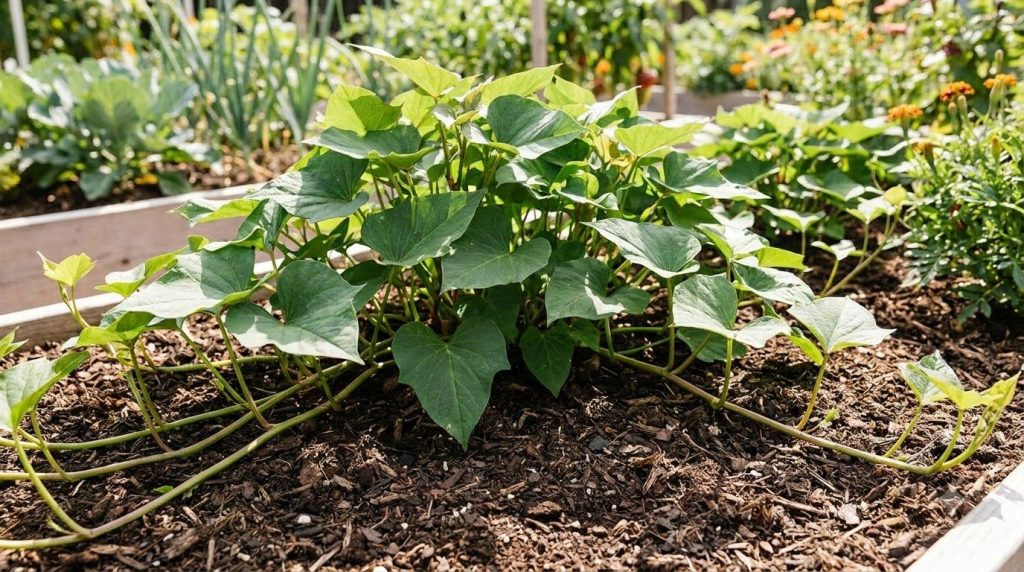
Once the root system is established, you’ll see vigorous growth above ground. The sweet potato plant will send out long, sprawling vines that can spread several feet. These vines are quite attractive and can help suppress weeds. Keep an eye on moisture levels, especially during dry spells. You can direct the vines to stay within your designated planting area, or let them ramble if you have the space.
Stage 4: Sweet Potatoes Form
Finally, the moment we’ve all been waiting for! As the growing season progresses, the plant will start to form its delicious tubers underground. These sweet potatoes develop along the root system, growing larger and sweeter as time goes on. This process usually takes 90-120 days from planting, depending on the variety and your local climate. You won’t see this magic happening, but consistent care ensures your plant is putting energy into forming these subterranean treasures.
Caring for Your Sweet Potato Patch
- Sunlight: Sweet potatoes need at least 6-8 hours of full sun daily.
- Soil: Well-draining, loose, sandy loam soil is ideal. A slightly acidic to neutral pH (5.8 to 6.2) is preferred.
- Watering: Keep the soil consistently moist, especially during dry periods, but avoid overwatering, which can lead to rot.
- Fertilizing: Sweet potatoes don’t require a lot of nitrogen; too much can lead to excessive vine growth at the expense of tubers. A balanced fertilizer or compost worked into the soil before planting is usually sufficient.
- Pest Control: While generally robust, keep an eye out for common garden pests. Companion planting can help deter some insects naturally.
Harvesting Your Bounty
Sweet potatoes are typically ready for harvest when the leaves and ends of the vines start to turn yellow, usually before the first hard frost. Carefully dig around the perimeter of the plant, being cautious not to damage the sweet potatoes. Gently lift them from the soil. After harvesting, cure your sweet potatoes by leaving them in a warm, humid place for about 1-2 weeks. This process enhances their sweetness and extends their storage life.
Start Your Sweet Potato Journey Today!
Growing sweet potatoes from slips is a rewarding experience that brings fresh, wholesome food to your table. With a little sunshine, water, and patience, you’ll soon be enjoying your very own homegrown harvest. Happy gardening!