There are singers you recognize after one note, their voice instantly familiar. But take the music away, crop the photograph down to only the eyes, and suddenly even a legendary face becomes surprisingly difficult to pinpoint. Was it Sam Cooke? Smokey Robinson? Otis Redding? All are believable guesses when stripped of their iconic sounds. Take one more look before you make your final decision.
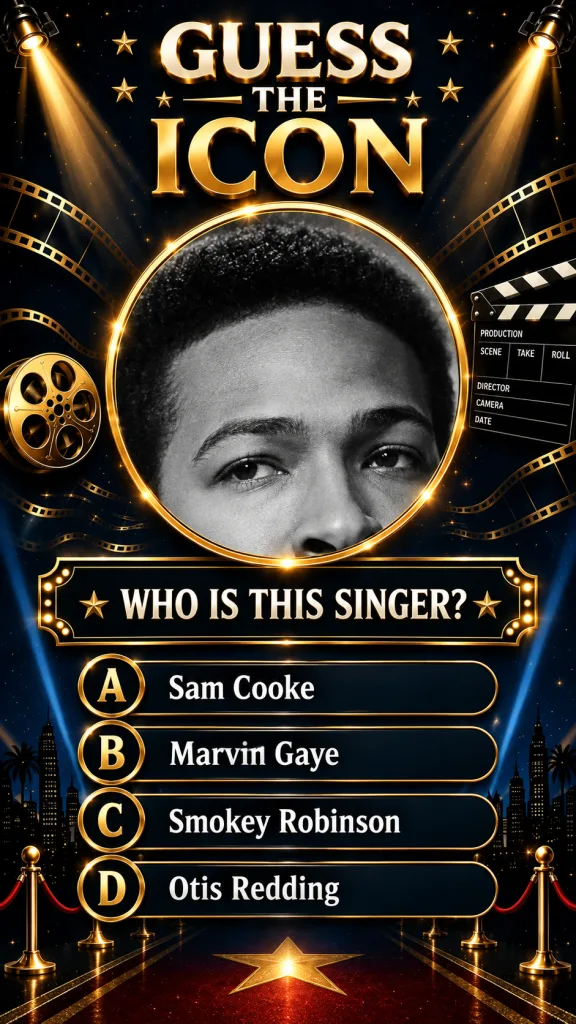
The correct answer, as many discerning fans will know, is Marvin Gaye. The man behind those soulful eyes became one of the most important and influential artists ever to emerge from the legendary Motown label.
Before He Became the “Prince of Soul”
Marvin Gaye began building his career at Motown in the early 1960s. Interestingly, singing was not the only talent he brought to the studio. Before his solo career fully took off and established him as a premier vocalist, Gaye also played drums for other Motown performers. This included significant session work connected with artists like Smokey Robinson and the Miracles, showcasing his versatility and deep musical understanding.
His early recordings quickly established him as a polished and sophisticated soul singer. Tracks such as “Pride and Joy,” “How Sweet It Is (To Be Loved by You),” and the iconic “I Heard It Through the Grapevine” transformed his unique voice into one of Motown’s most recognizable and beloved sounds. These early hits cemented his status as a hitmaker, but Marvin Gaye would eventually aspire to create music that delved much deeper into social commentary and personal expression.
The Album That Changed His Career
In 1971, Gaye released his groundbreaking album, What’s Going On. This wasn’t just another collection of catchy tunes; it was a profound departure from Motown’s traditional pop-oriented sound, marking a pivotal moment in his career and in music history. The album saw Gaye taking complete creative control, crafting a conceptual masterpiece that addressed pressing social issues of the time, including war, poverty, and environmental destruction. Its seamless suite of songs, told from the perspective of a Vietnam veteran returning home, resonated deeply with audiences and critics alike. What’s Going On demonstrated Gaye’s maturity as an artist, proving that commercial success could coexist with powerful, socially conscious storytelling.
Marvin Gaye’s Enduring Legacy
Marvin Gaye’s impact on music extends far beyond his hit singles. He blurred the lines between soul, R&B, and pop, influencing countless artists across genres. His ability to convey profound emotion, combined with his unparalleled vocal talent, made him a true innovator. From his smooth early Motown sound to the introspective and socially aware anthems of his later career, Gaye’s artistry consistently pushed boundaries. His music remains a cornerstone of American popular culture, continuing to inspire new generations of listeners and musicians with its timeless messages and undeniable groove.
So, while his face might have been a challenge to identify from a cropped image, Marvin Gaye’s voice and his monumental contributions to music are, without a doubt, unforgettable.