Welcome back, gardening friends! Have you ever watched your favorite plants grow tall and then start to lean, flop over, or even break under the weight of their own bounty? It’s a common struggle for many gardeners, but there’s a simple solution: plant supports! Providing the right support can transform your garden, leading to healthier plants, bigger harvests, and a tidier, more beautiful space.
Today, we’re diving deep into the world of plant supports – why they’re essential, what types are available, and how to choose the best one for your green companions. Get ready to elevate your garden to new heights!
Why Plant Supports Are a Game-Changer for Your Garden
You might wonder if plant supports are truly necessary. The answer is a resounding yes! Here’s why they’re so beneficial:
- Increased Air Circulation: Lifting plants off the ground improves airflow, which can significantly reduce the risk of fungal diseases and mildew.
- Better Sunlight Exposure: When plants are supported, their leaves and fruits are exposed to more sunlight, leading to more even ripening and stronger growth.
- Protection from Pests and Soil-borne Diseases: Keeping fruits and foliage off the soil surface minimizes contact with pests and pathogens that live in the ground.
- Prevents Stem Breakage: Heavy fruits, strong winds, or even heavy rain can cause delicate stems to snap. Supports provide the structural integrity plants need.
- Optimized Space: Especially in small gardens or raised beds, vertical supports allow you to grow more plants in a compact area.
- Easier Harvesting: Supported plants often present their bounty more visibly, making harvesting a breeze and reducing stooping.
Choosing the Right Support for Your Plants
The best plant support depends on the type of plant, its growth habit, and how heavy its yield will be. Let’s explore some popular options:
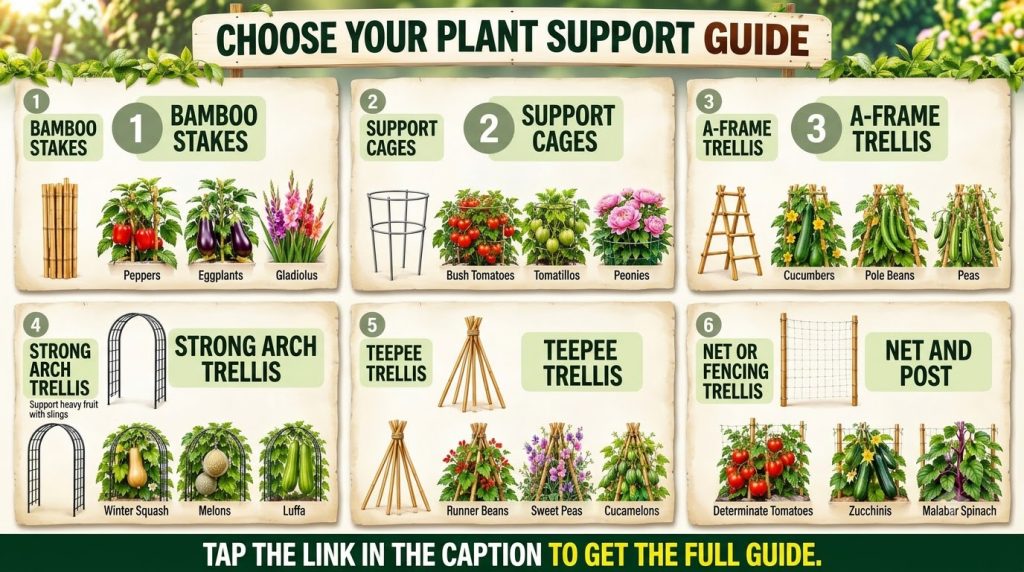
1. Stakes
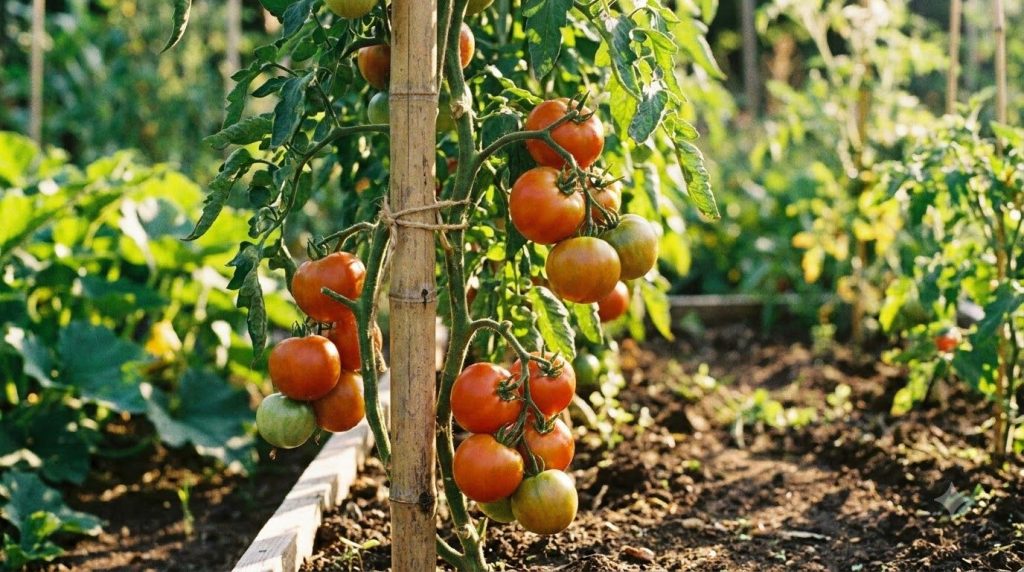
Stakes are perhaps the simplest form of plant support. They are typically single poles, bamboo canes, or sturdy wooden dowels driven into the ground next to a plant. As the plant grows, you gently tie it to the stake.
- Best for: Tall, single-stemmed plants, or plants with heavy fruits. Tomatoes (especially determinate varieties), peppers, sunflowers, gladioli, and dahlias.
- Pros: Inexpensive, easy to install, customizable height.
- Cons: Requires regular tying, may not be suitable for very bushy plants without multiple stakes.
2. Cages
Plant cages are self-supporting structures, usually made of wire, that encircle a plant. As the plant grows, it grows through and within the cage, providing support on all sides.
- Best for: Bushy plants that produce heavy fruits or flowers, particularly indeterminate tomatoes, eggplants, and some pepper varieties.
- Pros: Easy to set up, provides all-around support, requires less tying than stakes.
- Cons: Can be bulky to store, may not be tall enough for very vigorous indeterminate tomatoes without extensions.
3. Trellises
Trellises are open frameworks, often made of wood, metal, or strong netting, designed for climbing plants to attach to. They come in various shapes and sizes, from flat panels to A-frames.
- Best for: Vining plants like cucumbers, pole beans, peas, squash, melons (for smaller varieties), and many ornamental climbers like clematis and morning glories.
- Pros: Excellent for maximizing vertical space, attractive, promotes good airflow, easy harvesting.
- Cons: Can be more involved to install, some require plants to be guided initially.
4. Netting and String Systems
Similar to trellises, netting provides a grid for plants to climb. String systems involve running twine or string between stakes or overhead supports, which is particularly common in commercial tomato and cucumber production.
- Best for: Peas, beans, cucumbers, and smaller squash varieties.
- Pros: Cost-effective, very space-efficient, can be easily reconfigured.
- Cons: Netting can sometimes be tricky to install and can tangle, string systems require overhead support.
Easy DIY Plant Stakes for Strong Growth
You don’t always need to buy fancy equipment to support your plants! Many effective supports can be made with materials you might already have:
- Bamboo Stakes: Collect sturdy bamboo poles (if available) or purchase them. They are naturally strong and blend beautifully into the garden.
- Rebar or Metal Rods: For exceptionally heavy plants or long-term support, rebar can be cut to size. Just be sure to cap the tops to prevent injury.
- Branches and Twigs: Prune sturdy, straight branches from trees or shrubs. These can make excellent, natural-looking stakes for smaller plants or act as a mini-trellis for peas.
- Old Clothes Hangers (Wire): For lightweight plants or to support individual branches, old wire hangers can be straightened and bent into custom shapes.
- PVC Pipe: While not the most aesthetically pleasing, PVC pipe is durable and can be used to create strong stakes or even simple cages by connecting pieces.
When using DIY stakes, remember to install them when plants are young to avoid damaging roots. Always tie plants loosely with soft materials like old pantyhose strips, garden twine, or fabric scraps to prevent girdling the stem.
Tips for Successful Plant Support
- Install Early: It’s always best to install supports when plants are small to minimize root disturbance and guide growth from the start.
- Tie Loosely: Use soft ties and allow enough room for stems to grow thicker without being constricted. Check ties periodically.
- Consider Plant Weight: Choose supports that can handle the full mature weight of your plant and its harvest.
- Placement Matters: Place stakes or cages firmly into the ground, ideally a few inches away from the main stem, to avoid root damage.
- Match Growth Habit: Vining plants need something to climb, while bushy plants need all-around support.
Providing your plants with the right support is a small effort that yields tremendous rewards. You’ll enjoy healthier plants, a more abundant harvest, and a garden that looks its absolute best. So go ahead, give your plants the lift they deserve, and watch your garden truly thrive!