Welcome back, fellow garden enthusiasts! Are you dreaming of a lush, thriving garden bursting with vibrant flowers and bountiful vegetables? Sometimes, even the hardiest plants need a little extra help to reach their full potential. That’s where plant supports come in! Providing the right support can prevent broken stems, keep fruits off the ground, improve air circulation, and ultimately lead to healthier, more productive plants. Let’s dive into the ultimate guide to plant supports and discover how to master your garden!
Why Plant Supports Are a Game-ChChanger for Your Garden
Imagine your garden after a heavy rainstorm or a strong gust of wind. Without proper support, tall plants might flop over, heavy fruit-laden branches could snap, and delicate blooms might get trampled. Plant supports offer numerous benefits that protect your plants and enhance your gardening success:
- Prevents Damage: Protects stems and branches from breaking under their own weight or external forces.
- Improves Air Circulation: Lifts foliage off the ground, reducing the risk of fungal diseases.
- Keeps Produce Clean: Stops fruits and vegetables from rotting on damp soil or becoming a snack for pests.
- Optimizes Space: Helps vertical growers reach upwards, making the most of smaller garden plots.
- Enhances Aesthetics: Creates a neat, organized, and beautiful garden display.
- Easier Harvesting: Keeps fruits and vegetables accessible and visible, simplifying harvest time.
Choosing the Best Plant Support for Your Needs
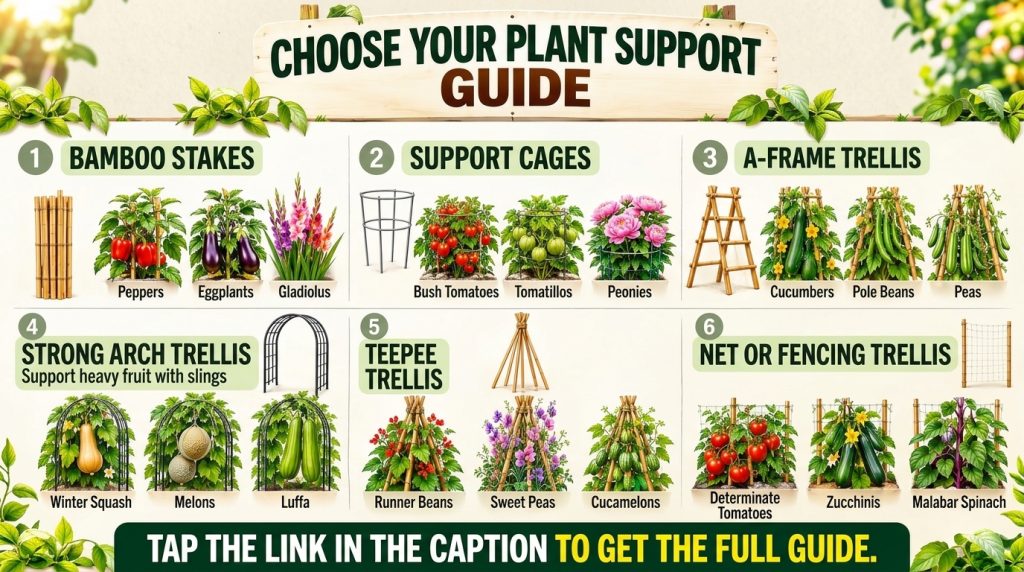
Not all plants need the same kind of support. The best choice depends on the plant’s size, growth habit, and weight. Here are some of the most popular and effective plant support options:
1. Stakes: Simple and Effective
Stakes are perhaps the most straightforward form of plant support. They are ideal for single-stemmed plants, tall flowers, or young plants that need initial guidance. They come in various materials like bamboo, wood, or metal.
- Best for: Gladiolus, dahlias, delphiniums, sunflowers, young trees, individual tomato plants.
- Tips: Insert the stake into the ground when planting or when the plant is still small to avoid damaging roots. Use soft ties (like garden twine or fabric strips) to gently secure the stem to the stake, allowing for growth.
2. Cages: Perfect for Bushy Plants
Plant cages, typically made of wire, surround bushy plants, offering support from all sides as they grow. They are especially popular for heavy fruit-bearing plants.
- Best for: Tomatoes, peppers, eggplants, bushy squash varieties.
- Tips: Place the cage over the plant when it’s still small so it can grow into the structure. As the plant grows, its branches will naturally weave through the cage, providing stable support.
3. Trellises: Vertical Gardening Powerhouse
Trellises are structures, often made of lattice, mesh, or wire grids, designed for climbing plants to grow vertically. They are fantastic for maximizing space and creating stunning garden features.
- Best for: Cucumbers, pole beans, peas, climbing roses, clematis, morning glories, grapes, many types of squash and melons.
- Tips: Install trellises before planting or when plants are very young. Gently guide new growth onto the trellis, and the tendrils will do the rest. Ensure the trellis is sturdy enough to support the mature weight of the plant.
4. Netting: Gentle and Flexible Support
Plant netting, similar to a trellis but often lighter and more flexible, provides a grid for plants to climb or lean against. It’s often used horizontally as well to support bushy plants.
- Best for: Peas, cucumbers, small climbing flowers, keeping bushy plants from flopping (when used horizontally).
- Tips: Securely attach netting to posts or a frame. For climbing plants, ensure the mesh size is appropriate for the plant’s tendrils.
5. Obelisks and Decorative Supports: Form Meets Function
Obelisks are pyramid-shaped structures that provide both support and an attractive focal point in the garden. There are also many other decorative supports like tepees or intricate metal structures.
- Best for: Climbing roses, clematis, sweet peas, small vining plants, peonies, or creating vertical interest in flower beds.
- Tips: Position obelisks in key spots in your garden design. Train vines around the structure for a beautiful, cascading effect.
6. Grow-Through Supports: Invisible Strength
These supports are often rings or grids on legs that sit over the plant, allowing it to grow up through the structure. They offer subtle support, preventing plants from splaying open.
- Best for: Peonies, delphiniums, asters, and other bushy perennials that tend to flop.
- Tips: Install grow-through supports early in the season, when plants are still relatively small, so they can grow up and obscure the support structure.
General Tips for Success with Plant Supports
- Install Early: It’s always best to install supports before your plants get too big or begin to flop.
- Choose the Right Height: The support should be tall enough to accommodate the plant’s mature height.
- Use Gentle Ties: Avoid tight ties that can cut into stems. Use soft materials and allow for some movement.
- Check Regularly: As plants grow, they may need adjustments or additional ties.
- Clean Before Storing: At the end of the season, clean your reusable supports to prevent disease spread.
With the right plant supports, you can transform your garden into a picture of health and productivity. No more struggling with fallen branches or rotting produce! Embrace these tools, and watch your plants reach for the sky, yielding a garden that truly thrives.
Happy gardening!