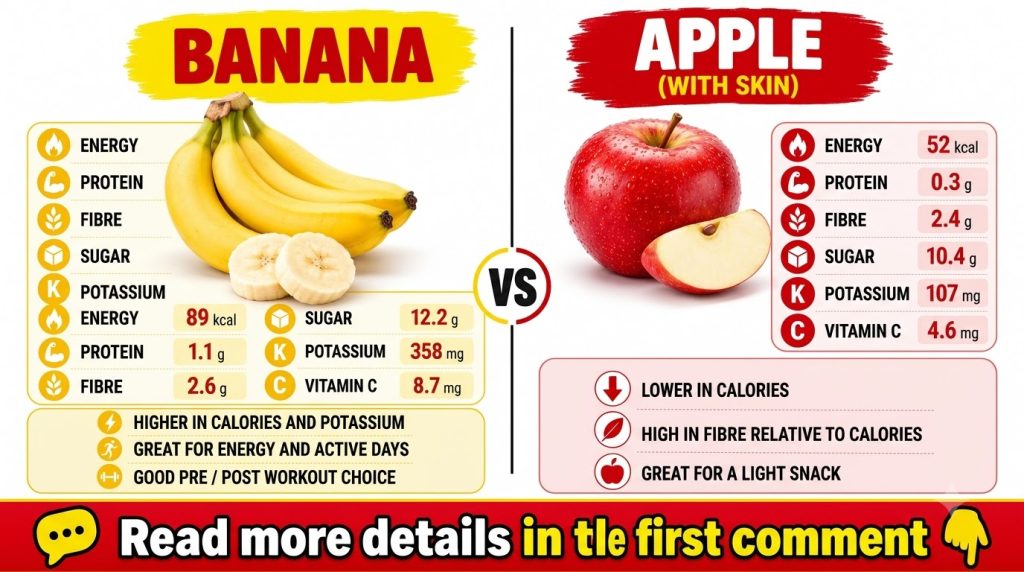
Banana vs. Apple: Which Fruit Wins Your Healthy Heart?
When it comes to healthy snacking, bananas and apples often top the list. Both are delicious, convenient, and packed with nutrients, but they offer distinct health benefits. You might find yourself reaching for one over the other depending on your energy needs or nutritional goals.
This article will dive deep into the nutritional profiles of bananas and apples, comparing their calories, protein, carbs, fat, fiber, and essential vitamins and minerals. We’ll explore what makes each fruit unique and help you decide which one might be the best choice for different occasions. Get ready to peel back the layers and discover which fruit truly wins your heart!
Whether you’re looking for a quick energy boost, a fiber-rich snack, or simply curious about what your favorite fruit offers, you’ll find all the answers here.
Nutrition Comparison Table: Banana vs. Apple
Let’s break down the approximate nutritional content of a medium-sized banana (about 118g) and a medium-sized apple (about 182g) with the skin on.
| Nutrient | Medium Banana (118g) | Medium Apple (182g) |
|---|---|---|
| Calories | 105 kcal | 95 kcal |
| Protein | 1.3 g | 0.5 g |
| Carbohydrates | 27 g | 25 g |
| Fiber | 3.1 g | 4.4 g |
| Total Fat | 0.4 g | 0.3 g |
| Potassium | 422 mg | 195 mg |
| Vitamin C | 10.3 mg | 8.4 mg |
| Vitamin B6 | 0.4 mg | 0.1 mg |
Calories and Energy
While both fruits are relatively low in calories, a medium banana tends to have slightly more calories than a medium apple. This difference is mainly due to bananas typically having more carbohydrates, which translates to a bit more energy. If you’re looking for a quick source of fuel before a workout or to combat a mid-afternoon slump, a banana may provide that slightly higher energy boost.
Protein and Fat Content
Neither bananas nor apples are significant sources of protein or fat. They are primarily carbohydrate-rich fruits. However, bananas contain a bit more protein than apples. For well-rounded nutrition, it’s always a good idea to pair either fruit with a protein source, like a handful of nuts or a spoonful of yogurt, to promote satiety.
Carbohydrates and Fiber
Both fruits are excellent sources of carbohydrates, which provide essential energy for your body. The type of carbohydrates differs slightly; bananas have a higher content of natural sugars, which contribute to their quick energy release. Apples, on the other hand, are renowned for their high fiber content, especially pectin, which is found in their skin.
- Bananas: Offer a good mix of soluble and insoluble fiber. The soluble fiber may help stabilize blood sugar levels, while insoluble fiber supports digestive regularity.
- Apples: Stand out with a higher fiber content per serving, particularly soluble fiber. This can contribute to feelings of fullness, support gut health, and may help manage cholesterol levels.

Key Vitamins and Minerals
Bananas: The Potassium Powerhouse
Bananas are most famous for their high potassium content, an essential mineral that plays a crucial role in maintaining healthy blood pressure and proper muscle function. They also provide a good amount of Vitamin B6, which is important for brain health and metabolism. While bananas do contain Vitamin C, it’s not their most prominent vitamin.
Apples: A Source of Vitamin C
Apples are a good source of Vitamin C, a powerful antioxidant that supports your immune system and skin health. They also contain smaller amounts of other vitamins and minerals, along with various beneficial plant compounds and antioxidants, especially in their skin.
Taste and Texture
Beyond nutrition, taste and texture significantly influence our fruit choices:
- Bananas: Known for their creamy, soft texture and sweet, mild flavor. They are often used in smoothies, baked goods, or as a standalone snack.
- Apples: Offer a crisp, crunchy texture and a range of flavors from sweet to tart, depending on the variety. They are versatile, perfect for snacking, salads, or cooking.
Which Fruit is Best For You?
There’s no single

