Have you ever wondered if those eggs in your fridge are still good to eat? It’s a common dilemma that can lead to unnecessary food waste. Nobody wants to crack open a rotten egg, but throwing out perfectly good ones isn’t ideal either!
Knowing how fresh your eggs are is super important, not just for taste but also for food safety. Thankfully, there’s a simple, foolproof method you can use right at home. In this article, we’ll dive into the popular egg water test, explain why it works, and share tips to keep your eggs fresh longer. Get ready to become an egg freshness expert!
Key Points: The Simple Egg Water Test
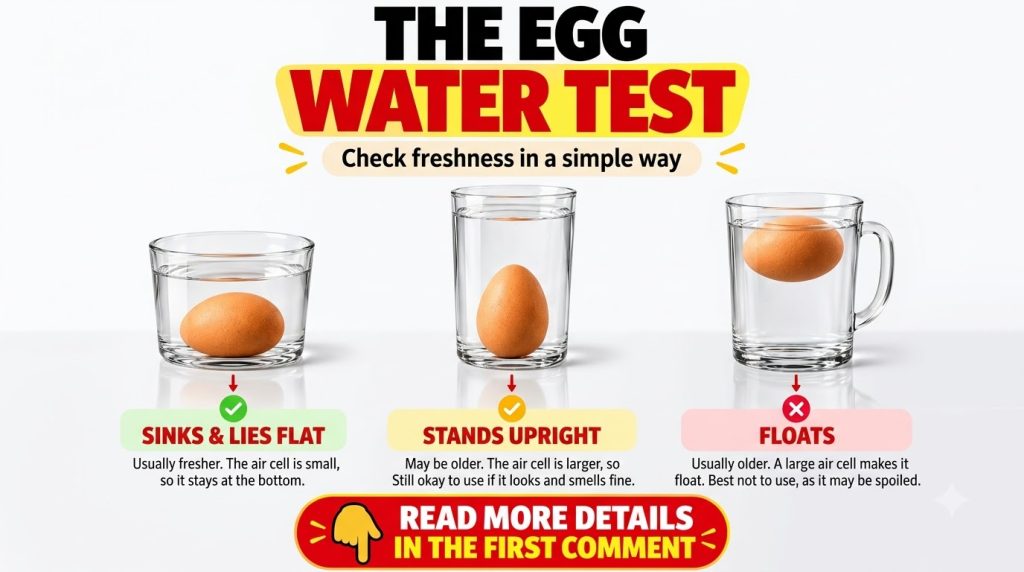
The egg water test is a classic kitchen hack that relies on the natural changes eggs undergo as they age. Here’s how it works and what each result means:
How to Perform the Test:
- Grab a Bowl: Find a bowl deep enough for an egg to be fully submerged in water.
- Fill with Water: Fill the bowl with cold tap water.
- Gently Place Egg: Carefully place each egg into the water, one at a time.
- Observe: Watch how the egg behaves.
What the Results Mean:
- Sinks to the Bottom and Lies Flat: This is a sign of a very fresh egg! It has a small air cell and is dense, so it stays put. These eggs are perfect for poaching, frying, or baking.
- Sinks but Stands Upright on its End: This egg is a bit older, perhaps a week or two. The air cell inside has grown larger, causing the narrower end to tilt upwards. It’s still perfectly fine to eat, especially great for hard-boiling or scrambling.
- Floats to the Surface: An egg that floats is an old egg. The large air cell has made it buoyant. While it might not necessarily be spoiled, it’s best to avoid consuming eggs that float. They likely have a compromised texture and flavor.
Food Examples: Why Eggs Behave This Way
Understanding why eggs react differently in water helps demystify the test. An eggshell is actually porous, meaning it has tiny holes. As an egg ages, moisture inside gradually evaporates through these pores, and air simultaneously enters the egg, causing the small air pocket (called the air cell) at the egg’s wider end to get larger. The larger the air cell, the more buoyant the egg becomes.
- Fresh Eggs: Have very small air cells, making them denser than water. They sink.
- Older Eggs: Have larger air cells, making them less dense. They may stand up or float.
Common Mistakes to Avoid
While the water test is straightforward, there are a few misconceptions to clarify:
- Assuming a Floating Egg is Always Rotten: A floating egg is definitely old and should generally be discarded, but it might not necessarily smell bad yet. However, it indicates significant age and potential quality issues. When in doubt, it’s always safer to toss it.
- Discarding Upright Eggs: Don’t throw away eggs that stand upright! These are often a week or two old but are still perfectly safe and delicious for cooking. They are ideal for hard-boiled eggs because the slightly larger air cell makes them easier to peel.
- Not Trusting Your Senses: The water test is excellent, but your nose is the ultimate judge. If an egg passes the water test but smells sulfurous or off when cracked, trust your instincts and discard it.
Tips for Keeping Eggs Fresher, Longer
Want to extend the life of your eggs? Follow these simple storage tips:
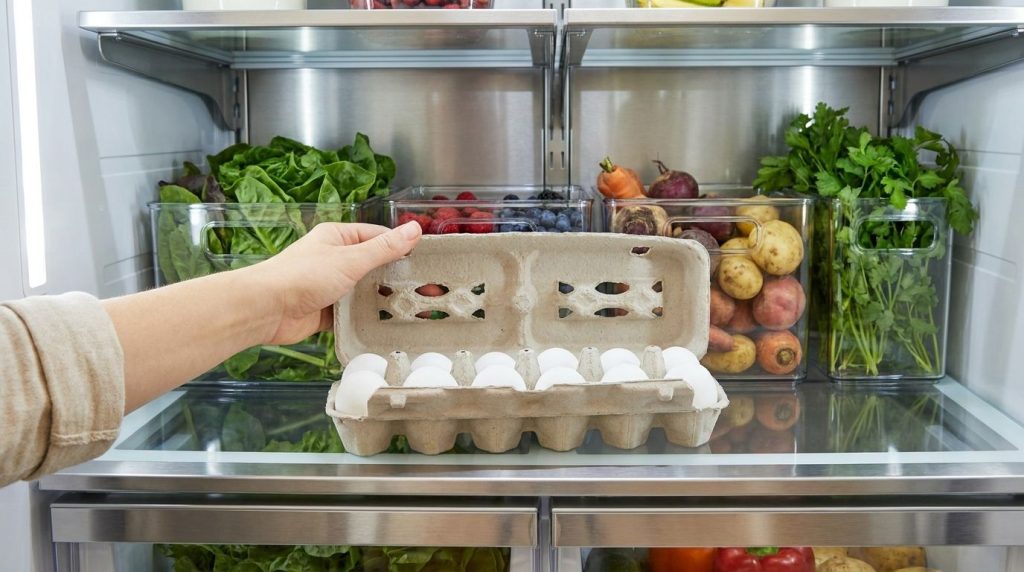
- Refrigerate Properly: Always store eggs in their original carton in the coldest part of your refrigerator, not in the door. The carton protects them from absorbing odors and maintains consistent temperature.
- Avoid Washing Eggs: Store-bought eggs in the US have a protective bloom removed and are washed and sanitized before packaging. An invisible layer of mineral oil is often applied to compensate. Washing them at home can remove this protective layer, making them more susceptible to bacteria.
- Limit Temperature Fluctuations: Consistent cold temperatures are key. Try to minimize how long eggs are left out at room temperature.
- First In, First Out (FIFO): Use older eggs before newer ones. A good practice is to date your cartons.
FAQs About Egg Freshness
Q1: Can I still eat an egg that stands upright in water?
Yes, absolutely! An egg that stands upright is a little older but still perfectly good to eat. It’s especially great for hard-boiling because the slightly larger air pocket helps with easier peeling.
Q2: How long do eggs typically last in the refrigerator?
When stored properly in the refrigerator, raw eggs can last for about 3-5 weeks beyond their ‘sell-by’ or ‘expiration’ date.
Q3: What if my egg passes the water test but smells bad when cracked?
Always trust your nose! If an egg has an unpleasant, sulfurous, or ‘off’ smell when cracked, it is spoiled and should be discarded immediately, regardless of the water test result.
Q4: Does the water test work for all types of eggs?
Yes, the water test is effective for checking the freshness of chicken eggs, duck eggs, or any other type of bird egg you might have.
Q5: Is it safe to eat a floating egg?
It is generally not recommended to eat an egg that floats. While it might not always be rotten, it indicates significant age and that the quality has degraded. It’s best to err on the side of caution and discard it.
Conclusion
The egg water test is a simple, effective, and reliable method to check the freshness of your eggs and prevent unnecessary food waste. By understanding how an egg’s air cell changes over time, you can confidently determine whether your eggs are best for scrambling, hard-boiling, or perhaps best for the compost bin.
Next time you’re unsure about your carton of eggs, give this easy test a try. It’s a fantastic way to eat healthier, reduce waste, and build your confidence in the kitchen! We encourage you to explore more healthy food content on our website to continue your journey towards a healthier lifestyle.
This content is for educational purposes only and should not be considered medical advice. Consult a qualified healthcare professional for personalized dietary recommendations.